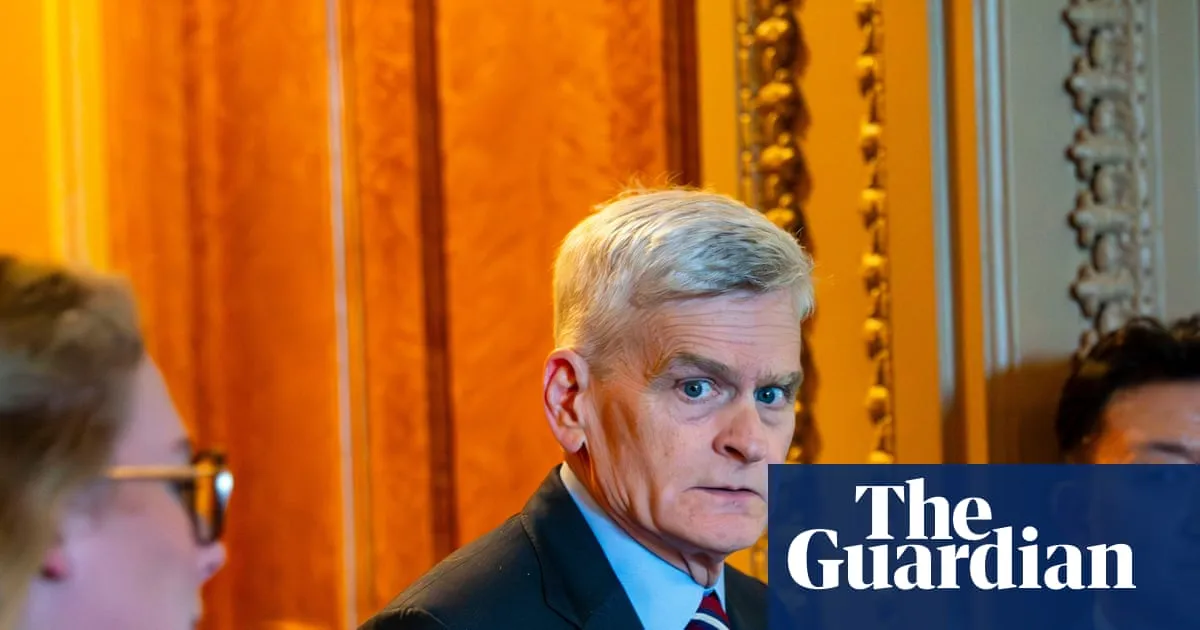
A handful of Senate Republicans have sharply criticized the agreement Donald Trump reached with Iran, accusing the administration of committing “the worst foreign policy blunder in decades”.On Wednesday, the Trump administration released the text of an interim deal between Washington and Tehran to end the 110-day conflict, framing it as a “major win” for the US – even as the 14-point accord made significant political and financial concessions to Iran to reopen the Strait of Hormuz and prevent a “worldwide depression”.“Reagan is rolling over in his grave,” the Republican senator Bill Cassidy declared, in a statement posted on X.“Iran’s nuclear ambitions were not curbed, and they have learned that threatening the Strait of Hormuz works and will undoubtedly leverage it in the future,” the outgoing Louisiana senator wrote. “Now, Iran gets to build brand-new infrastructure under this deal.”Senior administration officials said the deal would help prevent Iran from obtaining a nuclear weapon, pointing to a concession in the MOU in which Iran sats its enriched uranium stockpile “will be destroyed” through “down-blending”. But critics argue that the deal achieves less than the one Barack Obama negotiated with Iran in 2015.“Before the war, the strait was open, Iran was being crushed by sanctions, and 13 service members were still alive,” Cassidy said. “Now, 13 Americans are dead, families have paid billions at the pump, sanctions will be lifted, and the bombing has stopped. This is the worst foreign policy blunder in decades.”Cassidy lost his primary last month when voters in Louisiana opted instead to advance two challengers to a runoff election after an extraordinary intervention by Trump to oust the incumbent. Trump has publicly feuded with Cassidy for years, after the Republican senator voted in favor of Trump’s impeachment after the January 6 insurrection.Before the Louisiana Senate primary election, Trump repeatedly disparaged Cassidy on social media, calling him “a disloyal disaster”.The Republican senator Lindsey Graham, one of Trump’s most vocal congressional allies, said in the immediate aftermath of the deal’s announcement he was “somewhat concerned that Iran’s view of the agreement seems different than what the American negotiating team is claiming”.On Wednesday, Graham seemed to take a less skeptical view of the memorandum of understanding (MOU) following a “very lengthy and productive” conversation with the US special envoy Steve Witkoff.“After this discussion, it is my opinion that signing the MOU will be beneficial to the United States, in as much as the Strait of Hormuz will begin to open, and the hostilities with Iran will stop,” Graham wrote on social media.“Whether or not the United States can reach an acceptable, verifiable deal with Iran regarding its nuclear program and other issues is yet to be determined, but I see little downside to trying.”Vice-President JD Vance, who has maintained a complicated but publicly supportive stance on the war, responded to the post by thanking Graham for his statement.The Republican senator Thom Tillis said it was “concerning” that the Trump administration is considering a $300bn fund for Iran as part of the agreement.“I’m hearing a $300bn number and that’s concerning to me, so I just need the details,” Tillis told MS Now reporters on Wednesday. “I also need to know the methodology. I’m not interested in just an agreement that gets us through two and a half years, which is how much longer this administration lasts.”The MOU, officially signed by the presidents of both sides on Wednesday, , gives both sides 60 days to negotiate a comprehensive final agreement.The conflict with Iran has cost thousands of lives and devastated the world economy, prompting a handful of Republicans to break with Trump on the issue. Earlier this month, the House of Representatives voted 215 to 208 in favor of the war powers resolution, as four Republicans voted with Democrats to curb Trump’s authority in Iran.Trump defended his ceasefire deal on Wednesday at the G7 summit, further promising that if Iran misbehaved he would “go back to dropping bombs right smack in the middle of their head”.
SRCThe Guardian - World News
LANGEN
LEANCenter-Left
WORDS662
ENT12
WED · 2026-06-17 · 23:30 GMTBRIEF NSR-2026-0618-85335
NSR-2026-0618-85335News Report·EN·Diplomatic
Top Republican decries Trump’s Iran deal: ‘Reagan is rolling over in his grave’
A handful of Senate Republicans have criticized an interim deal reached by the Trump administration with Iran to end a 110-day conflict. Senator Bill Cassidy called the agreement "the worst foreign policy blunder in decades," arguing it fails to curb Iran's nuclear ambitions and makes concessions while 13 Americans are dead.
Marina DunbarThe Guardian - World NewsFiled 2026-06-17 · 23:30 GMTLean · Center-LeftRead · 3 min
The Guardian - World NewsFIG 01
Reading time
3min
Word count
662words
Sources cited
3cited
Entities identified
12entities
Quality score
100%
§ 01
Briefing Summary
AI-generatedNEWSAR · AI
A handful of Senate Republicans have criticized an interim deal reached by the Trump administration with Iran to end a 110-day conflict. Senator Bill Cassidy called the agreement "the worst foreign policy blunder in decades," arguing it fails to curb Iran's nuclear ambitions and makes concessions while 13 Americans are dead. The deal, which aims to reopen the Strait of Hormuz and prevent a global depression, includes Iran's commitment to destroy its enriched uranium stockpile. While some Republicans, like Lindsey Graham, expressed initial concern but later found the deal potentially beneficial, others, such as Thom Tillis, are worried about a reported $300 billion fund for Iran. The memorandum of understanding gives both sides 60 days to negotiate a comprehensive final agreement.
Confidence 0.90Sources 3Claims 5Entities 12
§ 02
Article analysis
Model · rule-basedFraming
Diplomatic
Political Strategy
Tone
Mixed Tone
AI-assessed
CalmNeutralAlarmist
Factuality
0.40 / 1.00
Mixed
LowHigh
Sources cited
3
Well sourced
FewMany
§ 03
Key claims
5 extracted01
After this discussion, it is my opinion that signing the MOU will be beneficial to the United States, in as much as the strait of Hormuz will begin to open, and the hostilities with Iran will stop.
quoteLindsey Graham
Confidence
1.00
02
Iran’s nuclear ambitions were not curbed, and they have learned that threatening the strait of Hormuz works and will undoubtedly leverage it in the future.
quoteBill Cassidy
Confidence
1.00
03
The Trump administration released the text of an interim deal between Washington and Tehran to end the 110-day conflict.
factual
Confidence
1.00
04
A handful of Senate Republicans have sharply criticized the agreement Donald Trump reached with Iran.
factual
Confidence
1.00
05
Critics argue that the deal achieves less than the one Barack Obama negotiated with Iran in 2015.
factual
Confidence
0.80
§ 04
Full report
3 min read · 662 words§ 05
Entities
12 identifiedKey playerOppositionContextPositiveNeutralNegative
People6
Locations4
§ 06
Keywords & salience
9 termsiran deal
1.00
foreign policy blunder
0.90
strait of hormuz
0.80
iran nuclear ambitions
0.70
sanctions
0.60
republican criticism
0.50
donald trump
0.50
memorandum of understanding
0.40
nuclear weapon
0.40
§ 07
Topic connections
Interactive graph Network visualization showing 51 related topics
View Full Graph Person Organization Location Event|Click node to navigate|Edge numbers = shared articles