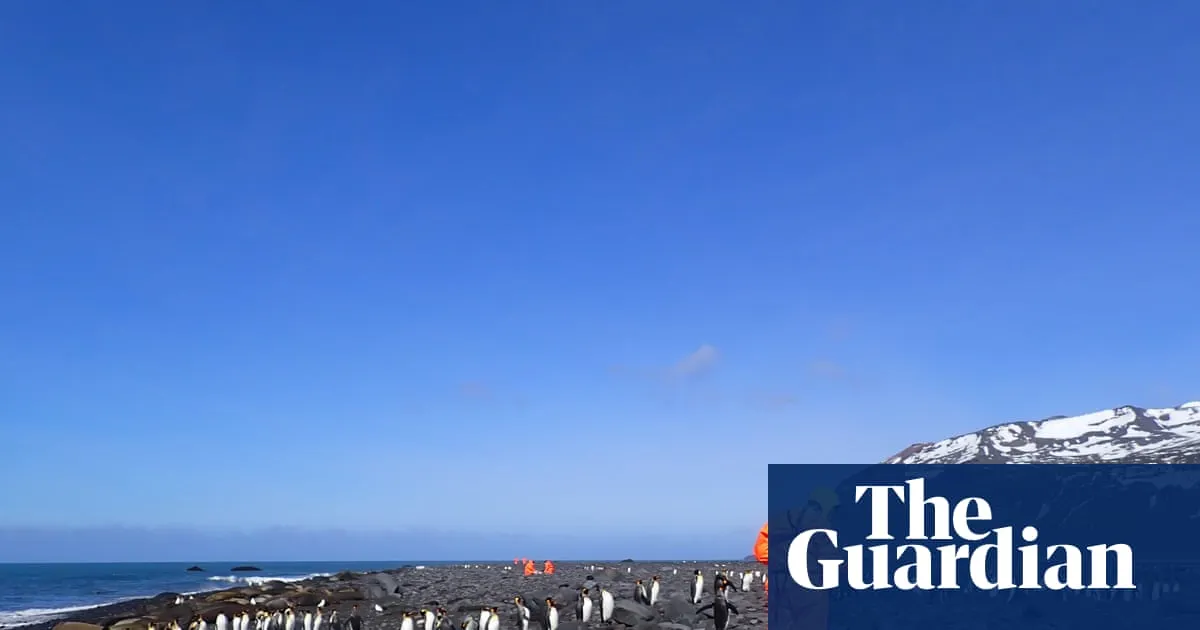
Mass mortality among southern elephant seal pups on Heard Island More than 13,000 seal pups die on remote Australian island amid bird flu outbreak Testing confirms spread of deadly H5N1 virus on the subantarctic Heard Island, about 4,000km south-west of Perth Follow our Australia news live blog for latest updates Get our breaking news email, free app or daily news podcast More than 13,000 seal pups have died on an Australian territory, as testing confirmed the spread of deadly H5N1 bird flu among penguins, seals and petrels on subantarctic islands. The mass mortality of southern elephant seal pups on Heard Island, about 4,000km south-west of Perth and 1,700km north of Antarctica, was observed by government scientists conducting drone and ground surveys in October 2025 and January 2026. Death rates were extremely high, averaging 76% across the island, and up to 97% in one location. The results, which have been submitted as a preprint research paper, also included evidence of high seal pup mortality at McDonald Island. Dr Jarrod Hodgson, a senior research scientist and co-lead author of the paper, who was aboard the icebreaker RSV Nuyina on voyages to Heard and McDonald islands, said the figures may be an underestimate. “When we departed the island, mortality was still ongoing. “The mass mortality was very sobering, but it’s something that we had prepared for.” In comparison, pup mortality in a typical year would generally be below 5%, he said. View image in fullscreen A mass mortality event of southern elephant seals was found at Capsize beach in Heard Island’s south-east. Photograph: Jarrod Hodgson Six out of nine species on Heard Island have now tested positive for the H5N1 strain, including southern elephant seals, king penguins, gentoo penguins, Antarctic fur seals and South Georgia diving petrels. Several hundred dead adult king penguins were also observed. Thesubantarctic islands are home to more than a million breeding seals and seabirds, including many that were listed both nationally and internationally, Hodgson said. Wildlife veterinarian and epidemiologist Dr Tristan Burgess, bird flu coordinator with the Australian Antarctic Program, said the significant impacts on elephant seals was consistent with other outbreaks in the southern hemisphere. View image in fullscreen The deadly impact of the H5N1 bird flu on Heard Island, a subantarctic island. Photograph: Australian government Genetic analysis of samples indicated the deadly influenza was probably introduced via wildlife from the French subantarctic Crozet Islands – about 1,800 km away – with an estimated arrival in August last year, according to the paper. “These observations of H5 bird flu at Heard Island and McDonald Island are the first detection in an Australian external territory and show the continued eastward movement of the virus around the sub-Antarctic,” co-lead author wildlife biologist Dr Julie McInnes said. The Australian Antarctic Program continued to monitor for signs of bird flu in the Australian Antarctic Territory and on Macquarie Island, which have not had any suspected cases. View image in fullscreen Australian government scientists conducting drone and ground surveys in October 2025 and January 2026 discovered the mass deaths of elephant seal pups. Photograph: Jarrod Hodgson On Thursday, the federal government said it had allocated an additional $11.2m in the 2026-27 budget to prepare for potential impacts of H5N1 on at-risk native species on the Australian mainland. “For now we’re free from the serious and contagious H5 bird flu, but as it continues to spread globally, we must be realistic about the likelihood of an incursion here, and plan accordingly,” said the environment minister, Murray Watt. Dr Michelle Wille, an expert in avian influenza viruses at the University of Melbourne, said the results of the surveys were “really devastating”, but consistent with impacts elsewhere in the subantarctic. Wille, who is not an author of the paper, said early risk assessments for Australia had focused on the potential introduction of H5N1 from the north. But the movement of the virus across vast distances in the subantarctic made the risk of entry to Australia via the south more plausible. Public reporting remained “extremely important”, she said. “If people see sick or dead birds or marine mammals its really important that they report via the emergency animal disease hotline (1800 675 888).” Explore more on these topics bird flu Australian climate and environmental reporting Wildlife Birds news Share Reuse this content
SRCThe Guardian - World News
LANGEN
LEANCenter-Left
WORDS716
ENT12
THU · 2026-06-18 · 04:51 GMTBRIEF NSR-2026-0618-85397
NSR-2026-0618-85397News Report·EN·Environmental
More than 13,000 seal pups die on remote Australian island amid bird flu outbreak
Over 13,000 southern elephant seal pups have died on Australia's remote Heard Island due to the H5N1 bird flu virus. Government scientists observed the mass mortality during drone and ground surveys in October 2025 and January 2026, with death rates reaching up to 97% in some areas, significantly higher than the typical below 5% mortality.
Petra StockThe Guardian - World NewsFiled 2026-06-18 · 04:51 GMTLean · Center-LeftRead · 3 min
The Guardian - World NewsFIG 01
Reading time
3min
Word count
716words
Sources cited
3cited
Entities identified
12entities
Quality score
100%
§ 01
Briefing Summary
AI-generatedNEWSAR · AI
Over 13,000 southern elephant seal pups have died on Australia's remote Heard Island due to the H5N1 bird flu virus. Government scientists observed the mass mortality during drone and ground surveys in October 2025 and January 2026, with death rates reaching up to 97% in some areas, significantly higher than the typical below 5% mortality. Testing confirmed the virus has spread to multiple species, including penguins and other seals, on Heard and McDonald Islands. Genetic analysis suggests the virus likely arrived from the French Crozet Islands. This marks the first detection of H5N1 in an Australian external territory, prompting the Australian government to allocate additional funds for preparedness against potential mainland incursions.
Confidence 0.90Sources 3Claims 5Entities 12
§ 02
Article analysis
Model · rule-basedFraming
Environmental
Public Health
Tone
Mixed Tone
AI-assessed
CalmNeutralAlarmist
Factuality
0.90 / 1.00
Factual
LowHigh
Sources cited
3
Well sourced
FewMany
§ 03
Key claims
5 extracted01
Six out of nine species on Heard Island have tested positive for the H5N1 strain.
statistic
Confidence
1.00
02
Death rates for seal pups averaged 76% across Heard Island, reaching up to 97% in one location.
statistic
Confidence
1.00
03
Testing confirmed the spread of deadly H5N1 bird flu among penguins, seals, and petrels on subantarctic islands.
factual
Confidence
1.00
04
More than 13,000 southern elephant seal pups have died on Heard Island due to H5N1 bird flu.
statistic
Confidence
1.00
05
Genetic analysis suggests the H5N1 influenza was introduced via wildlife from the French subantarctic Crozet Islands.
factual
Confidence
0.90
§ 04
Full report
3 min read · 716 words§ 05
Entities
12 identifiedKey playerOppositionContextPositiveNeutralNegative
Organizations1
Locations5
§ 06
Keywords & salience
10 termsh5n1 virus
1.00
bird flu outbreak
1.00
mass mortality
0.90
seal pups
0.90
heard island
0.80
southern elephant seals
0.70
wildlife disease
0.60
subantarctic islands
0.50
australian territory
0.40
genetic analysis
0.40
§ 07
Topic connections
Interactive graph Network visualization showing 2 related topics
View Full Graph Person Organization Location Event|Click node to navigate|Edge numbers = shared articles