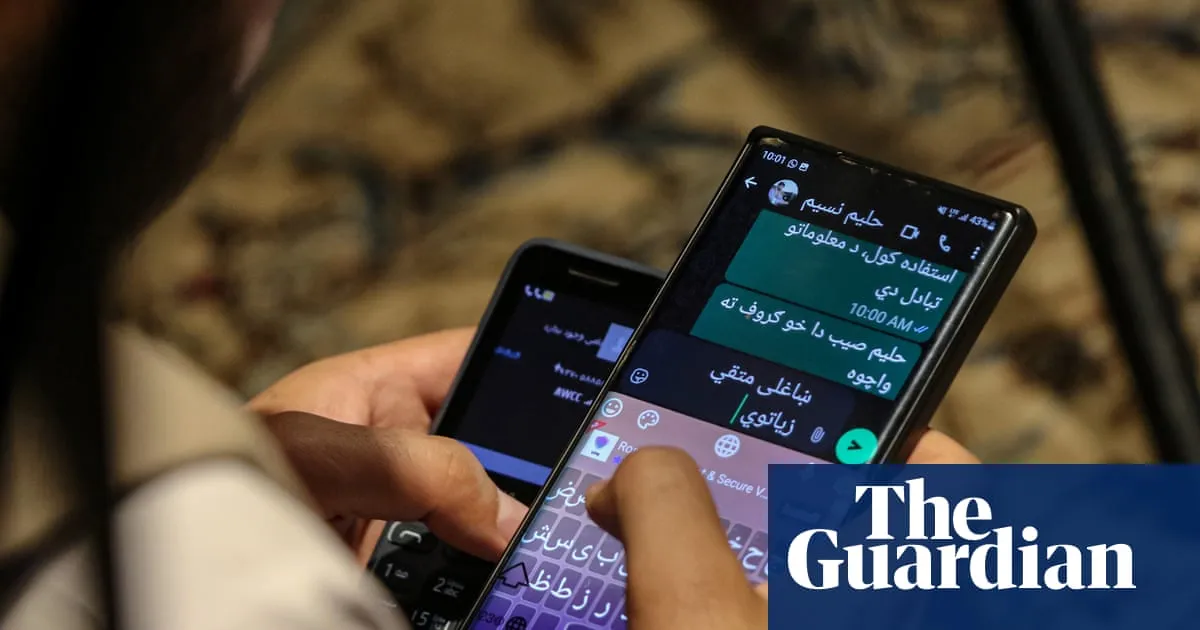
The Taliban have ordered a sweeping ban on the use of smartphones by government officials – in what some analysts say could foreshadow broader, population-level restrictions.In a directive issued by the Taliban’s military courts and reviewed by the Guardian, the ban was to take effect this week and prohibits “high rank, low rank, general mujahideen, or service staff” from using mobile phones.In one video published online, a Taliban official appears to be shown reading the banning order from his phone while the other person is shown breaking phones.The order states: “If anyone uses one, their mobile phone will be smashed and legal and sharia punishment will be imposed on the violator.” It adds that any exemptions require a written decree from the Taliban supreme leader, Hibatullah Akhundzada. The Guardian was unable to reach a Taliban spokesperson.Video appears to show Taliban officials smashing up smartphones after ban announcedReports and sources inside Afghanistan say that the bans are being implemented in an “ad-hoc” way – in some areas targeting only government officials, in some cities and provinces extending to women, civilians, medical workers, schoolteachers and students.“A lot of things happen at the local level, because of what someone local has decided. But also, it could be a prelude to a blanket ban and they are just testing the waters,” said an analyst who works on Afghanistan.The bans come after escalating efforts by the Taliban to completely cut Afghanistan off from the global internet. In September, authorities ordered an internet blackout which lasted two days and was vaguely justified by concerns over pornography; the order said the cutoff was to “prevent immorality”.The Afghanistan analyst said that cutoff was done hastily and with a lack of foresight. It froze commerce across the country and affected emergency services and aviation.“The private sector was freaking out, the banking sector was freaking out, even their own people – the security sector and the supreme leader’s office – and they realised ‘OK guys, we didn’t really think this through’, so they put it back on,” the analyst said.There are probably several factors driving the latest ban. First, the street demonstrations that broke out in the western city of Herat after the Taliban arrested women and girls for “improper hijab”. In the course of the protests, Taliban forces appeared to fire into a crowd and killed at least two people.This event may have provided some impetus for the restrictions, said the analyst. “The videos that came out of the protests in Herat raised a lot of alarms. The emirate was trying to contain it. In the beginning, they denied it. They said, no, no, this didn’t happen. Then the videos started coming out.”However, the Taliban were pushing smartphone bans before the protests – for reasons including fear of internal leaks, and worries that they were eroding productivity among officials.In the province of Herat, in western Afghanistan, two government employees said that bans on smartphones had been in place for months.“About two months ago they said not to bring your mobile phones to the office,” said one. “Me and a few colleagues didn’t take it seriously. They confiscated them, and after we made a fuss about it, they smashed our phones” – a loss he estimated at about 8,000 afghanis (£95).The Taliban worry that “people are just on their phones all the time and they’re not working. And, you know, smartphones shouldn’t belong at work,” said the analyst.Then there is the problem of leaks: there are a lot of them, said the analyst, because government officials are using their smartphones to photograph documents – and record the occasional meeting – and then allowing these, one way or another, to make it out into the public before the supreme leader signs it off.Employees wasting time online and leaking information may be part of the usual challenges of governance. The difference, said the analyst, is the Taliban’s approach to it.“smartphones and being online affecting productivity to a certain extent is universal. The difference here is that I haven’t seen any other countries legislating against it.” Zahra Nader is editor-in-chief at Zan Times
SRCThe Guardian - World News
LANGEN
LEANCenter-Left
WORDS680
ENT8
THU · 2026-06-18 · 05:00 GMTBRIEF NSR-2026-0618-85404
NSR-2026-0618-85404News Report·EN·Political Strategy
Taliban order ban on smartphones as officials shown destroying devices
The Taliban has issued a directive banning government officials from using smartphones, effective this week. This order, originating from the Taliban's military courts, applies to all ranks of government employees and includes the confiscation and destruction of violating devices, with legal and Sharia punishment for offenders.
Aisha Down and Zahra Nader for Zan TimesThe Guardian - World NewsFiled 2026-06-18 · 05:00 GMTLean · Center-LeftRead · 3 min
The Guardian - World NewsFIG 01
Reading time
3min
Word count
680words
Sources cited
2cited
Entities identified
8entities
Quality score
100%
§ 01
Briefing Summary
AI-generatedNEWSAR · AI
The Taliban has issued a directive banning government officials from using smartphones, effective this week. This order, originating from the Taliban's military courts, applies to all ranks of government employees and includes the confiscation and destruction of violating devices, with legal and Sharia punishment for offenders. Reports suggest the ban is being implemented inconsistently, with some areas extending it to civilians, women, and students, raising concerns among analysts about a potential future Afghanistan-wide prohibition. The Taliban's motivations appear to include fears of internal leaks, concerns about officials' productivity, and a desire to control information flow, potentially influenced by recent protests.
Confidence 0.90Sources 2Claims 5Entities 8
§ 02
Article analysis
Model · rule-basedFraming
Political Strategy
Human Rights
Tone
Mixed Tone
AI-assessed
CalmNeutralAlarmist
Factuality
0.70 / 1.00
Factual
LowHigh
Sources cited
2
Limited
FewMany
§ 03
Key claims
5 extracted01
The Taliban previously ordered a two-day internet blackout in September, justified by concerns over pornography and 'immorality'.
factualauthorities
Confidence
1.00
02
Violators will have their phones smashed and face legal and sharia punishment.
factualTaliban's military courts
Confidence
1.00
03
The ban prohibits 'high rank, low rank, general mujahideen, or service staff' from using mobile phones.
factualTaliban's military courts
Confidence
1.00
04
The Taliban have ordered a ban on smartphones for government officials, effective this week.
factualTaliban's military courts
Confidence
1.00
05
Some analysts believe this ban could foreshadow broader, population-level restrictions.
predictionanalysts
Confidence
0.70
§ 04
Full report
3 min read · 680 words§ 05
Entities
8 identifiedKey playerOppositionContextPositiveNeutralNegative
§ 06
Keywords & salience
8 termssmartphone ban
1.00
taliban
1.00
government officials
0.90
restrictions
0.80
internet access
0.70
sharia law
0.60
afghanistan
0.50
protests
0.40
§ 07
Topic connections
Interactive graph No topic relationship data available yet. This graph will appear once topic relationships have been computed.