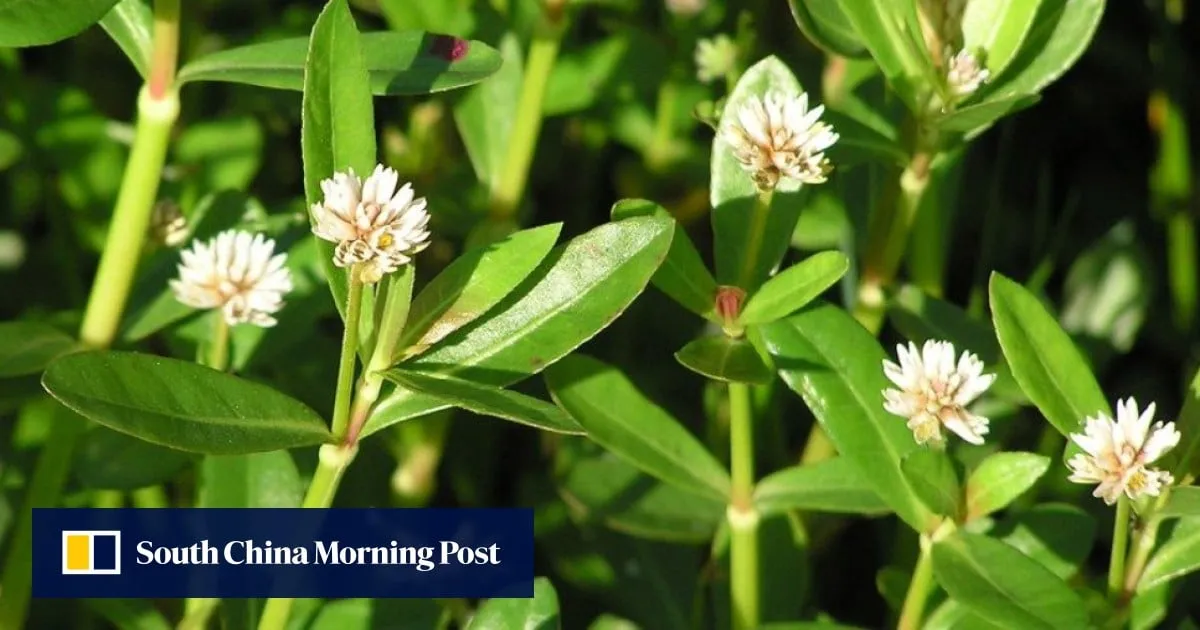
The verdant green leaves and dainty white flowers of the alligator weed are becoming a common sight in waterways across Japan.But while the plant, whose scientific name is Alternanthera philoxeroides, may look innocuous, it is an absolute menace according to Koichi Goka, head of the Invasive Species Research Team at Japan’s National Institute for Environmental Studies (NIES).“We first had reports of alligator weed in Japan in Hyogo prefecture in 1989 and it quickly spread from there across much of central and then southern Japan,” he told This Week in Asia. “We were soon having reports from the Tokai region as it spread to the east and now it is in Kanto and spreading to the north.”The plant is now found in 30 of Japan’s 47 prefectures.It was unfortunate that the plant liked the Japanese environment, Goka said, expressing concern over its effect on the agricultural sector.A Japanese farmer works in a rice field in Chiba. Photo: AFP“It invades paddy fields, other agricultural fields and waterways and it spreads because it thrives both in a water environment and on the land,” he said. “It spreads very easily because it can reproduce from parts that are cut off the plant, such as a piece of leaf, so cutting the plant back can actually help it to spread.”
SRCSouth China Morning Post
LANGEN
LEANCenter-Right
WORDS215
ENT2
MON · 2026-01-19 · 01:30 GMTBRIEF NSR-2026-0119-8543
NSR-2026-0119-8543News Report·EN·Environmental
Japan struggles to weed out plant threatening agriculture, ecosystems
Alligator weed, first reported in Japan in 1989, is rapidly spreading across the country, now present in 30 of 47 prefectures. The invasive plant thrives in both water and on land, posing a significant threat to Japan's agriculture and ecosystems.
Julian RyallSouth China Morning PostFiled 2026-01-19 · 01:30 GMTLean · Center-RightRead · 1 min
South China Morning PostFIG 01
Reading time
1min
Word count
215words
Sources cited
1cited
Entities identified
2entities
Quality score
100%
§ 01
Briefing Summary
AI-generatedNEWSAR · AI
Alligator weed, first reported in Japan in 1989, is rapidly spreading across the country, now present in 30 of 47 prefectures. The invasive plant thrives in both water and on land, posing a significant threat to Japan's agriculture and ecosystems. It invades paddy fields, agricultural areas, and waterways, hindering crop production. The weed's ability to reproduce from even small fragments makes eradication difficult, as cutting it can inadvertently aid its dispersal. Koichi Goka of the National Institute for Environmental Studies (NIES) highlights the growing concern over the plant's impact as it continues to spread northward.
Confidence 0.90Sources 1Claims 5Entities 2
§ 02
Article analysis
Model · rule-basedFraming
Environmental
Economic Impact
Tone
Measured
AI-assessed
CalmNeutralAlarmist
Factuality
0.80 / 1.00
Factual
LowHigh
Sources cited
1
Limited
FewMany
§ 03
Key claims
5 extracted01
The plant is now found in 30 of Japan’s 47 prefectures.
statistic
Confidence
1.00
02
Alligator weed was first reported in Japan in 1989 in Hyogo prefecture.
quoteKoichi Goka
Confidence
1.00
03
Alligator weed thrives both in water and on land.
quoteKoichi Goka
Confidence
0.90
04
Alligator weed is a menace to Japan's ecosystems and agriculture.
quoteKoichi Goka
Confidence
0.90
05
Cutting the plant back can actually help it to spread.
quoteKoichi Goka
Confidence
0.80
§ 04
Full report
1 min read · 215 words§ 05
Entities
2 identifiedKey playerOppositionContextPositiveNeutralNegative
§ 06
Keywords & salience
8 termsalligator weed
1.00
invasive species
0.90
japan
0.80
agriculture
0.70
paddy fields
0.60
ecosystems
0.60
environmental impact
0.50
weed control
0.50
§ 07
Topic connections
Interactive graph Network visualization showing 51 related topics
View Full Graph Person Organization Location Event|Click node to navigate|Edge numbers = shared articles