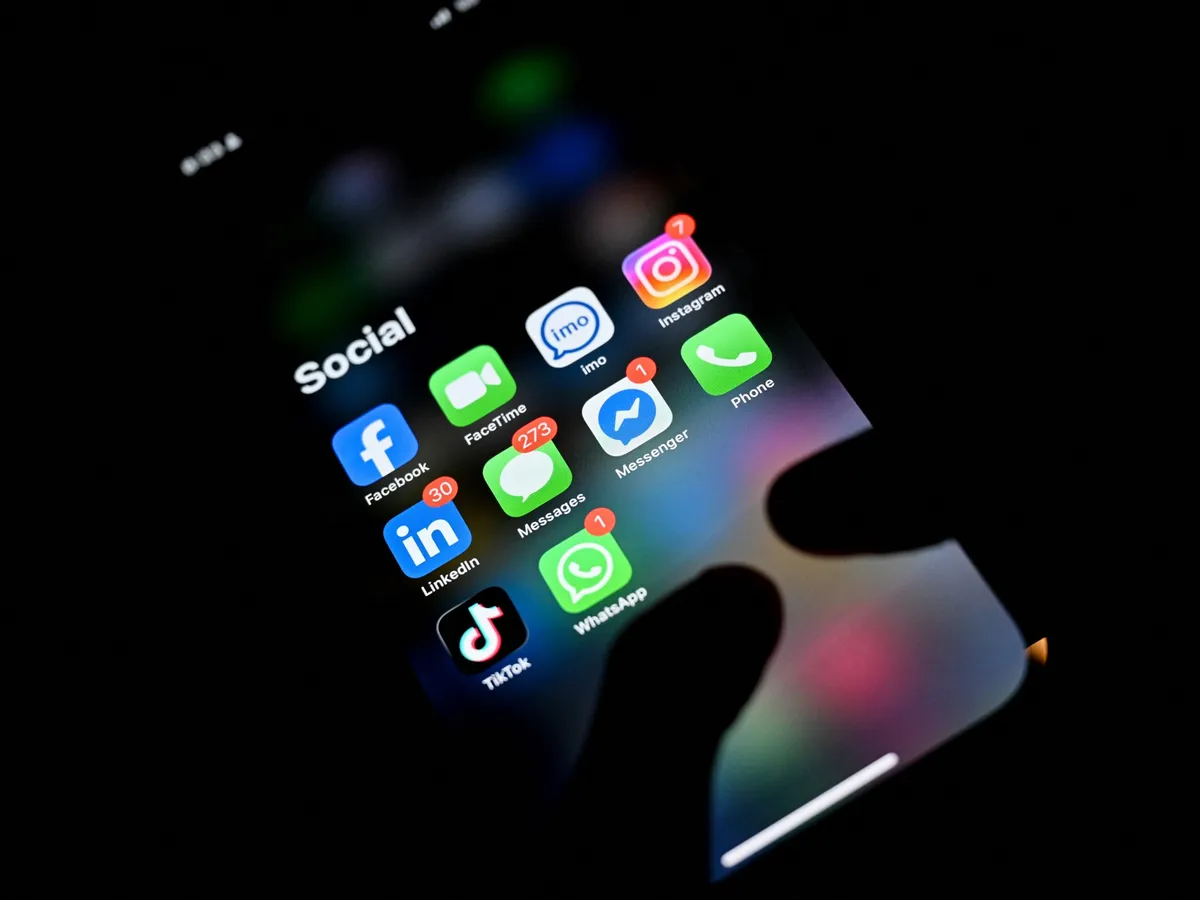
As the United Nations marks the International Day for Countering Hate Speech, Al Jazeera examines how AI handles it – and where it falls short.Published On 18 Jun 2026Hate speech that once circulated in person now travels farther and faster via anonymous online accounts behind a screen.As the United Nations marks the International Day for Countering Hate Speech on June 18, UN Secretary-General Antonio Guterres has warned that social platforms are amplifying the threat.With Artificial Intelligence (AI) increasingly tasked with detecting and removing hate speech online, Al Jazeera looks at where these systems fall short compared with human judgement.How is hate speech defined?According to the UN, hate speech covers any communication – spoken, written or behavioural – that discriminates against or incites violence towards a person or group.The UN states that hate speech targets a person’s actual or perceived identity, race, ethnicity, religion, gender, sexual orientation or disability. And it isn’t limited to words, with the UN noting it can also take the form of images, cartoons, gestures and even objects.How many people encounter hate speech online?According to a 2023 joint survey of 8,000 people in 16 countries done by polling company Ipsos and the UN Educational, Scientific and Cultural Organization (UNESCO), more than two-thirds of internet users encountered hate speech online.The survey also found that 33 percent of people thought LGBTQI people experienced the most cases of hate speech, followed by ethnic and racial minorities (28 percent) and women (18 percent).Meta, which owns Facebook, has removed fewer hateful posts since 2023. In the last quarter of 2025, the company removed 1.3 million posts from Instagram and 1.3 million from Facebook, compared to 7.4 million removed from Instagram and 5.8 million from Facebook in the fourth quarter of 2024.
SRCAl Jazeera
LANGEN
LEANCenter
WORDS289
ENT10
THU · 2026-06-18 · 08:41 GMTBRIEF NSR-2026-0618-85441
NSR-2026-0618-85441News Report·EN·Technology
Why do AI models struggle with online hate speech detection?
On the UN's International Day for Countering Hate Speech, Al Jazeera highlights AI's limitations in detecting online hate. The UN defines hate speech as communication that discriminates against or incites violence towards individuals or groups based on identity, including race, religion, gender, and sexual orientation, and can manifest beyond words.
Hanna Duggal,Mohammed HaddadAl JazeeraFiled 2026-06-18 · 08:41 GMTLean · CenterRead · 2 min
Al JazeeraFIG 01
Reading time
2min
Word count
289words
Sources cited
3cited
Entities identified
10entities
Quality score
100%
§ 01
Briefing Summary
AI-generatedNEWSAR · AI
On the UN's International Day for Countering Hate Speech, Al Jazeera highlights AI's limitations in detecting online hate. The UN defines hate speech as communication that discriminates against or incites violence towards individuals or groups based on identity, including race, religion, gender, and sexual orientation, and can manifest beyond words. A 2023 survey found over two-thirds of internet users encounter hate speech online, with LGBTQI people, ethnic/racial minorities, and women being disproportionately targeted. The article notes that Meta has removed fewer hateful posts from Facebook and Instagram in late 2025 compared to the same period in 2024, indicating a potential shift in moderation efforts. AI systems struggle to match human judgment in identifying the nuances and evolving forms of online hate speech.
Confidence 0.90Sources 3Claims 4Entities 10
§ 02
Article analysis
Model · rule-basedFraming
Technology
Social Justice
Tone
Measured
AI-assessed
CalmNeutralAlarmist
Factuality
0.70 / 1.00
Factual
LowHigh
Sources cited
3
Well sourced
FewMany
§ 03
Key claims
4 extracted01
Hate speech is defined by the UN as communication that discriminates against or incites violence towards a person or group based on identity.
factualUN
Confidence
1.00
02
A 2023 survey found over two-thirds of internet users encountered hate speech online.
statisticIpsos and UNESCO
Confidence
0.95
03
Meta removed fewer hateful posts in Q4 2025 compared to Q4 2024.
statisticMeta
Confidence
0.90
04
AI models struggle with detecting and removing online hate speech compared to human judgment.
factualAl Jazeera
Confidence
0.90
§ 04
Full report
2 min read · 289 words§ 05
Entities
10 identifiedKey playerOppositionContextPositiveNeutralNegative
Organizations7
§ 06
Keywords & salience
8 termsai hate speech detection
1.00
online hate speech
0.90
artificial intelligence
0.80
united nations
0.70
hate speech definition
0.60
social platforms
0.50
unesco
0.40
meta
0.40
§ 07
Topic connections
Interactive graph Network visualization showing 51 related topics
View Full Graph Person Organization Location Event|Click node to navigate|Edge numbers = shared articles