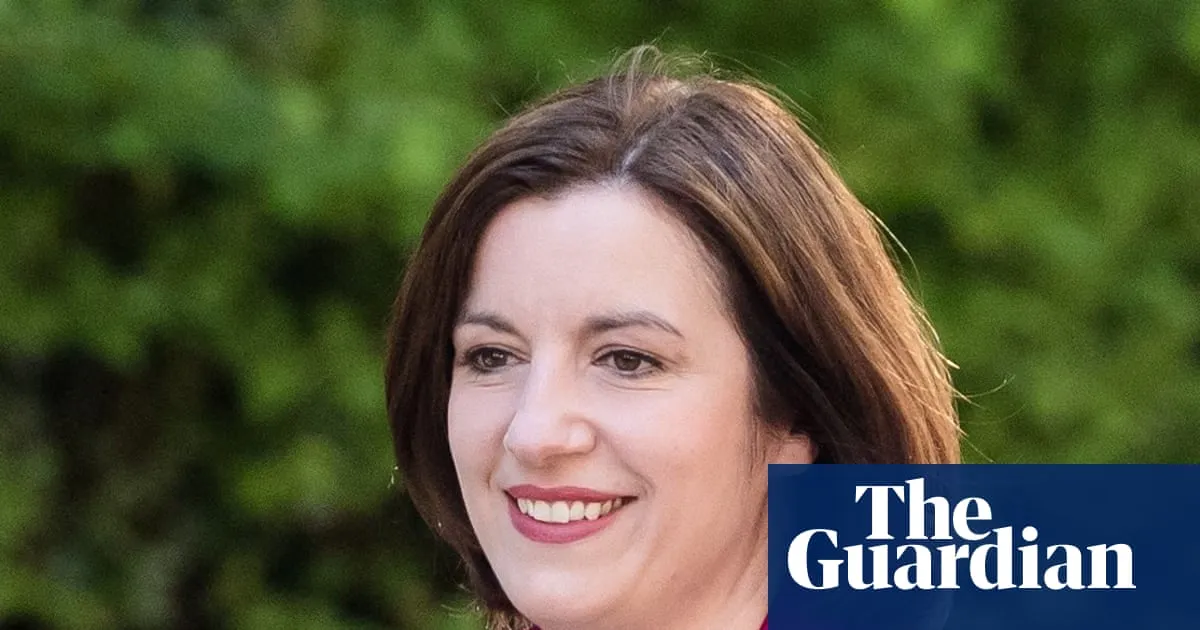
Adding VAT to private school fees has failed to trigger an exodus of pupils into the state sector despite widespread speculation that it would, the education secretary, Bridget Phillipson, has said.The Labour government applied 20% VAT to private school fees from the start of 2025. They had previously been exempt from the tax. Newly published admissions data for England showed there had been no influx towards state schools since then.“The predicted exodus from private schools simply hasn’t happened and today’s data proves it,” Phillipson said.“Critics warned state schools would be swamped with new pupils. They were wrong. They said private schools would close en masse. They haven’t.“We are rebalancing the system to focus on the 94% of kids in state schools, a majority that has been sidelined for too long.”The admissions data is the first since VAT was added, taken from applications to state schools made in October last year for places in the school year starting next September.The former chancellor Jeremy Hunt was among those who predicted that up to 90,000 children could enter the state sector after the addition of VAT. But the figures from the Department for Education (DfE) actually showed a decline in overall applications for both primary and secondary school places this year, while nearly 85% of families received their first choice of secondary school place, higher than in 2025 and 2024.Local authorities in central London with some of the highest proportions of privately educated children showed no signs of a rise in applications. Hammersmith and Fulham and Kensington and Chelsea both received fewer applications for places in September compared with the two previous years. But there was a slight increase in Islington, where the share of families getting their first preference of secondary school dropped from 68% to 66%.The DfE said that 94% of secondary applicants and 98% of primary applicants in London received an offer from one of their six preferred schools and noted: “That is not a system under pressure.”In Surrey, which was singled out as a likely hotspot for private school defections, there were fewer applications for secondary places this year, while in Kent there was an increase of 2%.However experts cautioned that the falling birthrate and post-Brexit population shifts may partly mask any impact of the VAT increase. The DfE’s 2026 school survey found that while the number of children in schools of all types fell by 1.2%, the numbers at independent schools were down by 3.8%, a drop of 22,000 compared with 2025.The Independent Schools Council said that its members have lost 30,000 pupils since the introduction of VAT, although the group’s membership includes schools in Scotland, Wales and Northern Ireland, while the DfE’s figures are for England alone and include hundreds of private schools that are not ISC members.The census recorded a continuing increase in the number of private schools operating in England, noted by Phillipson. The DfE census showed an increase of 41 private schools in 2026, but the figure was boosted by 88 more independent special schools opening, offsetting the 47 mainstream schools that closed.The DfE said that VAT on private school fees was raising more than had been initially forecast, and is now likely to bring in £1.8bn annually by 2029-30.The addition of VAT was a Labour manifesto pledge during the 2024 general election, and the money raised was to be put toward hiring an additional 6,500 teachers by the end of this parliament. The National Audit Office recently cast doubt on the DfE’s ability to meet the pledge, which is aimed at recruiting more secondary, special needs and further education teachers.
SRCThe Guardian - World News
LANGEN
LEANCenter-Left
WORDS597
ENT12
THU · 2026-06-18 · 15:30 GMTBRIEF NSR-2026-0618-85532
NSR-2026-0618-85532News Report·EN·Political Strategy
VAT on private school fees has not caused pupil exodus, says Bridget Phillipson
Education Secretary Bridget Phillipson stated that the introduction of 20% VAT on private school fees in England from January 2025 has not led to a significant increase in state school applications. Newly published admissions data for England shows no influx of pupils into the state sector, contrary to predictions.
Richard Adams Education editorThe Guardian - World NewsFiled 2026-06-18 · 15:30 GMTLean · Center-LeftRead · 3 min
The Guardian - World NewsFIG 01
Reading time
3min
Word count
597words
Sources cited
5cited
Entities identified
12entities
Quality score
100%
§ 01
Briefing Summary
AI-generatedNEWSAR · AI
Education Secretary Bridget Phillipson stated that the introduction of 20% VAT on private school fees in England from January 2025 has not led to a significant increase in state school applications. Newly published admissions data for England shows no influx of pupils into the state sector, contrary to predictions. Applications for state school places in October 2025 for the following academic year actually declined overall, with a high percentage of families receiving their first-choice secondary school. While some areas saw fewer applications, others experienced slight increases, but overall, the system is not under pressure. However, experts suggest falling birth rates and population shifts may be masking the full impact of the VAT increase. The Department for Education data indicates a decrease in pupils at independent schools, though the Independent Schools Council reports a larger loss. The VAT is projected to raise significant revenue, intended for hiring additional teachers.
Confidence 0.90Sources 5Claims 5Entities 12
§ 02
Article analysis
Model · rule-basedFraming
Political Strategy
Economic Impact
Tone
Measured
AI-assessed
CalmNeutralAlarmist
Factuality
0.70 / 1.00
Factual
LowHigh
Sources cited
5
Well sourced
FewMany
§ 03
Key claims
5 extracted01
Newly published admissions data for England showed there had been no influx towards state schools since VAT was added to private school fees.
statisticDepartment for Education (DfE)
Confidence
0.95
02
Critics warned state schools would be swamped with new pupils and private schools would close en masse.
quoteCritics (as reported by Bridget Phillipson)
Confidence
0.90
03
Adding VAT to private school fees has not caused an exodus of pupils into the state sector.
factualBridget Phillipson
Confidence
0.90
04
The number of children at independent schools fell by 3.8%, a drop of 22,000 compared with 2025.
statisticDfE's 2026 school survey
Confidence
0.85
05
Experts cautioned that falling birthrate and post-Brexit population shifts may partly mask any impact of the VAT increase.
factualExperts
Confidence
0.80
§ 04
Full report
3 min read · 597 words§ 05
Entities
12 identifiedKey playerOppositionContextPositiveNeutralNegative
Locations7
Topics1
§ 06
Keywords & salience
10 termsvat on private school fees
1.00
pupil exodus
0.90
state schools
0.80
private schools
0.80
education secretary
0.70
admissions data
0.60
rebalancing the system
0.50
bridget phillipson
0.50
falling birthrate
0.40
post-brexit population shifts
0.40
§ 07
Topic connections
Interactive graph Network visualization showing 43 related topics
View Full Graph Person Organization Location Event|Click node to navigate|Edge numbers = shared articles