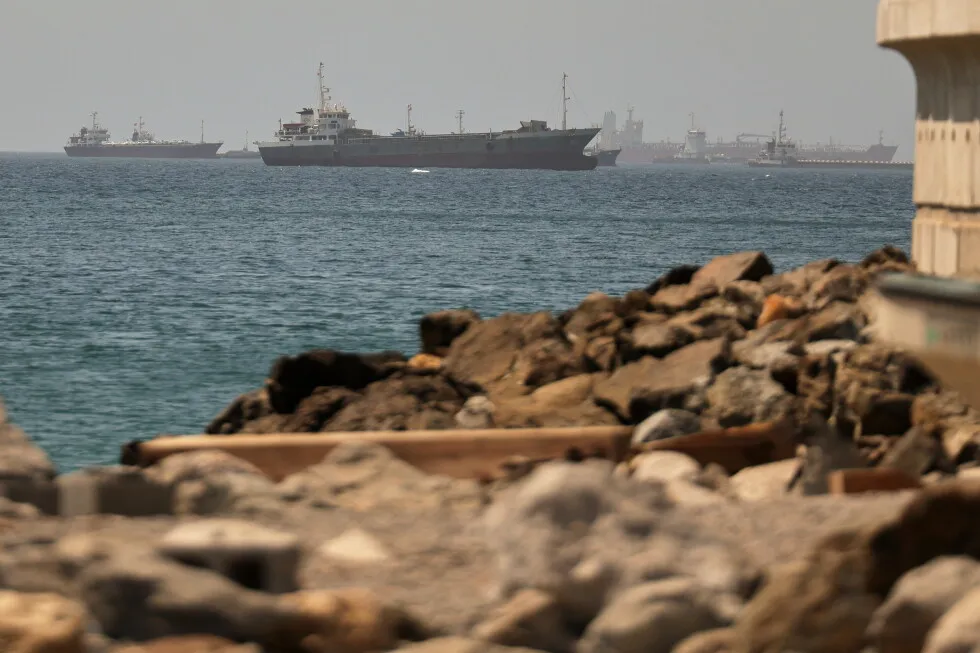
2026-06-18T15:44:43Z Major shipowners have begun moving vessels through the Strait of Hormuz since the U.S. and Iran signed an agreement Wednesday, according to maritime data company Lloyd’s List Intelligence. In a media briefing, Richard Meade, editor in chief of Lloyd’s List, said for the first time in 110 days, ships owned by major companies are transiting the strait after effectively being marooned there since February. The strait is a critical passageway for the world’s oil and natural gas. Its closure has created a historic energy crisis. They did not give data on how many ships have passed through the strait as of Thursday. Tankers controlled by major ship owners Grimaldi Group, Cosco, Knutsen and NYK have passed through the strait. And two Iran-flagged, National Iranian Tanker Company-owned, sanctioned crude oil tankers have entered the strait, according to Lloyd’s List. Phillip Belcher, marine director of Intertanko, a trade group for global independent tanker owners, said the main central route of the Strait of Hormuz is still closed and has an estimated 80 mines that need to be cleared. But ships have been passing through the smaller northern route, which goes through Iranian waters, and the southern route, which goes through Omani waters. “Those two routes now seem to be fully open,” Belcher said. LLoyd’s list estimates 550 merchant ships will need to prepare to exit the gulf, including 160 tankers, 200 bulk carriers, 60 container ships and 10 vehicle carriers. MAE ANDERSON Anderson reports for The Associated Press on a wide range of issues that small businesses face. She is based in New York. twitter mailto
SRCAssociated Press (AP)
LANGEN
LEANCenter
WORDS265
ENT12
THU · 2026-06-18 · 15:53 GMTBRIEF NSR-2026-0618-85547
NSR-2026-0618-85547News Report·EN·Economic Impact
Maritime data company says stranded ships have begun transiting the Strait of Hormuz
Major shipowners have resumed transiting the Strait of Hormuz following a U.S.-Iran agreement, according to Lloyd’s List Intelligence. This marks the first movement of ships owned by major companies through the strait in 110 days, after they were effectively stranded since February.
Associated Press (AP)Filed 2026-06-18 · 15:53 GMTLean · CenterRead · 2 min
Associated Press (AP)FIG 01
Reading time
2min
Word count
265words
Sources cited
3cited
Entities identified
12entities
Quality score
100%
§ 01
Briefing Summary
AI-generatedNEWSAR · AI
Major shipowners have resumed transiting the Strait of Hormuz following a U.S.-Iran agreement, according to Lloyd’s List Intelligence. This marks the first movement of ships owned by major companies through the strait in 110 days, after they were effectively stranded since February. Vessels from Grimaldi Group, Cosco, Knutsen, and NYK have passed through, along with two sanctioned Iranian crude oil tankers. While the main central route remains closed due to mines, ships are utilizing the northern route through Iranian waters and the southern route through Omani waters, which are now reportedly open. This reopening is significant as the Strait of Hormuz is a crucial passage for global oil and natural gas, and its closure had caused an energy crisis.
Confidence 0.90Sources 3Claims 5Entities 12
§ 02
Article analysis
Model · rule-basedFraming
Economic Impact
Diplomatic
Tone
Measured
AI-assessed
CalmNeutralAlarmist
Factuality
0.80 / 1.00
Factual
LowHigh
Sources cited
3
Well sourced
FewMany
§ 03
Key claims
5 extracted01
For the first time in 110 days, ships owned by major companies are transiting the strait after being marooned since February.
factualRichard Meade, editor in chief of Lloyd’s List
Confidence
0.90
02
Major shipowners have begun moving vessels through the Strait of Hormuz since the U.S. and Iran signed an agreement.
factualLloyd’s List Intelligence
Confidence
0.90
03
Ships have been passing through the smaller northern and southern routes of the Strait of Hormuz, which are now open.
factualPhillip Belcher, marine director of Intertanko
Confidence
0.80
04
The main central route of the Strait of Hormuz is still closed with an estimated 80 mines that need to be cleared.
factualPhillip Belcher, marine director of Intertanko
Confidence
0.80
05
Lloyd’s list estimates 550 merchant ships will need to prepare to exit the gulf.
statisticLloyd’s List
Confidence
0.70
§ 04
Full report
2 min read · 265 words§ 05
Entities
12 identifiedKey playerOppositionContextPositiveNeutralNegative
People1
Organizations8
§ 06
Keywords & salience
9 termsstrait of hormuz
1.00
maritime data
0.90
ship transit
0.80
energy crisis
0.70
oil and natural gas
0.60
us-iran agreement
0.50
sanctioned tankers
0.50
mines
0.40
merchant ships
0.40
§ 07
Topic connections
Interactive graph Network visualization showing 51 related topics
View Full Graph Person Organization Location Event|Click node to navigate|Edge numbers = shared articles