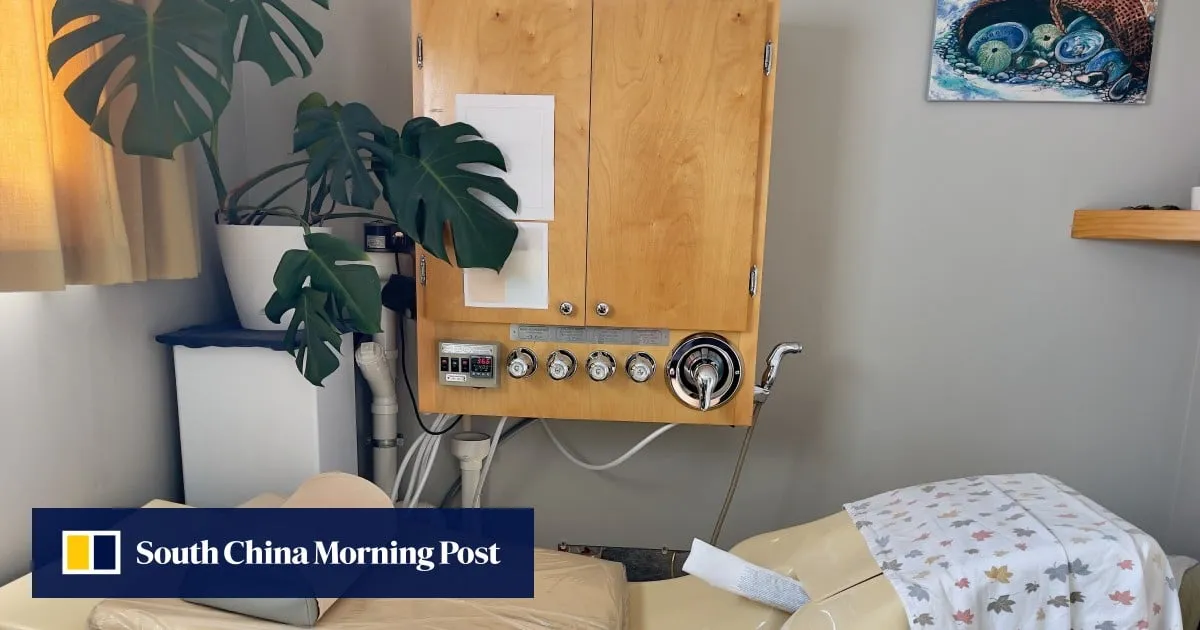
A Chinese health centre scammed more than 100 elderly people out of a total of over 10 million yuan (US$1.5 million) by putting soy sauce in an intestinal cleaning liquid to dupe them into thinking they had toxins in their bodies.The Beijing-police" class="entity-link entity-organization" data-entity-id="148969" data-entity-type="organization">Beijing police have arrested more than 30 people involved on suspicion of fraud.They cracked the case after the family of a woman in her 60s discovered she had spent 700,000 yuan (US$104,000) in the health centre.The victim, surnamed Li, bought numerous expensive treatments, priced at tens of thousands of yuan per session.A male doctor chats to an elderly man during a health check-up as he sits with two family members. Photo: ShutterstockWhen Li had run out of money and decided to give up the treatment, clinic staff even asked her to pawn her golden bracelet, saying: “If your illness cannot be treated, what do you need money for?”Li first went to the health centre to buy a 38-yuan (US$6) foot massage voucher.The staff there were enthusiastic and caring towards her.They also remembered people’s birthdays, in a bid to give them the illusion that the staff cared more about them than their own children.The Beijing-police" class="entity-link entity-organization" data-entity-id="148969" data-entity-type="organization">Beijing police also said that they targeted affluent senior people who lived alone, or those who were emotionally lonely despite having children.Rows of bottles of soy sauce on sale in a Beijing supermarket. Photo: ShutterstockThe staff would go to senior centres, or places where the elderly gather, and offer free “expert” medical consultations.Further ReadingThe fake experts would then tell the seniors that they were ill and required special, long-term treatment.To convince them, they also performed intestinal cleansing for the seniors, and added dark soy sauce, a condiment often used to colour food while cooking, to the cleansing liquid, to dupe them into thinking that their bodies contained toxins.The police said the health centre’s turnover reached more than 30 million yuan (US$4.5 million). An abnormal amount for such places.One victim even spent over two million yuan (US$295,000).An unidentified elderly Asian man, above, sitting alone on a bench in a public park. Photo: ShutterstockThe police said a large-scale fraud gang was involved, with over 20 shops masquerading as health centres in multiple Beijing districts.The shops used fake experts to intimidate the seniors and prey on their loneliness and need for care.By the end of 2025, China had 323 million people aged 60 and above, 23 per cent of the country’s population.Of them, 60 per cent were reported to be empty-nesters, either without children or having children who live separately.“There are many such health centres trapping seniors with free gifts. The industry needs urgent supervision,” said an online observer.
SRCSouth China Morning Post
LANGEN
LEANCenter-Right
WORDS440
ENT12
FRI · 2026-06-19 · 01:00 GMTBRIEF NSR-2026-0619-85659
NSR-2026-0619-85659News Report·EN·Human Interest
China’s ‘soy sauce’ intestinal detox scam swindles over 100 seniors out of US$1.5 million
Beijing police have arrested over 30 individuals in connection with a large-scale fraud scheme that targeted over 100 elderly people, swindling them out of approximately US$1.5 million. The scam involved health centers that administered intestinal cleaning liquids containing soy sauce, falsely convincing seniors they had toxins in their bodies.
Fran LuSouth China Morning PostFiled 2026-06-19 · 01:00 GMTLean · Center-RightRead · 2 min
South China Morning PostFIG 01
Reading time
2min
Word count
440words
Sources cited
1cited
Entities identified
12entities
Quality score
100%
§ 01
Briefing Summary
AI-generatedNEWSAR · AI
Beijing police have arrested over 30 individuals in connection with a large-scale fraud scheme that targeted over 100 elderly people, swindling them out of approximately US$1.5 million. The scam involved health centers that administered intestinal cleaning liquids containing soy sauce, falsely convincing seniors they had toxins in their bodies. The operation was uncovered after a victim's family discovered she had spent over US$100,000 on expensive, unnecessary treatments. The perpetrators preyed on lonely and affluent seniors, offering free consultations and feigning care to encourage purchases of high-priced services. The fraud gang operated over 20 fake health centers across multiple Beijing districts, with some victims spending hundreds of thousands of dollars.
Confidence 0.90Sources 1Claims 5Entities 12
§ 02
Article analysis
Model · rule-basedFraming
Human Interest
Social Justice
Tone
Mixed Tone
AI-assessed
CalmNeutralAlarmist
Factuality
0.80 / 1.00
Factual
LowHigh
Sources cited
1
Limited
FewMany
§ 03
Key claims
5 extracted01
The scam targeted affluent, lonely seniors, preying on their emotional needs.
factualBeijing police
Confidence
1.00
02
The health center's turnover reached over 30 million yuan (US$4.5 million).
statisticBeijing police
Confidence
1.00
03
One victim, surnamed Li, spent 700,000 yuan (US$104,000) on treatments.
factualArticle based on police findings
Confidence
1.00
04
Beijing police arrested over 30 people involved in the fraud.
factualBeijing police
Confidence
1.00
05
A Chinese health center scammed over 100 elderly people out of US$1.5 million by using soy sauce to simulate toxins.
factualBeijing police
Confidence
1.00
§ 04
Full report
2 min read · 440 words§ 05
Entities
12 identifiedKey playerOppositionContextPositiveNeutralNegative
People1
§ 06
Keywords & salience
8 termshealth scam
1.00
elderly exploitation
0.90
intestinal detox
0.80
fraud
0.70
loneliness
0.60
fake experts
0.50
soy sauce
0.40
beijing police
0.40
§ 07
Topic connections
Interactive graph Network visualization showing 51 related topics
View Full Graph Person Organization Location Event|Click node to navigate|Edge numbers = shared articles