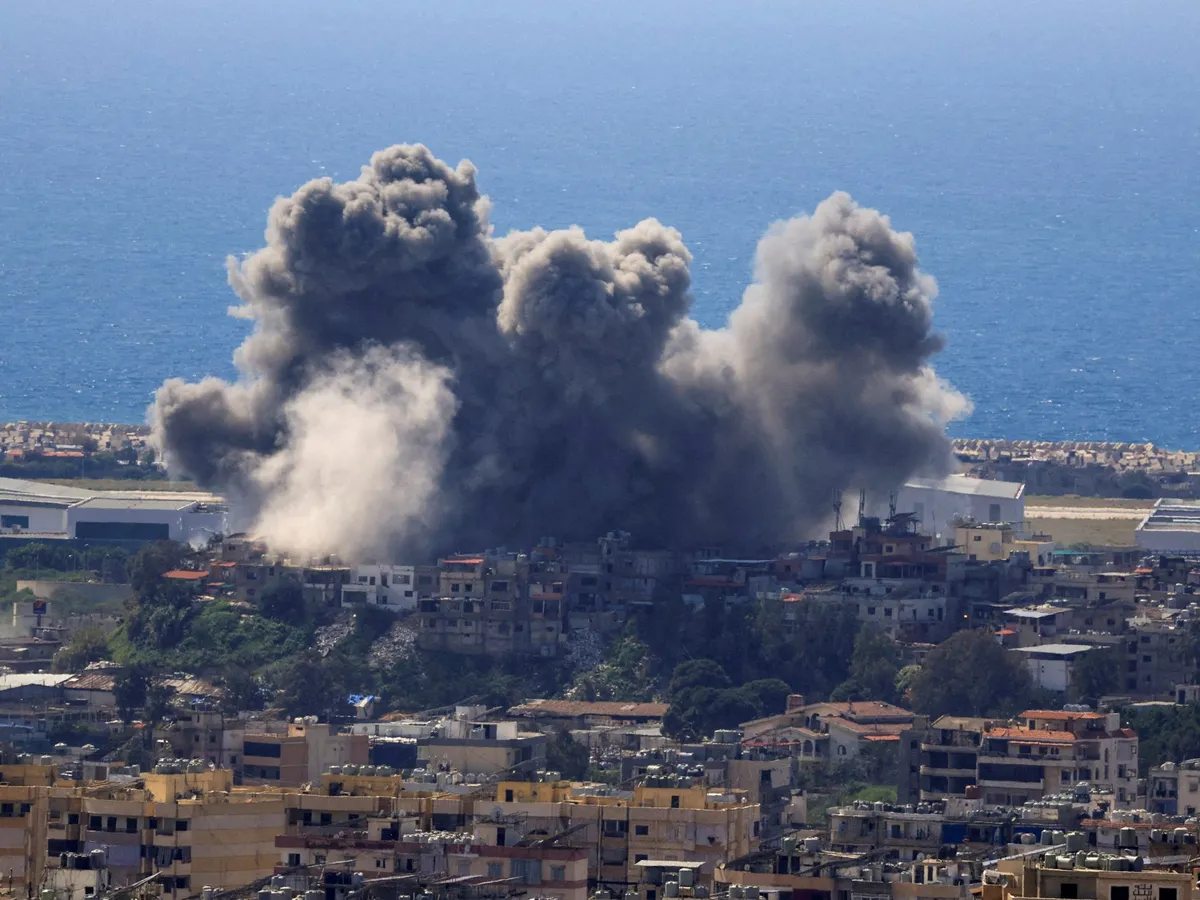
EXPLAINERIsrael is blowing up buildings in Lebanon – and chances of a lasting deal to secure peace in the Middle East.Smoke rises following an Israeli attack on the southern suburbs of Beirut, as seen from Baabda, Lebanon, April 8, 2026 [Mohamed Azakir/Reuters]Published On 19 Jun 2026The fragile Iran-peace-agreement" class="entity-link entity-topic" data-entity-id="149178" data-entity-type="topic">United States-Iran peace agreement is hanging by a thread as Israel intensifies its military campaign in southern Lebanon, raising fears it could unravel before formal negotiations are completed.The agreement, which the US and Iran signed earlier this week, triggers a 60-day negotiation period for the two to reach a formal peace deal, and talks were supposed to begin in Switzerland on Friday.However, US Vice President JD Vance cancelled his flight to Switzerland on Thursday night at the last minute after Israeli bombing in southern Lebanon, which killed at least 18 people, after which Iran said its negotiators were not prepared to begin talks until the agreement, which stipulates that Lebanon is included in the ceasefire, showed signs of being implemented.Analysts say Israel’s continued bombardment of southern Lebanon is poised to derail any hope of ending the war in the Middle East. Israel currently occupies one-fifth of Lebanon, which it has subjected to near-daily attacks since early March. More than 3,000 people have been killed, and more than one million have been displaced from their homes.While the US-Iran agreement stipulates that both sides will commit to ensuring the “territorial integrity and sovereignty of Lebanon”, Israeli officials have stated this week that their forces will not withdraw from the territory. Ministers in Israel have said “all of Lebanon must burn.”So, can the deal survive in the face of Israeli bombing? And can President Donald Trump rein in Israel’s Benjamin Netanyahu?President Donald Trump speaks as Secretary of State Marco Rubio, right, and Vice President JD Vance listen in the Oval Office at the White House, Thursday, April 23, 2026, in Washington, Dc [Mark Schiefelbein/AP]Why have Iranian and US negotiators cancelled trips to Switzerland?Neither side has given an official reason for cancelling trips to begin the awaited talks, which were to be held at the Burgenstock Resort in Stansstad, near Lucerne in central Switzerland.A statement from the White House noted that “the plans for the upcoming technical talks have not been finalised,” adding that the Vance-led delegation is “prepared to depart at the first available opportunity”.However, it added, “the logistics of these negotiations have never been simple or predictable. As of now, the Vice President is not departing tonight.”Iran’s semi-official Tasnim news agency reported that there was no confirmation that Iranian negotiators would travel for talks, because they first wanted to see signs that the interim agreement, which includes Lebanon in the US-Iran ceasefire, is being implemented.The Swiss Foreign Ministry followed up with a statement, saying talks to implement the preliminary deal struck between Tehran and Washington to end the war have been “postponed”.No new date has yet been set for talks to commence, despite the 60-day clock for a deal to be reached beginning on Thursday this week.Israeli military vehicles drive on a Lebanese road by the Israel-Lebanon border, as seen from northern Israel, June 18, 2026 [Gil Eliyahu/Reuters]What’s happening in Lebanon?Just after midnight local time on Thursday night (21:00 GMT), residents in southern Lebanon woke up to the start of an intense Israeli bombardment of their villages and cities, hours before US-Iran talks were scheduled to begin in Switzerland.The attacks have so far killed at least 18 people and wounded dozens, with the largest number of bodies pulled out from a bombed-out residential building in Harouf village.Israel has been on one of its deadliest sprees of attacks on southern Lebanon since its ally, the US, came into an agreement with Iran to end the hostilities on all fronts – including Lebanon.Israel began near-daily attacks on Lebanon in early March, when the Iran-backed Lebanese group Hezbollah began firing rockets into Israel in response to the US-Israeli attacks on Tehran that killed the supreme leader, Ayatollah Ali Khamenei, and other top Iranian officials.Israeli attacks have continued despite a US-brokered “ceasefire” in April. Now, despite the US-Iran memorandum of understanding (MoU), they are continuing.In a statement on Friday, Israel’s military said attacks on southern Lebanon overnight, which have continued through the morning, were a response to Hezbollah’s “repeated violations of the ceasefire”.Hezbollah acknowledged attacks on Israeli military positions inside Lebanon. Soon after, the Israeli military announced that four of its soldiers had been killed during combat in Lebanon.Netanyahu’s political ally, Itamar Ben-Gvir, the far-right Israeli national security minister, said “all of Lebanon must burn.“With all due respect to the Americans, Israel must make it clear to the entire world that the blood of our sons and the security of our citizens are not forfeit,” Ben-Gvir wrote in a post on X, adding that, in the region, you needed to “go berserk. To obliterate. To crush the terror”.A man smokes a cigarette as he stands with a relative at his house, damaged by an Israeli air strike, while they look at neighbouring houses that were destroyed. The men returned to their village after being displaced by the war, following the deal between the US and Iran, in Qlailieh, Tyre district, Lebanon, June 18, 2026 [Zohra Bensemra/Reuters]What does the peace agreement say about Lebanon?The first clause of the MoU signed by the US and Iran on Wednesday this week addresses the question of Lebanon.The US and Iran have agreed to the “immediate and permanent termination of military operations on all fronts, including in Lebanon”, it states.Additionally, it says, both sides will commit to ensuring the “territorial integrity and sovereignty of Lebanon”.However, there is no mention of Israel in the MoU at all, leaving interpretation of this clause wide open, experts say.Given that the agreement is solely between the US and Iran – Israel and Hezbollah are not signatories – it is unclear how a ceasefire in Lebanon would be implemented, or whether it means Iran must stop funding Hezbollah.Iran’s Foreign Ministry spokesperson Esmaeil Baghaei has noted that Tehran “does not separate the United States and the Israeli regime”, adding that it is the responsibility of the US to ensure Israel respects commitments made under the memorandum.How has Israel responded to the US-Iran agreement?There is fury in Israel over the deal – and political allies and opposition alike are circling Prime Minister Netanyahu over it.Moreover, Israel was reportedly neither privy to negotiations nor allowed to review the text before it was signed by US President Donald Trump and Iranian President Masoud Pezeshkian on Wednesday.Netanyahu has said “the battle is not over yet,” and “Israel still faces additional challenges,” noting that the military would not withdraw from occupied Lebanese land.Israel “will restore security to the north”, and this requires “maintaining the security strip in southern Lebanon”, from which Israel will not withdraw “as long as Israel’s security needs require it”, Netanyahu said.On Monday, Defence Minister Israel Katz said in a statement: “Netanyahu and I are pursuing a clear policy under which the [military] will remain in the security zones in Lebanon, Syria and Gaza for an unlimited period of time in order to protect the border and Israeli communities from there against jihadist elements.”These statements come against the backdrop of simmering tensions between Washington and Israel.At the G7 summit in France, Trump criticised Netanyahu’s bombing tactics in Lebanon that have led to large numbers of civilian casualties.
SRCAl Jazeera
LANGEN
LEANCenter
WORDS1 225
ENT12
FRI · 2026-06-19 · 10:13 GMTBRIEF NSR-2026-0619-85752
NSR-2026-0619-85752News Report·EN·Conflict
Can US-Iran peace ‘deal’ survive Israeli bombing of Lebanon?
A fragile US-Iran peace agreement is jeopardized by Israel's intensified bombing campaign in southern Lebanon. The agreement, signed earlier this week, triggered a 60-day negotiation period for a formal peace deal, with initial talks scheduled in Switzerland.
Yashraj SharmaAl JazeeraFiled 2026-06-19 · 10:13 GMTLean · CenterRead · 5 min
Al JazeeraFIG 01
Reading time
5min
Word count
1 225words
Sources cited
3cited
Entities identified
12entities
Quality score
100%
§ 01
Briefing Summary
AI-generatedNEWSAR · AI
A fragile US-Iran peace agreement is jeopardized by Israel's intensified bombing campaign in southern Lebanon. The agreement, signed earlier this week, triggered a 60-day negotiation period for a formal peace deal, with initial talks scheduled in Switzerland. However, US Vice President JD Vance cancelled his trip after Israeli attacks killed at least 18 people, prompting Iran to state its negotiators would not proceed until the agreement, which includes Lebanon in a ceasefire, shows signs of implementation. Israel, which occupies a fifth of Lebanon and has conducted near-daily attacks since March, has stated its forces will not withdraw. The ongoing Israeli bombardment is seen by analysts as a significant obstacle to ending the regional conflict.
Confidence 0.90Sources 3Claims 5Entities 12
§ 02
Article analysis
Model · rule-basedFraming
Conflict
Diplomatic
Tone
Sensational
AI-assessed
CalmNeutralAlarmist
Factuality
0.60 / 1.00
Mixed
LowHigh
Sources cited
3
Well sourced
FewMany
§ 03
Key claims
5 extracted01
Israeli officials have stated this week that their forces will not withdraw from the territory.
quoteIsraeli officials
Confidence
0.90
02
Iran said its negotiators were not prepared to begin talks until the agreement, which stipulates that Lebanon is included in the ceasefire, showed signs of being implemented.
quoteIran
Confidence
0.90
03
US Vice President JD Vance cancelled his flight to Switzerland on Thursday night after Israeli bombing in southern Lebanon, which killed at least 18 people.
factual
Confidence
0.90
04
The fragile United States-Iran peace agreement is hanging by a thread as Israel intensifies its military campaign in southern Lebanon.
factual
Confidence
0.80
05
Israel currently occupies one-fifth of Lebanon, which it has subjected to near-daily attacks since early March.
factual
Confidence
0.70
§ 04
Full report
5 min read · 1 225 words§ 05
Entities
12 identifiedKey playerOppositionContextPositiveNeutralNegative
Locations7
§ 06
Keywords & salience
10 termsisraeli bombing of lebanon
1.00
us-iran peace deal
1.00
middle east peace
0.90
lebanon ceasefire
0.80
negotiations
0.70
sovereignty of lebanon
0.60
territorial integrity
0.60
president donald trump
0.50
israel's benjamin netanyahu
0.50
us vice president jd vance
0.50
§ 07
Topic connections
Interactive graph Network visualization showing 51 related topics
View Full Graph Person Organization Location Event|Click node to navigate|Edge numbers = shared articles