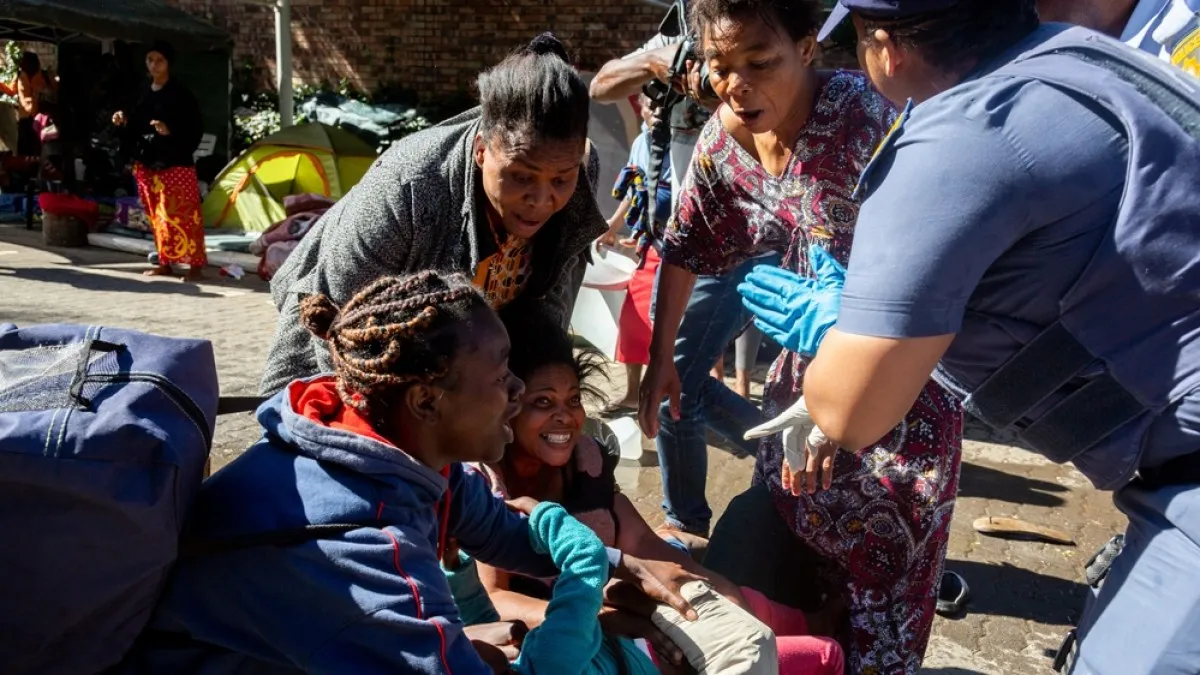
A government push to curb Undocumented employment is exposing the dependence of many small businesses on Migrant labour.Migrant workers have become the focus of South Africa's crackdown on Undocumented employment amid high unemployment and growing political pressure [Yeshiel Panchia/Al Jazeera]Published On 21 Jun 2026Johannesburg, South Africa – In the narrow lanes of Fordsburg in central Johannesburg, Junaid Mohammed* stands behind the counter of a family shop that has been in his family for decades. His father started it as a general dealer. Today, it survives on cheap Chinese imports and shrinking margins.Junaid, who asks us to use a pseudonym, does not call it a decline. He calls it survival.But the bigger change is not what he sells. It is who he employs.Junaid only employs foreign nationals as store assistants and packers. “It was not a deliberate choice,” he says.It began with cost. Then habit. Then necessity.“It became expensive to hire locals,” he says.South Africa’s minimum wage is about $1.87 per hour, roughly $324 per month, plus statutory contributions and strong labour protections.Junaid says he cannot carry it.He pays about $12 a day, below the legal minimum, and hires workers only when business allows.“If we do well, we can hire more. But when we are not busy, we can say we don’t need you now,” he says.Pressure beyond the shopOutside, pressure is rising.Across South Africa, vigilante groups such as Operation Dudula and the March and March movement have carried out “citizen raids” on businesses accused of hiring foreign nationals. Some have turned violent.At the same time, the state is tightening enforcement. President Cyril Ramaphosa has condemned vigilante action and promised to hire 10,000 Labour inspectors.For employers like Junaid, the squeeze now comes from both directions.A violation of labour law could shut him down.“I don’t know what I am going to do,” he says.Labour, law, and blameAnti-immigrant sentiment has hardened. Some groups blame undocumented migrants for unemployment and demand their removal.The government insists enforcement is about legality, not politics.But its language is blunt.“The reason why you see a number of companies employing illegal foreign immigrants is because, for them, it’s cheap labour. It’s about exploitation. It’s about making profit,” South Africa’s Deputy Minister of Labour Jomo Sibiya, told Al Jazeera.He added: “If this worker gets injured … they don’t have any obligation to take him to hospital or report it.”Still, he distinguishes between documented and undocumented workers.“We are not saying there shouldn’t be a foreign national who comes to work in South Africa … We are saying we can’t continue having job opportunities being taken by people who are illegally in the country.”South Africa’s unemployment rate is about 33 percent. Youth unemployment is far higher, exceeding 60 percent for the youngest 15-24 demographic.Government officials argue that high unemployment has made labour enforcement an economic as well as an Immigration issue. They say employers who hire undocumented migrants can gain an unfair advantage by paying below legal wage standards and avoiding some of the obligations that come with formal employment.Labour authorities also argue that undocumented workers are especially vulnerable to exploitation because their Immigration status may discourage them from reporting abuses or seeking help from state institutions. That concern has become a central justification for the government’s push to increase inspections and penalise employers found to be breaking labour laws.Supporters of the crackdown say stronger enforcement will help protect labour standards and create more opportunities for South Africans seeking work. Critics, however, question whether tougher Immigration enforcement alone can address the country’s deep-rooted unemployment challenges.In that context, foreign workers have become a political flashpoint.The inner-city economyBut inside Johannesburg’s inner city, the picture is more layered.Loren Landau, a migration scholar at the University of Oxford, says undocumented labour is concentrated in the sectors hardest to regulate.“On the job front … there are huge advantages to hiring foreigners. You can always threaten them with deportation, or non-payment.”He rejects the idea of simple preference.“Definitely, employers will exploit that. It’s rational. The fact that immigrants are not going to go to the labour department to complain makes it more appealing.”“It’s not an inherent preference. It’s a preference to maximise profits.”Policy is now shifting towards legal employees. “We are not saying there shouldn't be a foreign national who comes to work in South Africa … We are saying we can't continue having job opportunities being taken by people who are illegally in the country.” by Jomo Sibiya, South Africa's deputy minister of labour A draft plan proposes fines of up to 1 million South African rand ($61,700) for hiring undocumented workers.Deputy Minister Sibiya says the aim is to cut demand.“Cut off the demand, and you are going to see less and less people coming to work illegally.”A city being reshapedBut migrants are also embedded in Johannesburg’s informal economy – running shops, moving goods, sustaining trade in struggling inner-city blocks.Urban planner Tanya Zack says that role is often overlooked.“A lot of money generated by migrants selling fast fashion … is important to an inner city that’s failing. If we could invest in infrastructure and policing to make it safer, you could capture more in the South African economy,” she says.She disputes claims that migrants sit outside taxation entirely.“There is no system for the informal economy. They are increasingly using card systems and digital banking.”Cities, she argues, are already being reshaped – policy or not.Enforcement without resolutionOn the ground, enforcement is visible: raids, arrests, removals. Undocumented nationals from several African countries are being repatriated from South Africa, emboldening anti-immigrant groups.Yet nothing feels settled.Landau says the moment is becoming self-reinforcing.“The day after Ramaphosa’s speech … Operation Dudula was back on the street. They have no reason to stop,” he said.“It shows these movements are effective. It’s adding fuel to the fire.”* Not his real name
SRCAl Jazeera
LANGEN
LEANCenter
WORDS954
ENT12
SUN · 2026-06-21 · 05:42 GMTBRIEF NSR-2026-0621-86096
NSR-2026-0621-86096News Report·EN·Economic Impact
South Africa’s immigration crackdown divides Johannesburg’s inner city
South Africa is intensifying its crackdown on undocumented employment, particularly in Johannesburg's inner city, highlighting the reliance of many small businesses on migrant labor. Driven by high unemployment and political pressure, the government aims to enforce labor laws and protect South African jobs.
By Qaanitah HunterAl JazeeraFiled 2026-06-21 · 05:42 GMTLean · CenterRead · 4 min
Al JazeeraFIG 01
Reading time
4min
Word count
954words
Sources cited
3cited
Entities identified
12entities
Quality score
100%
§ 01
Briefing Summary
AI-generatedNEWSAR · AI
South Africa is intensifying its crackdown on undocumented employment, particularly in Johannesburg's inner city, highlighting the reliance of many small businesses on migrant labor. Driven by high unemployment and political pressure, the government aims to enforce labor laws and protect South African jobs. Employers like Junaid Mohammed* in Fordsburg admit to hiring foreign nationals below minimum wage due to cost, flexibility, and avoiding statutory contributions, a practice criticized by the Deputy Minister of Labour as exploitation. While the government states enforcement is about legality, not politics, vigilante groups are also targeting businesses employing migrants. This crackdown, coupled with proposed hefty fines for hiring undocumented workers, creates significant pressure on businesses and raises questions about its effectiveness in addressing South Africa's deep-rooted unemployment issues.
Confidence 0.90Sources 3Claims 5Entities 12
§ 02
Article analysis
Model · rule-basedFraming
Economic Impact
Social Justice
Tone
Measured
AI-assessed
CalmNeutralAlarmist
Factuality
0.60 / 1.00
Mixed
LowHigh
Sources cited
3
Well sourced
FewMany
§ 03
Key claims
5 extracted01
South Africa’s unemployment rate is about 33 percent. Youth unemployment is far higher, exceeding 60 percent for the youngest 15-24 demographic.
statisticarticle
Confidence
1.00
02
The reason why you see a number of companies employing illegal foreign immigrants is because, for them, it’s cheap labour. It’s about exploitation. It’s about making profit.
quoteSouth Africa’s Deputy Minister of Labour Jomo Sibiya
Confidence
1.00
03
Vigilante groups such as Operation Dudula and the March and March movement have carried out “citizen raids” on businesses accused of hiring foreign nationals.
factualarticle
Confidence
1.00
04
South Africa's minimum wage is about $1.87 per hour, roughly $324 per month, plus statutory contributions and strong labour protections.
factualarticle
Confidence
1.00
05
The government insists enforcement is about legality, not politics.
factualarticle
Confidence
0.80
§ 04
Full report
4 min read · 954 words§ 05
Entities
12 identifiedKey playerOppositionContextPositiveNeutralNegative
Organizations4
§ 06
Keywords & salience
10 termsmigrant labour
1.00
immigration crackdown
1.00
undocumented employment
0.90
small businesses
0.80
johannesburg
0.70
anti-immigrant sentiment
0.60
labour law
0.60
cheap labour
0.50
operation dudula
0.40
minimum wage
0.40
§ 07
Topic connections
Interactive graph Network visualization showing 51 related topics
View Full Graph Person Organization Location Event|Click node to navigate|Edge numbers = shared articles