Britain’s Prime Minister Boris Johnson addresses his supporters prior to boarding his General Election campaign trail bus in Manchester, England, Friday, Nov. 15, 2019. (AP Photo/Frank Augstein, Pool, File) By BRIAN MELLEY and PAN PYLAS Updated 3:51 PM MESZ, June 21, 2026 Leer en español Add AP News on Google Add AP News as your preferred source to see more of our stories on Google. Share Share Facebook Copy Link copied Print Email X LinkedIn Bluesky Flipboard Pinterest Reddit LONDON (AP) — Ten years ago, the United Kingdom voted to leave the European Union in a referendum that forges political identities to this day and that shattered a half-century project to get closer to the continent. Brexit, short for British exit, became a reality on June 23, 2016, when 52% — or more than 17 million people — voted to leave the EU. Though the margin was narrow, the vote led to the most dramatic shake-up of the U.K. economy and society since World War II. But like any divorce, the paperwork and process of completing the breakup was not swift: It took nearly five years. Brexit was born out of a growing sense of frustration not only with the EU but over the global financial crisis of 2008. Supporters were able to tap into that frustration, and argued that the U.K. on its own, would be revitalized and able to focus just on domestic priorities. Opponents warned that Brexit would lead to an economic disruption and that it risked the country’s standing in the world. A decade on, here is where Brexit stands. France restricts public alcohol consumption and outdoor sports as heat wave bakes parts of Europe 3 MIN READ EU leaders squabble over outreach to Moscow as Ukraine war rages on 3 MIN READ Meloni slams Trump’s claim she ‘begged’ for a photo with him as Italy’s top diplomat cancels US trip 5 MIN READ 536 Backers of Brexit — commonly known as Brexiters — held out a vision that the British economy could thrive outside the EU by harnessing the buccaneering spirit that had once made it the world’s biggest. Though the COVID-19 pandemic and the wars in Ukraine and more recently, the U.S.-Israeli war on Iran have not helped, it’s clear that the British economy has not been revitalized. Merchants have complained about the hurdles that they now have to clear when trading with their European neighbors — the 27-nation EU remains by far the U.K.’s biggest trading partner. And though there are no tariffs imposed on British goods entering the EU, there is a raft of non-tariff barriers, such as cumbersome customs paperwork, border certifications, and visa restrictions. Many of the trade deals that the Brexiters touted, most notably one with the United States, have not materialized. Experts say the British economy is between 4% and 8% smaller than it would have been had the country voted to remain in the EU. That would translate to much higher living standards and billions more pumped into public services, including the cherished National Health Service, which was promised an extra 350 million pounds ($468 million) a week by Brexit campaigners. That pledge was emblazoned on their big red campaigning bus. “Brexit has made the U.K. economy smaller than it otherwise would have been,” said Jonathan Portes, professor at King’s College London. “The effect has not been a sudden collapse, but a gradual and cumulative drag on trade, investment and productivity,” he wrote in an article for The UK in a Changing Europe think tank. A policeman escorts the driver of a shellfish export truck as he is stopped for an unnecessary journey in London, Monday, Jan, 18, 2021. (AP Photo/Alastair Grant, File) Brexiters argue, however, that leaving the EU is not something that can be judged in the short-term — there was always going to be a short-term economic disruption in return for greater control over an array of policy levers, including on migration. Brexit put an end to free movement between the U.K. and EU, but securing Britain’s border has had mixed outcomes. Getting a grip on immigration was a key promise of the Brexiters — their message of taking back control resonated. Nigel Farage, the leader of the UK Independence Party, celebrates and poses for photographers as he leaves a “Leave.EU” organization party for the British European Union membership referendum in London., June 24, 2016. (AP Photo/Matt Dunham, File) Though net migration — the difference between those entering the U.K. and those leaving in any one year, from Europe — has plunged, it has soared from non-EU countries. That’s partly because of changes in visa rules that the previous Conservative government introduced to help out sectors that desperately needed migrant labor, such as workers to care for the elderly. Overall though, there are signs the government is getting a grip on who can and cannot enter the country legally. Net migration has fallen sharply, from more than 900,000 in 2023 to 171,000 last year. Though net migration is down, many are angered by migrants entering the country illegally — specifically the sight of people, often escaping war zones such as Afghanistan and Sudan, arriving on British shores in inflatable boats after making the dangerous journey across the English Channel. The uproar over the number of small boat crossings, which peaked at 46,000 in 2022 and reached 41,000 last year, has become one of the main top political issues despite being a fraction of overall migration. Anger has focused on asylum seekers, often housed at public cost. Unruly mobs have protested outside and even tried to set fire to some hotels housing asylum seekers. In the years since Brexit, Britain’s political landscape has fractured, with declining support for the two long-dominant parties, Conservatives and Labour. The Conservatives were ejected in 2024 after 14 years in power, much of it dominated by wrangling over U.K.-European relations. The Labour government hasn’t impressed either and Prime Minister Keir Starmer looks like he will be announcing his resignation very soon. Millions of voters are being tempted by Reform U.K., led by Nigel Farage, who perhaps more than any other politician campaigned for Brexit. His party has led in almost every opinion poll for more than a year. At the same, there’s a growing feeling in the country that Brexit has failed. According to two polls from Ipsos, 52% of people in the U.K. would like to rejoin the EU while 33% are against it. The pollster also found that 48% think Brexit is going worse than expected against just 9% who think it’s going better. Also, Ipsos found that 48% would back another referendum today on the U.K.’s membership of the EU against 27% who oppose one. Against this backdrop, the Labour Party has walked a tightrope since being elected in 2024. Having explicitly ruled out reversing Brexit — or even rejoining the EU’s frictionless single market — it hasn’t got a huge amount of political space to maneouver. FILE- Anti Brexit campaigner Steve Bray walks on the beach to pose for a photograph during the Labour Party Conference at the Brighton Centre in Brighton, England, Monday, Sept. 23, 2019. (AP Photo/Kirsty Wigglesworth, File) Protestors are reflected in a large puddle as they wave European flags to demonstrate against Brexit in front of the Parliament in London, Dec. 3, 2018. (AP Photo/Frank Augstein, File) Starmer has sought a “reset” of ties following the distrust built over the years of the Brexit negotiations, largely centered around making trading easier. He is hoping to announce further measures at a summit with the EU next month — provided he’s still the prime minister. His most likely successor, Andy Burnham, tempered his language on the U.K. rejoining the EU while out on the campaign trail over the past month, ahead of his victory in a special election on Thursday that saw him beat back a challenge from Reform in a seat that overwhelmingly backed Brexit. “I am not proposing that the U.K. considers rejoining the EU,” Burnham said. “I respect the decision that was made at the referendum and it is going to undermine everything I have said about strengthening democracy if we don’t respect that vote.” Associated Press writer Jill Lawless in London contributed to this story
SRCAssociated Press (AP)
LANGEN
LEANCenter
WORDS1 375
ENT9
SUN · 2026-06-21 · 13:53 GMTBRIEF NSR-2026-0621-86166
NSR-2026-0621-86166News Report·EN·Economic Impact
What to know about the legacy of Brexit, which still divides Britain 10 years on
Ten years after the UK voted to leave the European Union in a 2016 referendum, Brexit continues to divide the nation. The decision, driven by frustrations with the EU and the 2008 financial crisis, promised economic revitalization and domestic focus for the UK.
Associated Press (AP)Filed 2026-06-21 · 13:53 GMTLean · CenterRead · 6 min
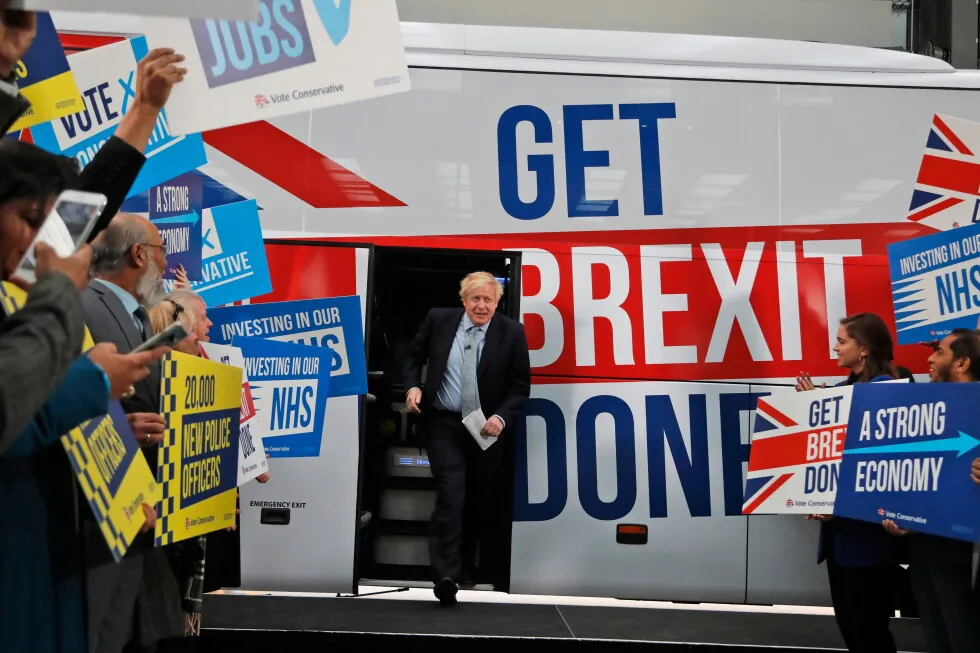
Associated Press (AP)FIG 01
Reading time
6min
Word count
1 375words
Sources cited
1cited
Entities identified
9entities
Quality score
100%
§ 01
Briefing Summary
AI-generatedNEWSAR · AI
Ten years after the UK voted to leave the European Union in a 2016 referendum, Brexit continues to divide the nation. The decision, driven by frustrations with the EU and the 2008 financial crisis, promised economic revitalization and domestic focus for the UK. However, a decade later, the British economy is estimated to be 4-8% smaller than it would have been if the UK had remained in the EU, with significant non-tariff barriers impacting trade with the EU. While free movement between the UK and EU ended, net migration from non-EU countries has increased, though overall net migration has fallen sharply. Public opinion polls now indicate a majority would like to rejoin the EU and believe Brexit is going worse than expected. The political landscape has fractured, with declining support for traditional parties and a growing sentiment that Brexit has failed.
Confidence 0.90Sources 1Claims 5Entities 9
§ 02
Article analysis
Model · rule-basedFraming
Economic Impact
Political Strategy
Tone
Measured
AI-assessed
CalmNeutralAlarmist
Factuality
0.70 / 1.00
Factual
LowHigh
Sources cited
1
Limited
FewMany
§ 03
Key claims
5 extracted01
Brexit became a reality on June 23, 2016, when 52% of voters chose to leave the EU.
statistic
Confidence
1.00
02
Many touted trade deals, like one with the United States, have not materialized.
factual
Confidence
0.90
03
Experts estimate the British economy is 4% to 8% smaller than if the UK had remained in the EU.
statisticExperts
Confidence
0.90
04
Merchants complain about hurdles when trading with European neighbors.
factual
Confidence
0.90
05
The British economy has not been revitalized since Brexit.
factual
Confidence
0.90
§ 04
Full report
6 min read · 1 375 words§ 05
Entities
9 identifiedKey playerOppositionContextPositiveNeutralNegative
Organizations1
Locations5
§ 06
Keywords & salience
9 termsbrexit
1.00
united kingdom
0.90
european union
0.90
economic disruption
0.80
political identities
0.70
domestic priorities
0.60
global financial crisis
0.50
trading partner
0.50
non-tariff barriers
0.40
§ 07
Topic connections
Interactive graph Network visualization showing 51 related topics
View Full Graph Person Organization Location Event|Click node to navigate|Edge numbers = shared articles