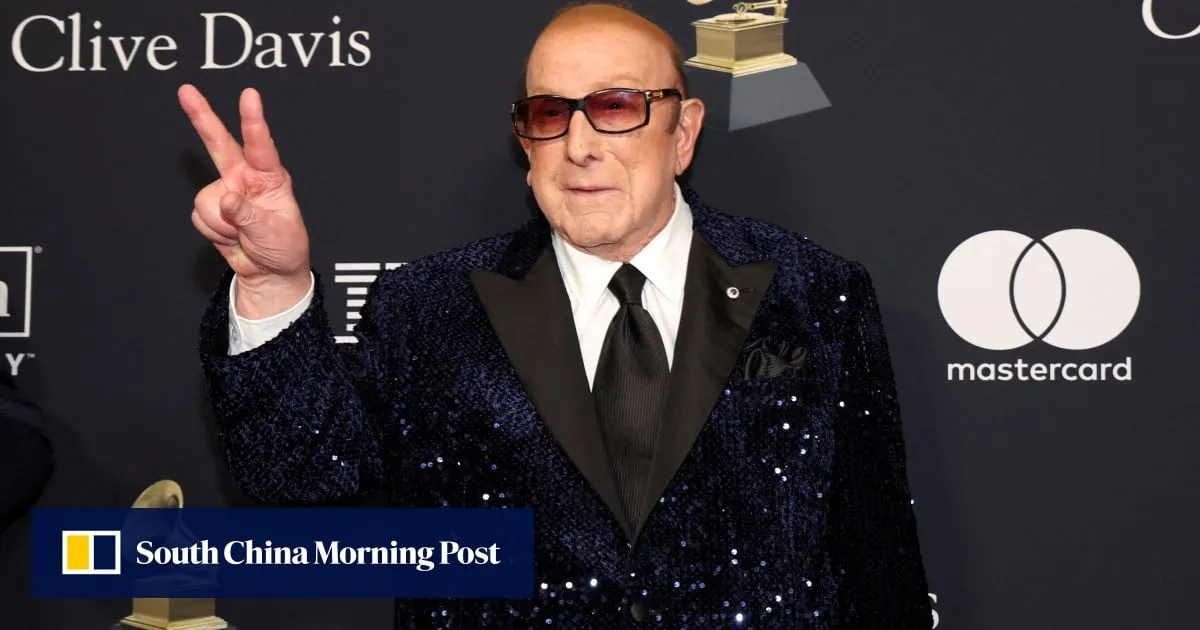
Clive Davis, a former corporate lawyer who became one of the most influential figures in American rock and pop music as he fostered the careers of Bob Dylan, Whitney Houston, Janis Joplin, Aretha Franklin, Bruce Springsteen and other stars, died on Monday at the age of 94, The New York Times reported, citing his family.Davis, who was known as “the man with the golden ear” for his ability to identify potential hit songs, died at his home in Manhattan, the daily reported, having recently been hospitalised with respiratory problems.As an incomparable hitmaker, Davis was highly adaptable and could span genres and generations, even as he hit his 80s. For every Janis Joplin he discovered in 1960s rock, there was a Sean “Diddy” Combs he mentored in hip-hop in the 1990s and a Kelly Clarkson he guided in pop in the 2000s.Davis won four Grammys for producing works by Clarkson, Carlos Santana and Jennifer Hudson, and a fifth for his contributions to music. He could even revive careers, as he did for Santana with an album that won nine Grammys in 2000, in addition to fostering comebacks by Rod Stewart, Aretha Franklin and Dionne Warwick.Davis was born in the New York borough of Brooklyn on April 4, 1932. As a boy, he said he listened to the radio but had no overwhelming affinity for music and did not even collect records like his friends.After graduating from New York University and Harvard Law School, Davis worked at private law firms before joining the legal department at Columbia Records, a branch of CBS, in the early 1960s. He made his first mark there by putting together a case that kept Dylan at the label when his handlers had tried to void his contract with the label.In 1966 Davis was named head of the record label, which until then had been largely ignoring the growing rock-oriented market with only a few acts such as Dylan, Simon and Garfunkel and the Byrds aimed at the youth audience.In his new position Davis helped change the sound of American music. Record producer Lou Adler took Davis to the Monterey Pop Festival in California in 1967, which Davis would come to consider “the creative turning point in my life”. Mesmerised by Joplin’s performance at the festival, he signed her and her band, Big Brother and the Holding Company.In the following years he would build the Columbia roster by signing Chicago, Aerosmith, Pink Floyd, Blood, Sweat and Tears, Springsteen, Santana, Billy Joel, Sly and the Family Stone and Boz Scaggs – all of whom became superstar acts.From left, musician Alicia Keys, Davis and singer Whitney Houston at the Beverly Hilton Hotel in California in February 2008. Photo: Getty Images / TNSDavis was a hands-on executive, taking a major role in the marketing of Columbia’s performers, working as a producer in the studio and giving input on song selection. When he suggested that Springsteen’s Greetings From Asbury Park, N.J. album needed a radio hit, Springsteen came up with “Spirit in the Night” and “Blinded by the Light”, which would become staples of his act.Further Reading“Talent comes to me because they believe I’ve established a creative haven in which they can flourish,” Davis said in an interview with Newsweek. “And talent attracts talent.”Davis enjoyed the attention that his success brought him and conceded that it inflated his ego. According to a running joke in the music world, Davis thought that CDs took their name from his initials.By 1973, CBS’s record division was on the verge of scandal amid its success. According to the book Hit Men: Power Brokers and Fast Money Inside the Music Business, there were reports of prostitutes at company meetings, payoffs to get records played on the radio and a Davis underling who was linked to fraud with a heroin smuggler.Davis was under scrutiny regarding use of corporate money to pay for his son’s bar mitzvah.CBS eventually fired Davis that year and filed a US$94,000 expense-account-related suit that would be settled out of court. Davis later pleaded guilty to failure to pay taxes on job-related expenses and was fined US$10,000.Davis was not down for long. By 1974, he found backing for his own record label, which he named Arista. Among the first signees was Barry Manilow, who gave Davis a string of hits.At Arista, Davis specialised in taking acts such as Franklin, Warwick, Lou Reed and the Kinks that had faded after initial success and returning them to stardom. The revived acts and new talent brought in great revenues, Grammys and stacks of gold records for Arista.Carlos Santana, left, and Davis pose with their Grammys at the 42nd Grammy Awards in Los Angeles in February 2000. Photo: APNot all of his moves were profit-driven. Davis signed Patti Smith, known as the godmother of punk rock, even though her commercial appeal was limited.Davis’ best move at Arista was discovering a teenage Whitney Houston in 1983 and guiding her career to record-breaking heights with a string of No 1 hits. He took a hands-on producer role with Houston’s single “I Will Always Love You” – from her film with Kevin Costner, The Bodyguard. It set a record by holding the top chart spot for 14 weeks and becoming one of the biggest-selling commercial singles of all time.Despite his roaring success, in 2000 Arista’s parent company, BMG Entertainment, ousted Davis, who was undeterred and started J Records. His biggest successes at J were with Alicia Keys, Luther Vandross and the American Songbook series of 1930s and 1940s pop standards that revived Stewart’s career.J Records went out of existence after a series of corporate mergers and in 2008 Davis was named chief creative officer of Sony Music Entertainment.In his 2013 memoir, “The Soundtrack of My Life,” Davis, who was married and divorced twice and had four children, revealed that he was bisexual. He said he had a 13-year relationship with a male doctor and was at the time in a long-term one with another man.
SRCSouth China Morning Post
LANGEN
LEANCenter-Right
WORDS993
ENT12
MON · 2026-06-22 · 17:24 GMTBRIEF NSR-2026-0622-86466
NSR-2026-0622-86466News Report·EN·Human Interest
Clive Davis, towering music executive who reshaped American sound, dies at 94
Clive Davis, a highly influential music executive known for his ability to discover and foster talent, died Monday at the age of 94. Davis, often called "the man with the golden ear," played a pivotal role in shaping American rock and pop music by championing artists such as Bob Dylan, Janis Joplin, Bruce Springsteen, and Whitney Houston.
ReutersSouth China Morning PostFiled 2026-06-22 · 17:24 GMTLean · Center-RightRead · 4 min
South China Morning PostFIG 01
Reading time
4min
Word count
993words
Sources cited
1cited
Entities identified
12entities
Quality score
100%
§ 01
Briefing Summary
AI-generatedNEWSAR · AI
Clive Davis, a highly influential music executive known for his ability to discover and foster talent, died Monday at the age of 94. Davis, often called "the man with the golden ear," played a pivotal role in shaping American rock and pop music by championing artists such as Bob Dylan, Janis Joplin, Bruce Springsteen, and Whitney Houston. After beginning his career in law, he transitioned to the music industry, leading Columbia Records and later founding Arista Records. At both labels, Davis was instrumental in launching new careers and reviving established ones across various genres. His career spanned decades, demonstrating adaptability and a consistent talent for identifying hit songs and artists, earning him multiple Grammy Awards.
Confidence 0.90Sources 1Claims 5Entities 12
§ 02
Article analysis
Model · rule-basedFraming
Human Interest
Tone
Measured
AI-assessed
CalmNeutralAlarmist
Factuality
0.80 / 1.00
Factual
LowHigh
Sources cited
1
Limited
FewMany
§ 03
Key claims
5 extracted01
Davis helped change the sound of American music after being named head of Columbia Records in 1966.
factual
Confidence
1.00
02
Davis won four Grammys for producing works by Clarkson, Santana, and Hudson, and a fifth for his contributions to music.
statistic
Confidence
1.00
03
Davis was known as 'the man with the golden ear' for his ability to identify potential hit songs.
factual
Confidence
1.00
04
Davis fostered the careers of numerous stars including Bob Dylan, Whitney Houston, Janis Joplin, Aretha Franklin, and Bruce Springsteen.
factual
Confidence
1.00
05
Clive Davis, a towering music executive who reshaped American sound, died at 94.
factualThe New York Times
Confidence
1.00
§ 04
Full report
4 min read · 993 words§ 05
Entities
12 identifiedKey playerOppositionContextPositiveNeutralNegative
People10
CD
Clive Davis
ExecutiveKey Player
10x
100
BD
Bob Dylan
Entertainer
2x
80
WH
Whitney Houston
Entertainer
70
BS
Bruce Springsteen
Entertainer
2x
70
AF
Aretha Franklin
Entertainer
2x
70
JJ
Janis Joplin
Entertainer
2x
70
CS
Carlos Santana
Entertainer
2x
60
KC
Kelly Clarkson
Entertainer
2x
60
S“
Sean “Diddy” Combs
Entertainer
60
JH
Jennifer Hudson
Entertainer
50
§ 06
Keywords & salience
10 termsclive davis
1.00
music executive
1.00
american sound
0.90
hitmaker
0.80
record label
0.70
music industry
0.60
career development
0.60
grammys
0.50
rock music
0.40
pop music
0.40
§ 07
Topic connections
Interactive graph No topic relationship data available yet. This graph will appear once topic relationships have been computed.