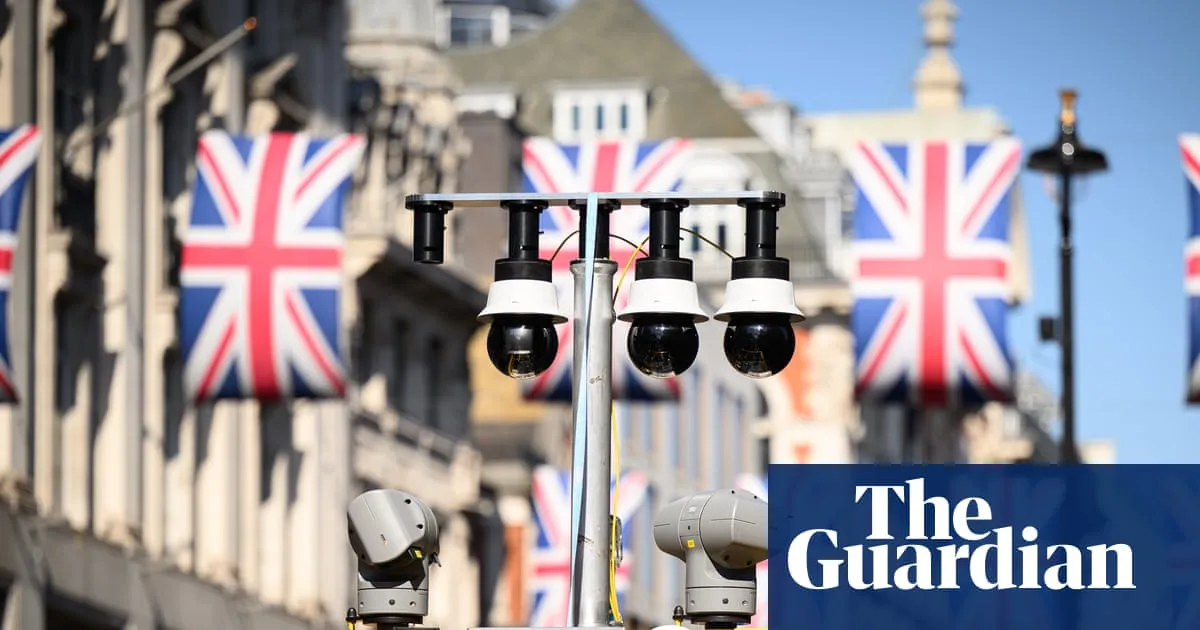
The Metropolitan police is to expand its use of live facial recognition (LFR) technology, first into London’s West End by Christmas and then into a further six areas next year.The new cameras will be fixed, and could be attached to street furniture such as lamp-posts. Critics said the new plans mean tens of thousands of people will be forced into a “digital police lineup”.LFR scans the faces of those people passing its camera’s lens, and then compares it with a watchlist of wanted suspects.The Met has been trialling the technology and using vans deployed for a short time in some areas.It also used LFR via a static camera in Croydon, south London as an experiment, which Britain’s biggest force says was a success.Later this year new static cameras will be deployed in London’s West End and Soho, which have some of the highest crime rates in the British capital.The Met says the cameras will move location as officers spot crime trends.In 2027 it plans to place static LFR cameras in six further areas, and hopes local councils will contribute to the cost.The Met insists any decision to arrest following an alert on its LFR system is made by a human being.live facial recognition is controversial because it predominantly surveils the faces of the innocent when they walk past the system’s cameras. Furthermore the algorithm used to power it can discriminate against black people.Police and government, which back its expanded use, say the civil right issues are minimal, if they exist at all. The Met has turned down the sensitivity of its algorithm and says that nearly eliminates the bias. Ministers and police believe LFR’s crime fighting potential is huge, also freeing up officer time at a time of financial strain.Met commissioner Sir Mark Rowley said: “Facial recognition is one of the most revolutionary technology advances in policing in recent years. Public confidence in this is clear – around 80% of Londoners support its use. That backing reflects a simple truth: it works.”Figures from the use of static cameras in Croydon are used by the Met to show how effective LFR is.The force says 173 arrests were made during a six-month pilot, with cameras placed at both ends of Croydon high street.The force says only one person was wrongly identified by LFR out of 470,000 faces scanned, and was allowed to go and was not arrested.Rowley said: “We want to build on our success by introducing this capability to the West End and Soho by December. The use of static cameras will help us continue cutting crime in high-footfall areas in central London.”Silkie Carlo, of Big Brother Watch, said: “Expanding the use of live facial recognition to static cameras is an alarming escalation of an intrusive technology which has already scanned the faces of millions of innocent Londoners.“Forcing people to enter a digital police lineup in the capital’s busiest and most popular destinations is an affront to the idea that you should not have to identify yourself to the police if you have done nothing wrong. To see a play, you must now pay with your privacy.”The Met said the use of LFR cameras would be advertised beforehand. It said faces that were not a match for a suspect were deleted from its system nearly instantaneously.
SRCThe Guardian - World News
LANGEN
LEANCenter-Left
WORDS545
ENT8
MON · 2026-06-22 · 23:01 GMTBRIEF NSR-2026-0623-86525
NSR-2026-0623-86525News Report·EN·Technology
Met to expand use of live facial recognition into central London by Christmas
The Metropolitan Police plans to expand its use of live facial recognition (LFR) technology, deploying fixed cameras in London's West End by Christmas and six additional areas next year. This technology scans faces and compares them to a watchlist of wanted suspects.
Vikram Dodd Police and crime correspondentThe Guardian - World NewsFiled 2026-06-22 · 23:01 GMTLean · Center-LeftRead · 3 min
The Guardian - World NewsFIG 01
Reading time
3min
Word count
545words
Sources cited
3cited
Entities identified
8entities
Quality score
100%
§ 01
Briefing Summary
AI-generatedNEWSAR · AI
The Metropolitan Police plans to expand its use of live facial recognition (LFR) technology, deploying fixed cameras in London's West End by Christmas and six additional areas next year. This technology scans faces and compares them to a watchlist of wanted suspects. Critics argue this will force tens of thousands into a "digital police lineup." The Met states that human officers make all arrest decisions and that the algorithm's sensitivity has been adjusted to reduce bias. They believe LFR is a revolutionary tool that helps cut crime and frees up officer time, citing a pilot in Croydon where 173 arrests were made. The technology will be advertised beforehand, and non-matching faces are deleted almost instantly.
Confidence 0.90Sources 3Claims 5Entities 8
§ 02
Article analysis
Model · rule-basedFraming
Technology
Legal & Judicial
Tone
Mixed Tone
AI-assessed
CalmNeutralAlarmist
Factuality
0.70 / 1.00
Factual
LowHigh
Sources cited
3
Well sourced
FewMany
§ 03
Key claims
5 extracted01
Critics argue the new plans force tens of thousands into a “digital police lineup”.
quoteCritics
Confidence
1.00
02
The Metropolitan police will expand its use of live facial recognition (LFR) technology into London’s West End by Christmas.
factualMetropolitan police
Confidence
1.00
03
During a six-month pilot in Croydon, 173 arrests were made using static cameras.
statisticMetropolitan police
Confidence
0.90
04
Met commissioner Sir Mark Rowley states that around 80% of Londoners support the use of facial recognition.
statisticSir Mark Rowley
Confidence
0.90
05
The Met claims LFR's crime fighting potential is huge and frees up officer time.
factualMetropolitan police
Confidence
0.90
§ 04
Full report
3 min read · 545 words§ 05
Entities
8 identifiedKey playerOppositionContextPositiveNeutralNegative
Organizations1
Locations5
§ 06
Keywords & salience
10 termslive facial recognition
1.00
metropolitan police
0.90
surveillance technology
0.80
crime fighting
0.70
public safety
0.60
algorithmic bias
0.50
civil liberties
0.50
police reform
0.40
technology adoption
0.40
london
0.40
§ 07
Topic connections
Interactive graph No topic relationship data available yet. This graph will appear once topic relationships have been computed.