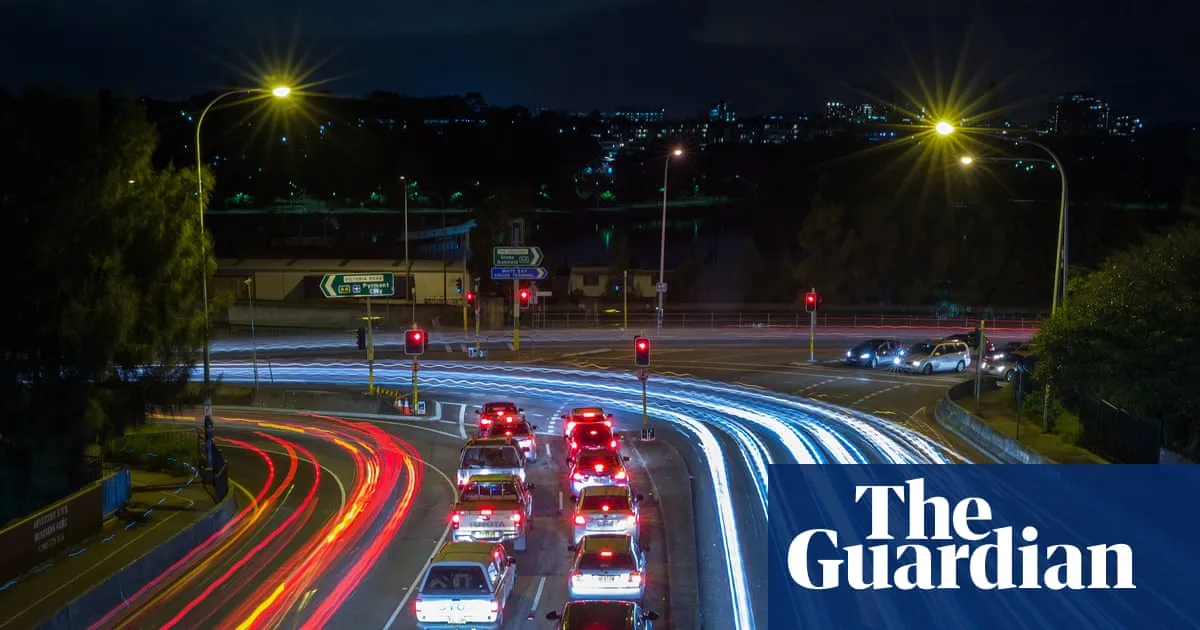
NSW will lower the threshold for a weekly road toll cap from $60 to $50 for 12 months and reduce registration by $100. Photograph: Steve Christo/Corbis/Getty Images View image in fullscreen NSW will lower the threshold for a weekly road toll cap from $60 to $50 for 12 months and reduce registration by $100. Photograph: Steve Christo/Corbis/Getty Images Public transport fee relief and car rego cut by $100 in NSW budget targeting cost-of-living pressures Australia’s most populous state forecast to plunge into worse-than-expected $2.3bn deficit in 2026-27, before rebounding to a $1.1bn surplus following year Get our breaking news email, free app or daily news podcast Public transport fares will be frozen for one year and vehicle registration cut by $100 under New South Wales budget measures designed to provide cost-of-living relief ahead of the upcoming election. In Tuesday’s budget, the last before the March 2027 state poll, the Minns government has made a direct appeal to working families in seats threatened by One Nation and the Coalition, especially in Sydney’s west. Public transport fares in the Opal system, capped at $50 a week, will be cheaper than expected, with prices to remain unchanged. They typically go up in July. The government will lower the threshold of its weekly road toll cap, beyond which drivers can claim back any additional tolls they incur, from $60 to $50 for 12 months. Drivers will be able to claim back up to $350 a week after paying $50. Australia’s most populous state is forecast to plunge into a worse-than-expected $2.3bn deficit in 2026-27, before rebounding to a $1.1bn surplus the following year, which would be the state’s first surplus since the pandemic sank state finances. NSW Labor expects the surplus to grow to $1.9bn by 2029-30. The state’s gross debt levels are forecast to breach the $200bn level by 2027-28, higher than previously expected. The NSW treasurer, Daniel Mookhey, framed the budget on Tuesday as a means to provide cost-of-living relief and create a “state working families can afford” to live in. He said the overwhelming pressure in NSW was that it was “too expensive to buy a house and too expensive to rent”. In his budget speech, Mookhey credited private investment in renewable projects for helping keep the state out of recession, contrasting Labor’s support for the energy transition with “some in this parliament [who] oppose net zero”. “One side is for creating thousands of jobs and growing the economy by reaching net zero. One side is not,” he said. View image in fullscreen The NSW treasurer Daniel Mookhey. Photograph: Blake Sharp-Wiggins/The Guardian The Liberal opposition leader, Kellie Sloane, said last year her language had “softened” in relation to her party’s commitment to net zero emissions by 2050. The Nationals voted to support “in principle” their federal counterparts’ plan to abandon the target. On Tuesday, the opposition backed cost-of-living measures including toll relief, and the $100 cut to vehicle registration, which it had advocated for ahead of the budget, but Sloane said the “temporary” measures did not go far enough at a time when household budgets were stretched. “Hope is going to be driven by a stronger economy, and there is no plan for a stronger economy.” With population growth expected at 1.1% and NSW’s economy forecast to grow by 1% in 2026-27, the opposition has claimed the state was entering a “per capita recession”. The shadow treasurer, Scott Farlow, said the budget had no “growth plan” and failed to provide tax relief for businesses, with the budget forecasting record earnings from payroll tax over the next four years. “This budget isn’t boring. This budget is bad,” he told reporters on Tuesday. The Labor government, which has resisted calls to follow Victoria in making public transport free following the oil shock from the Middle East conflict, has also ruled out new major transport projects. The modest spending measures leave room for new initiatives ahead of the March vote. The opposition, which has already backed the budget’s toll relief measures and announced its own plans for a $100 registration rebate, will probably attack the Minns government over metro spending, which will leave Metro West, and the western Sydney airport metro – both former Coalition government projects – the only under construction in the state, alongside the Sydenham to Bankstown extension. The NSW government is highly sensitive to changes in the property market, given households have the highest mortgages in the country, and property tax revenue swings wildly according to transaction volumes and prices. Recent rate hikes and a souring outlook have prompted a $8.4bn reduction in anticipated transfer duties and land tax over the four years to 2030. Part of that expected reduction has been offset by strong returns from the state’s investment vehicle, called OneFund, buoyed up by robust global markets. The state’s finances are also benefiting from higher mineral royalties, linked to strong thermal coal demand due to the Middle East conflict. The government’s cost-of-living measures are designed to avoid suggestions that it is fuelling inflation that could trigger further rate hikes. It plans to keep expense growth – one of the main indicators of whether a state is spending too much – to 2.7% over the budget years, ending in 2030. Labor wants to retain its credit rating, which affects its debt interest bill and is seen by voters as a marker of financial management. NSW holds a triple-A rating with Fitch and Moody’s and an AA+ from S&P Global. The budget includes additional funding for domestic and family violence programs, building on last year’s $1.2bn investment in child protection. Major announcements on housing were a notable absence in this year’s budget, although it will create a new facility to deliver prefabricated and modular homes. The budget contains $1.1bn in contingency funding in 2026-27 for yet-to-be finalised spending, which may include the cost of NSW’s commitment to match federal spending in the national firearm buy-back, as well as the joint bailout for the troubled Tomago aluminium smelter. Many of this year’s measures focus on western Sydney, which contains some of the marginal seats won by Labor in 2023. One Nation has said it will target those seats after its victory in the federal Farrer byelection in the state’s south, in which Labor did not run a candidate. The premier, Chris Minns, has said the party had nine months to win back voters. About $4.1bn of the government’s $9.2bn school four-year infrastructure spend will go to new schools and upgrades in the region, adding capacity for tens of thousands of students in the public system. Record spending on health infrastructure and service funding will also benefit the west. Labor’s primary vote is at 32%, with the Coalition on 26% and One Nation on 22%, according to a Sydney Morning Herald Resolve poll in May. Minns remains the preferred premier with a 38-18 lead over Sloane. Explore more on these topics New South Wales New South Wales politics news Share Reuse this content
SRCThe Guardian - World News
LANGEN
LEANCenter-Left
WORDS1 161
ENT10
TUE · 2026-06-23 · 07:50 GMTBRIEF NSR-2026-0623-86673
NSR-2026-0623-86673News Report·EN·Political Strategy
Public transport fee relief and car rego cut by $100 in NSW budget targeting cost-of-living pressures
The New South Wales government has introduced cost-of-living relief measures in its latest budget, including freezing public transport fares for one year and cutting vehicle registration by $100. The budget also lowers the weekly road toll cap threshold from $60 to $50 for 12 months.
Penry Buckley and Jonathan BarrettThe Guardian - World NewsFiled 2026-06-23 · 07:50 GMTLean · Center-LeftRead · 5 min
The Guardian - World NewsFIG 01
Reading time
5min
Word count
1 161words
Sources cited
2cited
Entities identified
10entities
Quality score
100%
§ 01
Briefing Summary
AI-generatedNEWSAR · AI
The New South Wales government has introduced cost-of-living relief measures in its latest budget, including freezing public transport fares for one year and cutting vehicle registration by $100. The budget also lowers the weekly road toll cap threshold from $60 to $50 for 12 months. These measures are aimed at supporting working families ahead of the March 2027 state election. The state is forecast to experience a $2.3 billion deficit in 2026-27 before rebounding to a surplus the following year. Opposition parties have supported some measures but argue they do not go far enough to stimulate the economy.
Confidence 0.90Sources 2Claims 5Entities 10
§ 02
Article analysis
Model · rule-basedFraming
Political Strategy
Economic Impact
Tone
Measured
AI-assessed
CalmNeutralAlarmist
Factuality
0.70 / 1.00
Factual
LowHigh
Sources cited
2
Limited
FewMany
§ 03
Key claims
5 extracted01
The NSW treasurer framed the budget as a means to provide cost-of-living relief and create a 'state working families can afford' to live in.
quoteDaniel Mookhey
Confidence
1.00
02
Public transport fares in NSW will be frozen for one year.
factual
Confidence
1.00
03
NSW will lower the threshold for a weekly road toll cap from $60 to $50 for 12 months.
factual
Confidence
1.00
04
The state's gross debt levels are forecast to breach the $200bn level by 2027-28.
statistic
Confidence
0.90
05
NSW is forecast to plunge into a $2.3bn deficit in 2026-27, before rebounding to a $1.1bn surplus the following year.
statistic
Confidence
0.90
§ 04
Full report
5 min read · 1 161 words§ 05
Entities
10 identifiedKey playerOppositionContextPositiveNeutralNegative
Organizations4
Locations1
Events1
§ 06
Keywords & salience
10 termscost-of-living pressures
1.00
public transport
0.90
vehicle registration
0.90
road toll cap
0.80
nsw budget
0.80
state deficit
0.70
election
0.60
housing affordability
0.50
state finances
0.40
energy transition
0.40
§ 07
Topic connections
Interactive graph Network visualization showing 51 related topics
View Full Graph Person Organization Location Event|Click node to navigate|Edge numbers = shared articles