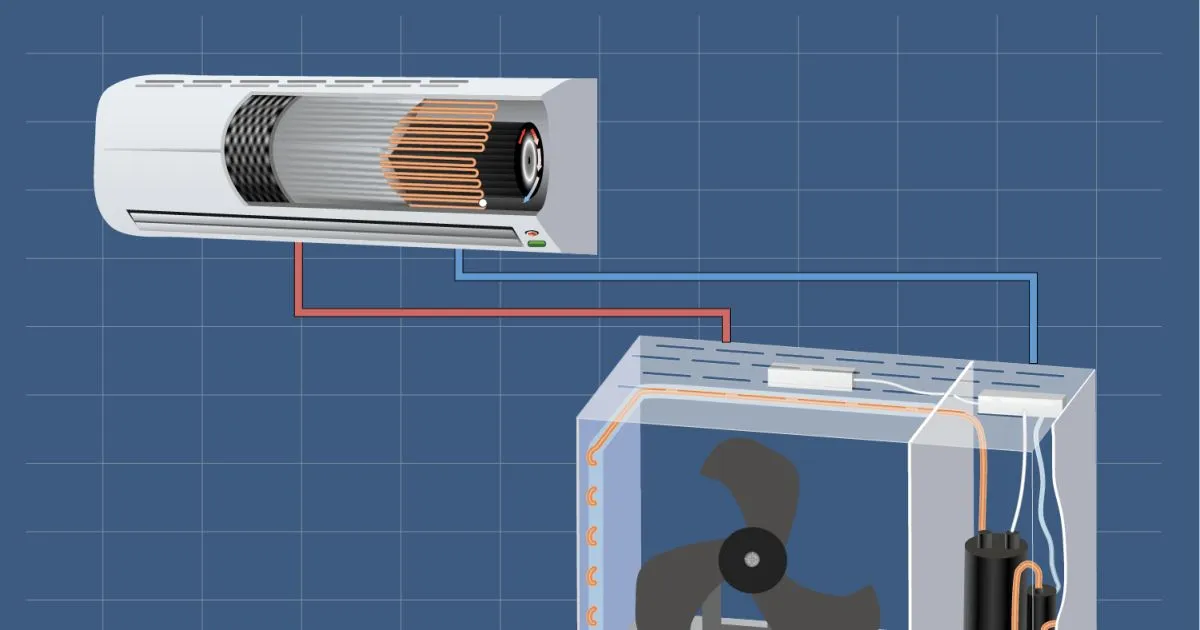
EXPLAINERWhile AC keeps us cool, it can also cause dry skin and irritation. Here are some tips to keep comfortable this summer.Summer is here and temperatures are rising across the Northern Hemisphere, where nearly 90 percent of the world’s people live. The heat is pushing people to rely on air conditioners to stay comfortable.While air conditioners provide relief from extreme heat, they also remove moisture from the air, which can cause skin dryness and irritation.In this visual explainer, Al Jazeera breaks down how air conditioners work, what they can do to your health and practical tips to protect yourself while you stay cool.How does an air conditioner work?Air conditioners work by removing heat and moisture from indoor air and releasing it outside.The process starts when the indoor unit pulls in warm air and sends it over cold evaporator coils. Inside the coils, liquid refrigerant absorbs the heat, evaporates into a gas and cools the air. A fan then blows the cooled air back into the room.The now-warm refrigerant gas travels to an outdoor unit, which releases the heat through a condenser coil that turns it back into a liquid.The liquid refrigerant returns indoors to repeat the cycle.(Al Jazeera)When was AC invented?The invention of modern air conditioning is generally credited to the American engineer Willis Carrier, who in 1902 designed a humidity-control system for a New York printing plant using chilled coils.Window-mounted units followed in 1931, and after World War II, mass production brought AC into homes and offices.An air conditioner is mounted in the window of an office, circa 1955 [File: Lambert/Getty Images]By the 1990s, growing environmental concerns led to the phaseout of ozone-depleting chlorofluorocarbons, or CFCs, in favour of hydrofluorocarbons (HFCs).
SRCAl Jazeera
LANGEN
LEANCenter
WORDS282
ENT9
TUE · 2026-06-23 · 11:07 GMTBRIEF NSR-2026-0623-86698
NSR-2026-0623-86698News Report·EN·Technology
How does air conditioning work, and how does it affect your body?
Air conditioners work by removing heat and moisture from indoor air and releasing it outside through a cycle involving refrigerant and coils. This process, credited to American engineer Willis Carrier in 1902, cools the air but can also lead to skin dryness and irritation by reducing humidity.
Marium AliAl JazeeraFiled 2026-06-23 · 11:07 GMTLean · CenterRead · 2 min
Al JazeeraFIG 01
Reading time
2min
Word count
282words
Sources cited
1cited
Entities identified
9entities
Quality score
100%
§ 01
Briefing Summary
AI-generatedNEWSAR · AI
Air conditioners work by removing heat and moisture from indoor air and releasing it outside through a cycle involving refrigerant and coils. This process, credited to American engineer Willis Carrier in 1902, cools the air but can also lead to skin dryness and irritation by reducing humidity. While providing relief from rising summer temperatures, AC's impact on health is a consideration. Modern AC units have evolved from early humidity-control systems to widespread home and office use, with environmental concerns prompting shifts in refrigerants over time.
Confidence 0.90Sources 1Claims 5Entities 9
§ 02
Article analysis
Model · rule-basedFraming
Technology
Public Health
Tone
Measured
AI-assessed
CalmNeutralAlarmist
Factuality
0.80 / 1.00
Factual
LowHigh
Sources cited
1
Limited
FewMany
§ 03
Key claims
5 extracted01
Growing environmental concerns led to the phaseout of ozone-depleting CFCs in favor of HFCs by the 1990s.
factual
Confidence
1.00
02
Nearly 90 percent of the world's people live in the Northern Hemisphere.
factual
Confidence
1.00
03
Air conditioners can cause skin dryness and irritation by removing moisture from the air.
factual
Confidence
1.00
04
The invention of modern air conditioning is generally credited to American engineer Willis Carrier in 1902.
factual
Confidence
1.00
05
Air conditioners work by removing heat and moisture from indoor air and releasing it outside.
factual
Confidence
1.00
§ 04
Full report
2 min read · 282 words§ 05
Entities
9 identifiedKey playerOppositionContextPositiveNeutralNegative
Organizations1
§ 06
Keywords & salience
8 termsair conditioning
1.00
how it works
0.90
health effects
0.80
skin dryness
0.70
refrigerant
0.60
summer heat
0.50
willis carrier
0.40
environmental concerns
0.40
§ 07
Topic connections
Interactive graph Network visualization showing 8 related topics
View Full Graph Person Organization Location Event|Click node to navigate|Edge numbers = shared articles