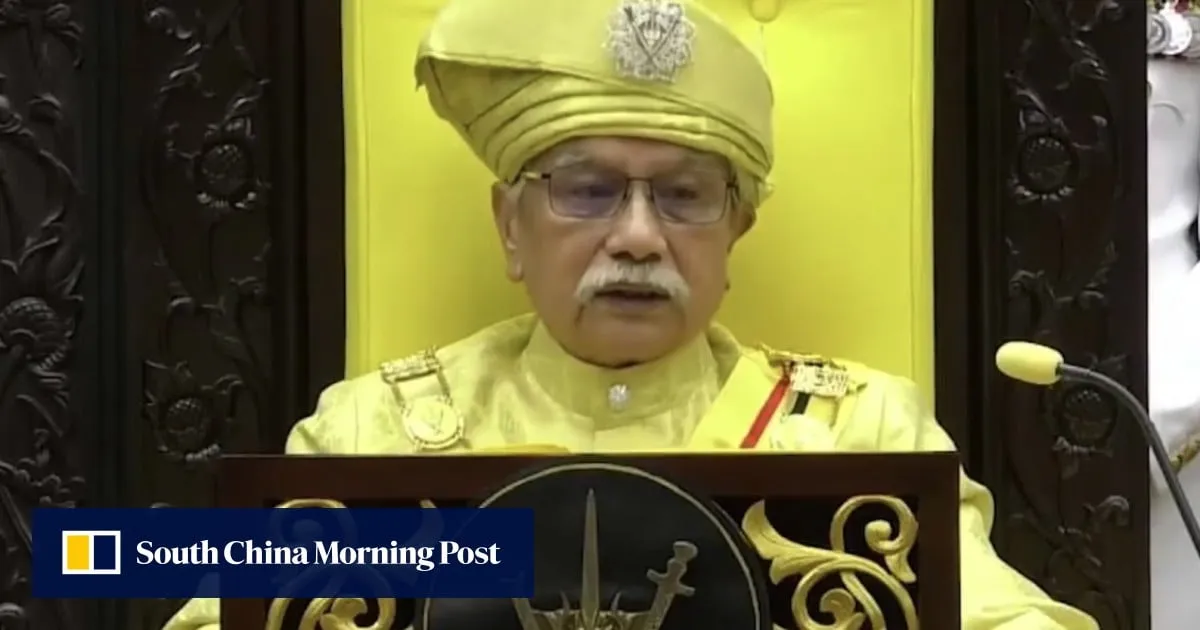
Malaysia’s rare postponement of a meeting of its royal council has pushed a throne dispute in the state of Negeri Sembilan beyond palace walls, threatening to turn a customary succession row into an electoral liability for Prime Minister Anwar Ibrahim’s uneasy governing alliance ahead of snap polls.The June 23–25 meeting of the Conference of Rulers – a council of Malaysia’s hereditary Malay rulers and state governors – was called off at the eleventh hour amid concerns that allowing Negeri Sembilan’s ruler to take part could be read as recognising one side in a contested succession.In Malaysia’s constitutional monarchy, rulers retain formal roles in state affairs and Islam, giving the question of who sits on the royal council practical as well as symbolic weight.
SRCSouth China Morning Post
LANGEN
LEANCenter-Right
WORDS123
ENT7
TUE · 2026-06-23 · 11:57 GMTBRIEF NSR-2026-0623-86716
NSR-2026-0623-86716News Report·EN·Political Strategy
Royal succession crisis strains Malaysia’s governing alliance ahead of polls
Malaysia's Conference of Rulers, a council of hereditary Malay rulers and state governors, postponed its June 23-25 meeting due to a succession dispute in the state of Negeri Sembilan. The postponement occurred at the last minute because allowing the Negeri Sembilan ruler to participate could be interpreted as recognizing one claimant in the contested succession.
Ushar DanieleSouth China Morning PostFiled 2026-06-23 · 11:57 GMTLean · Center-RightRead · 1 min
South China Morning PostFIG 01
Reading time
1min
Word count
123words
Sources cited
0cited
Entities identified
7entities
Quality score
100%
§ 01
Briefing Summary
AI-generatedNEWSAR · AI
Malaysia's Conference of Rulers, a council of hereditary Malay rulers and state governors, postponed its June 23-25 meeting due to a succession dispute in the state of Negeri Sembilan. The postponement occurred at the last minute because allowing the Negeri Sembilan ruler to participate could be interpreted as recognizing one claimant in the contested succession. This throne dispute, typically a customary row, is now a potential electoral liability for Prime Minister Anwar Ibrahim's governing alliance as snap polls approach. In Malaysia's constitutional monarchy, these rulers hold formal roles in state affairs and Islam, making the succession question significant both practically and symbolically.
Confidence 0.85Claims 4Entities 7
§ 02
Article analysis
Model · rule-basedFraming
Political Strategy
Legal & Judicial
Tone
Measured
AI-assessed
CalmNeutralAlarmist
Factuality
0.80 / 1.00
Factual
LowHigh
Sources cited
0
No named sources
FewMany
§ 03
Key claims
4 extracted01
In Malaysia’s constitutional monarchy, rulers retain formal roles in state affairs and Islam, giving the question of who sits on the royal council practical as well as symbolic weight.
factual
Confidence
0.95
02
The June 23–25 meeting of the Conference of Rulers was called off at the eleventh hour amid concerns that allowing Negeri Sembilan’s ruler to take part could be read as recognising one side in a contested succession.
factual
Confidence
0.90
03
Malaysia’s rare postponement of a meeting of its royal council has pushed a throne dispute in the state of Negeri Sembilan beyond palace walls.
factual
Confidence
0.90
04
The succession row threatens to turn into an electoral liability for Prime Minister Anwar Ibrahim’s uneasy governing alliance ahead of snap polls.
prediction
Confidence
0.70
§ 04
Full report
1 min read · 123 words§ 05
Entities
7 identifiedKey playerOppositionContextPositiveNeutralNegative
§ 06
Keywords & salience
9 termsroyal succession
1.00
malaysia
0.90
governing alliance
0.80
negeri sembilan
0.70
conference of rulers
0.70
constitutional monarchy
0.60
snap polls
0.50
electoral liability
0.50
prime minister anwar ibrahim
0.40
§ 07
Topic connections
Interactive graph Network visualization showing 51 related topics
View Full Graph Person Organization Location Event|Click node to navigate|Edge numbers = shared articles