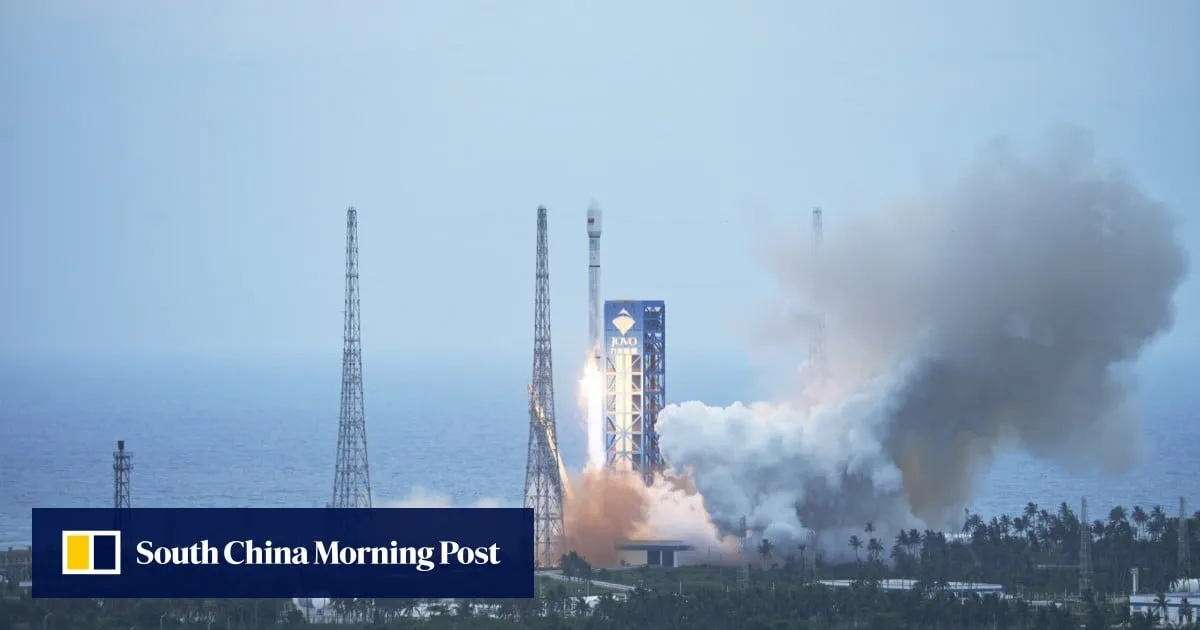
A Chinese Long March-12 rocket launched last week used a new super fuel that boosted the rocket’s payload capacity by 10 per cent, according to its developer.Instead of designing bigger, more expensive airframes, The Beijing Aerospace Test Technology Research Institute, a subsidiary of the China-aerospace-science-and-technology-corporation" class="entity-link entity-organization" data-entity-id="151125" data-entity-type="organization">China Aerospace Science and Technology Corporation (CASC), has been working on ways to maximise the energy density of the fuel used.Most rocket launches today use liquid oxygen-kerosene (kerolox) engines, but the fuel mixture they have traditionally used – based on refined petroleum – has now reached its performance limits.Instead, researchers have developed a new “high-energy synthetic kerosene” to fire the engines.The CASC said last week that this boosted the engine’s specific impulse – a measure of engine efficiency, similar to fuel economy in cars – by around eight seconds.
SRCSouth China Morning Post
LANGEN
LEANCenter-Right
WORDS133
ENT6
TUE · 2026-06-23 · 11:00 GMTBRIEF NSR-2026-0623-86718
NSR-2026-0623-86718News Report·EN·Technology
China’s new ‘super fuel’ could help Long March rockets increase payload by 10%
China's Long March-12 rocket recently utilized a new "high-energy synthetic kerosene" fuel, according to its developer, the Beijing Aerospace Test Technology Research Institute, a subsidiary of the China Aerospace Science and Technology Corporation (CASC). This innovative fuel, which replaces traditional liquid oxygen-kerosene, has increased the rocket's payload capacity by 10 percent.
Zhang TongSouth China Morning PostFiled 2026-06-23 · 11:00 GMTLean · Center-RightRead · 1 min
South China Morning PostFIG 01
Reading time
1min
Word count
133words
Sources cited
1cited
Entities identified
6entities
Quality score
100%
§ 01
Briefing Summary
AI-generatedNEWSAR · AI
China's Long March-12 rocket recently utilized a new "high-energy synthetic kerosene" fuel, according to its developer, the Beijing Aerospace Test Technology Research Institute, a subsidiary of the China Aerospace Science and Technology Corporation (CASC). This innovative fuel, which replaces traditional liquid oxygen-kerosene, has increased the rocket's payload capacity by 10 percent. The new fuel also boosted the engine's specific impulse, a measure of efficiency, by approximately eight seconds. This development addresses the growing demand for larger payloads for China's ambitious space missions, including lunar exploration and commercial satellite deployment, by enhancing fuel performance rather than requiring larger rocket airframes.
Confidence 0.85Sources 1Claims 4Entities 6
§ 02
Article analysis
Model · rule-basedFraming
Technology
National Security
Tone
Measured
AI-assessed
CalmNeutralAlarmist
Factuality
0.80 / 1.00
Factual
LowHigh
Sources cited
1
Limited
FewMany
§ 03
Key claims
4 extracted01
The new fuel is a 'high-energy synthetic kerosene'.
factualresearchers
Confidence
0.95
02
The new fuel boosted engine specific impulse by approximately eight seconds.
statisticCASC
Confidence
0.90
03
A Long March-12 rocket launched using a new super fuel increased payload capacity by 10%.
statisticdeveloper
Confidence
0.90
04
Traditional kerolox fuel mixtures have reached their performance limits.
factualarticle
Confidence
0.85
§ 04
Full report
1 min read · 133 words§ 05
Entities
6 identifiedKey playerOppositionContextPositiveNeutralNegative
Organizations2
Locations1
§ 06
Keywords & salience
9 termssuper fuel
1.00
long march rockets
0.90
payload capacity
0.80
high-energy synthetic kerosene
0.80
specific impulse
0.70
rocket engines
0.70
energy density
0.60
china aerospace science and technology corporation
0.50
liquid oxygen-kerosene
0.40
§ 07
Topic connections
Interactive graph Network visualization showing 51 related topics
View Full Graph Person Organization Location Event|Click node to navigate|Edge numbers = shared articles