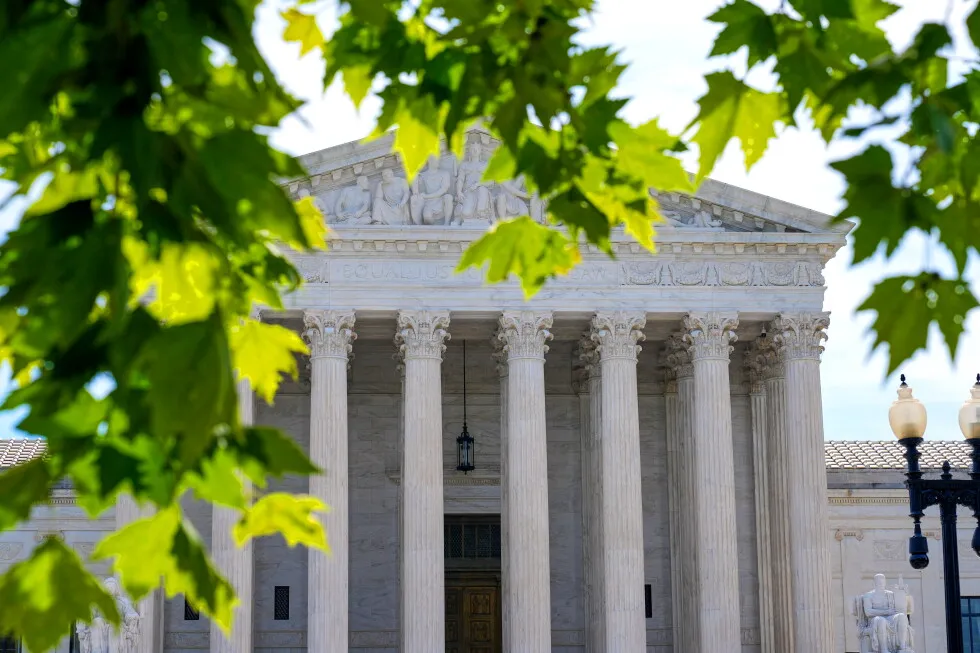
The U.S. Supreme Court is seen, June 5, 2026, in Washington. (AP Photo/Mariam Zuhaib, File) Updated [hour]:[minute] [AMPM] [timezone], [monthFull] [day], [year] WASHINGTON (AP) — The Supreme Court on Tuesday barred a former Louisiana inmate from suing prison officials who cut off his dreadlocks in violation of his Rastafari religious beliefs.The justices condemned what happened to the former inmate, Damon Landor. But they ruled that a federal law designed to protect the religious rights of inmates does not permit lawsuits for money damages against individuals even when rights are violated.The high court, in a 6-3 decision, agreed with lower courts that without exception had ruled that the law, the Religious Land Use and Institutionalized Persons Act, can’t be used to hold those who violate inmates’ rights financially responsible. The justices refused to apply the rationale from their decision in 2020 that allowed Muslim men to sue over their inclusion on the FBI’s no-fly list under a sister statute, the Religious Freedom Restoration Act. The Justice Department, which argued against the plaintiffs in the no-fly list case in President Donald Trump’s first Republican administration, had sided with Landor.Nothing in the law dealing with prisoners’ religious rights authorizes lawsuits against individual officers, Justice Neil Gorsuch wrote for the court. 3 MIN READ 2 MIN READ 1 MIN READ In a dissent, Justice Ketanji Brown Jackson wrote that state prison officials will have little incentive to abide by federal law. “It is not often that a real-life incident so clearly illustrates Congress’s reasons for adopting legislation, or the Constitution’s wisdom in enabling it,” Jackson wrote in an opinion that was joined by her two liberal colleagues. No one defended what happened to Landor during his five-month prison term in 2020. When he entered the prison system, he carried a copy of an appeals court ruling in another inmate’s case holding that cutting religious prisoners’ dreadlocks violated the federal law.At his first two stops, officials respected his beliefs. But things changed when he got to the Raymond Laborde Correctional Center in Cottonport, about 80 miles (130 kilometers) northwest of Baton Rouge, for the final three weeks of his term. A prison guard took the copy of the ruling Landor carried and tossed it in the trash, according to court records. Then the warden ordered guards to cut his dreadlocks. While two guards restrained him, a third shaved his head to the scalp, the records show. Landor sued after his release, but lower courts dismissed the case. The 5th U.S. Circuit Court of Appeals lamented Landor’s treatment but said the law doesn’t allow him to hold prison officials liable for damages.Louisiana wrote that “the state has amended its prison grooming policy to ensure that nothing like petitioner’s alleged experience can occur.”The Rastafari faith is rooted in 1930s Jamaica, growing as a response by Black people to white colonial oppression. Its beliefs are a melding of Old Testament teachings and a desire to return to Africa. Its message was spread across the world in the 1970s by Jamaican music icons Bob Marley and Peter Tosh, two of the faith’s most famous exponents.___Follow the AP’s coverage of the U.S. Supreme Court at https://apnews.com/hub/us-supreme-court. Sherman has covered the Supreme Court for The Associated Press since 2006. His journalism career spans five decades. He is based in Washington, D.C., and previously lived in New York, Paris and Atlanta.
SRCAssociated Press (AP)
LANGEN
LEANCenter
WORDS559
ENT12
TUE · 2026-06-23 · 14:53 GMTBRIEF NSR-2026-0623-86758
NSR-2026-0623-86758News Report·EN·Legal & Judicial
Supreme Court rules Rastafari man can’t sue Louisiana prison officials who cut his dreadlocks
The Supreme Court has ruled that a former Louisiana inmate, Damon Landor, cannot sue prison officials who cut his dreadlocks in violation of his Rastafari religious beliefs. While the justices acknowledged the inmate's mistreatment, they determined that the Religious Land Use and Institutionalized Persons Act does not permit lawsuits for monetary damages against individuals for violating inmates' religious rights.
By
MARK SHERMANAssociated Press (AP)Filed 2026-06-23 · 14:53 GMTLean · CenterRead · 3 min
Associated Press (AP)FIG 01
Reading time
3min
Word count
559words
Sources cited
3cited
Entities identified
12entities
Quality score
100%
§ 01
Briefing Summary
AI-generatedNEWSAR · AI
The Supreme Court has ruled that a former Louisiana inmate, Damon Landor, cannot sue prison officials who cut his dreadlocks in violation of his Rastafari religious beliefs. While the justices acknowledged the inmate's mistreatment, they determined that the Religious Land Use and Institutionalized Persons Act does not permit lawsuits for monetary damages against individuals for violating inmates' religious rights. This decision upholds lower court rulings that found the law cannot be used to hold those who violate inmates' rights financially responsible. The court declined to apply a previous ruling that allowed lawsuits under a similar statute. Justice Ketanji Brown Jackson dissented, arguing that this ruling provides little incentive for prison officials to comply with federal law. Louisiana has since amended its prison grooming policy.
Confidence 0.90Sources 3Claims 5Entities 12
§ 02
Article analysis
Model · rule-basedFraming
Legal & Judicial
Human Rights
Tone
Measured
AI-assessed
CalmNeutralAlarmist
Factuality
0.90 / 1.00
Factual
LowHigh
Sources cited
3
Well sourced
FewMany
§ 03
Key claims
5 extracted01
Louisiana has amended its prison grooming policy to prevent similar incidents from occurring.
factualLouisiana
Confidence
1.00
02
A prison guard destroyed a copy of a ruling protecting religious prisoners' dreadlocks, and the warden ordered guards to cut the inmate's dreadlocks.
factual
Confidence
1.00
03
Justice Ketanji Brown Jackson argued in dissent that state prison officials will have little incentive to abide by federal law.
quoteJustice Ketanji Brown Jackson
Confidence
1.00
04
The Supreme Court ruled 6-3 that the Religious Land Use and Institutionalized Persons Act cannot be used to hold individuals financially responsible for violating inmates' rights.
factual
Confidence
1.00
05
Supreme Court barred a former inmate from suing prison officials who cut his dreadlocks in violation of his Rastafari beliefs.
factual
Confidence
1.00
§ 04
Full report
3 min read · 559 words§ 05
Entities
12 identifiedKey playerOppositionContextPositiveNeutralNegative
People4
Locations4
§ 06
Keywords & salience
9 termssupreme court
1.00
religious freedom
1.00
rastafari
0.90
prison officials
0.80
dreadlocks
0.80
religious land use and institutionalized persons act
0.70
inmate rights
0.60
lawsuit
0.50
money damages
0.40
§ 07
Topic connections
Interactive graph No topic relationship data available yet. This graph will appear once topic relationships have been computed.