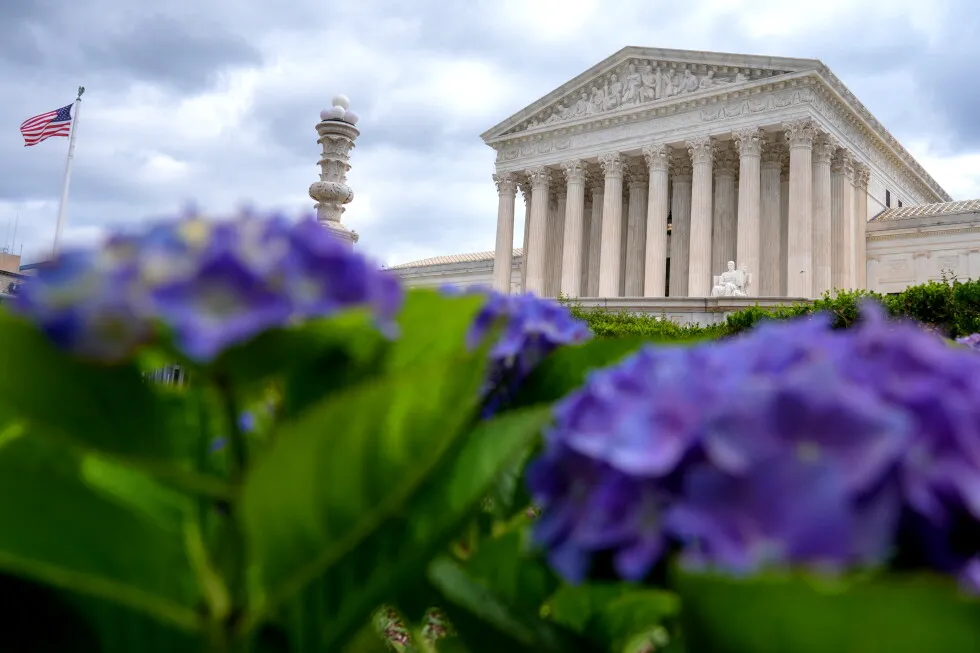
The U.S. Supreme Court is photographed, June 8, 2026, in Washington. (AP Photo/Mariam Zuhaib, File) Updated [hour]:[minute] [AMPM] [timezone], [monthFull] [day], [year] WASHINGTON (AP) — The Supreme Court on Tuesday ruled that Exxon Mobil can sue Cuban state-owned companies in American courts over property on the island nation that was seized after Fidel Castro took power.The 6-3 decision was the second in as many months in favor of U.S. owners of Cuban property that was confiscated by the Communist government more than 65 years ago.The outcome in the two cases could be an additional lever for the Trump administration to exert pressure on Cuba, which is already being squeezed by a U.S. oil embargo. At issue was whether the 1996 law known as Helms-Burton removes the shield from lawsuits in U.S. courts that typically cover foreign countries and state-owned businesses. The justices reversed a lower-court ruling that found that the Cuban state-owned companies are immune from lawsuits in U.S. courts. Exxon Mobil is seeking compensation for the confiscation of assets owned by subsidiaries of Standard Oil, Exxon Mobil’s predecessor, including more than 100 service stations and an oil refinery.Last month, the court ruled in another case involving confiscated property in Cuba, reviving claims by the U.S. company that operated docks in Havana against four cruise lines that brought tourists to Cuba during the brief thaw in relations during the Obama administration. That case turned on the same section of Helms-Burton allowing lawsuits over seized property. 2 MIN READ 3 MIN READ 3 MIN READ Congress passed the law in response to the 1996 downing of civilian planes flown by Miami-based exiles. Title III of the law allows Americans to sue almost any company that engages in commercial activity or benefits from property confiscated by Cuba’s government.Before the first Trump administration, every president had suspended the provision because of objections from U.S. allies doing business in Cuba and the effect on future negotiated settlements between the U.S. and Cuba. But Trump lifted the suspension in 2019, and Exxon Mobil filed its lawsuit the same day.Justice Brett Kavanaugh wrote for the conservative majority that it “would make little sense” if the law allowed the president to decide whether suits can proceed against Cuban interests while also protecting them. Justice Elena Kagan wrote in a dissent for the three liberals that the 1996 law simply contains no provision eliminating the sovereign immunity shield.The U.S. Foreign Claims Settlement Commission, an arm of the Justice Department, said in 1969 that the value of Exxon Mobil’s property in Cuba is $71.6 million, plus 6% annual interest beginning in 1960. That would be worth more than $1 billion today, Kavanaugh wrote.In addition, the commission found that nearly 6,000 individuals and businesses held claims worth $1.9 billion, before adding in interest or damages. Sherman has covered the Supreme Court for The Associated Press since 2006. His journalism career spans five decades. He is based in Washington, D.C., and previously lived in New York, Paris and Atlanta.
SRCAssociated Press (AP)
LANGEN
LEANCenter
WORDS498
ENT10
TUE · 2026-06-23 · 14:53 GMTBRIEF NSR-2026-0623-86759
NSR-2026-0623-86759News Report·EN·Legal & Judicial
Supreme Court OKs ExxonMobil lawsuit over Cuban property seized by Fidel Castro’s government
The U.S. Supreme Court has ruled 6-3 that ExxonMobil can sue Cuban state-owned companies in American courts for property seized by Fidel Castro's government over 65 years ago.
By
MARK SHERMANAssociated Press (AP)Filed 2026-06-23 · 14:53 GMTLean · CenterRead · 2 min
Associated Press (AP)FIG 01
Reading time
2min
Word count
498words
Sources cited
2cited
Entities identified
10entities
Quality score
100%
§ 01
Briefing Summary
AI-generatedNEWSAR · AI
The U.S. Supreme Court has ruled 6-3 that ExxonMobil can sue Cuban state-owned companies in American courts for property seized by Fidel Castro's government over 65 years ago. This decision, based on the 1996 Helms-Burton Act, reverses a lower court's ruling that granted immunity to Cuban state-owned companies. ExxonMobil is seeking compensation for assets, including service stations and a refinery, confiscated from its predecessor companies. This ruling follows a similar decision last month that allowed U.S. companies to sue over confiscated Cuban property. The court's decision could provide the Trump administration with an additional means to pressure Cuba, which is already subject to a U.S. oil embargo.
Confidence 0.90Sources 2Claims 5Entities 10
§ 02
Article analysis
Model · rule-basedFraming
Legal & Judicial
Economic Impact
Tone
Measured
AI-assessed
CalmNeutralAlarmist
Factuality
0.90 / 1.00
Factual
LowHigh
Sources cited
2
Limited
FewMany
§ 03
Key claims
5 extracted01
Justice Kagan argued in dissent that the law does not eliminate sovereign immunity for Cuban companies.
quoteJustice Elena Kagan
Confidence
1.00
02
Trump administration lifted the suspension of Title III of Helms-Burton in 2019, allowing such lawsuits.
factualarticle
Confidence
1.00
03
Exxon Mobil seeks compensation for assets seized from its predecessor, Standard Oil, valued at over $1 billion today.
statisticarticle
Confidence
1.00
04
The 1996 Helms-Burton law allows lawsuits against companies benefiting from confiscated Cuban property.
factualarticle
Confidence
1.00
05
Supreme Court ruled Exxon Mobil can sue Cuban state-owned companies in American courts over seized property.
factualSupreme Court
Confidence
1.00
§ 04
Full report
2 min read · 498 words§ 05
Entities
10 identifiedKey playerOppositionContextPositiveNeutralNegative
People4
Organizations3
§ 06
Keywords & salience
10 termscuban property seizure
1.00
exxonmobil lawsuit
1.00
helms-burton act
0.90
supreme court ruling
0.80
fidel castro
0.70
confiscated assets
0.60
u.s. courts
0.50
state-owned companies
0.50
trump administration
0.40
standard oil
0.40
§ 07
Topic connections
Interactive graph Network visualization showing 51 related topics
View Full Graph Person Organization Location Event|Click node to navigate|Edge numbers = shared articles