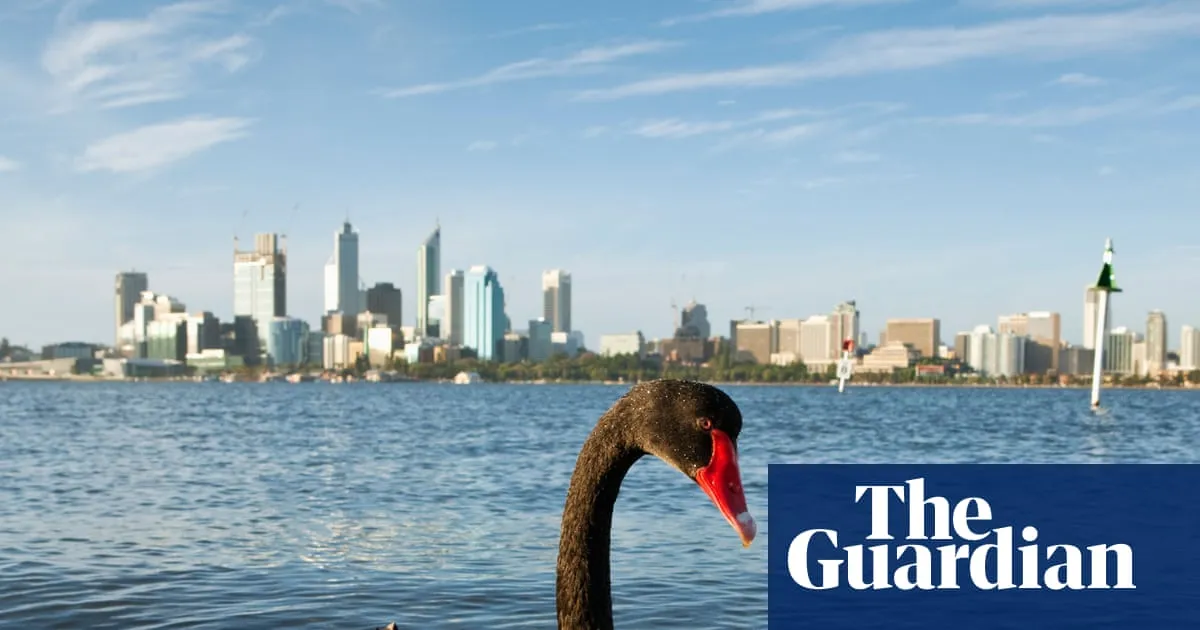
A Western Australian black swan. State and federal governments have been preparing for the likely arrival of the H5N1 bird flu strain for several years. Photograph: Travelscape Images/Alamy View image in fullscreen A Western Australian black swan. State and federal governments have been preparing for the likely arrival of the H5N1 bird flu strain for several years. Photograph: Travelscape Images/Alamy Tasmanian devils, swift parrots, black swans: the animals at risk if bird flu takes off in Australia Federal government identifies more than 150 native and unique bird species and 10 mammal species at ‘very high risk’ Get our breaking news email, free app or daily news podcast More than 150 of Australia’s native and unique bird species have been assessed as being at “very high risk” of extinction or major decline if they catch the deadly H5N1 bird flu strain, with Australia" class="entity-link entity-location" data-entity-id="706" data-entity-type="location">Western Australia’s celebrated black swans among the most susceptible. The Federal government analysis of Australia’s 800 different birds and 350 mammals reflects the high level of concern among experts about the arrival of the H5N1 strain, which has killed millions of birds and mammals around the world. Australia was the only continent free of the contagious strain until tests confirmed a brown skua and a giant petrel – found sick a few kilometres from each other on the Western Australian coastline near Esperance – both had the strain. On Tuesday, WA authorities said no new cases had been found and there was no evidence the virus had spread into other wild populations. State and federal governments have been preparing for the likely arrival of the disease for several years, including the development of 100 response plans for species and habitats and a risk analysis for Australian species. A federal environment department spokesperson said: “Many of our birds and mammals are not found anywhere else in the world, making the impacts of H5 bird flu difficult to predict.” There were more than 150 bird species unique to Australia “considered at very high risk” under the risk analysis, the spokesperson said. They included the red goshawk, fairy tern, plains-wanderer, shy albatross, black swan and western hooded plover. Migratory species like the short-tailed shearwater – famed for its 15,000km migration from the Arctic Circle to Australia – were also at very high risk. At a high risk were the swift parrot and orange-bellied parrot, both critically endangered in Australia. Chris Purnell, the wetland and migratory shorebird program manager at BirdLife Australia, advised on the analysis and said it had considered both the risk of extinction at a species level or at a regional population level. “For these endemic birds, there’s no avenue for repopulation from outside Australia. If they are gone, then they are gone.” More than 10 mammal species, including the already endangered Australian sea-lion as well as the subantarctic fur seal and the Australian fur seal, were also assessed as very high risk. Other species which “may be at high risk of H5 bird flu” included the Tasmanian devil and eastern quoll, the spokesperson said. The WA agriculture minister, Jackie Jarvis, said further testing of birds reported as sick or dead by members of the public had detected no new cases so far. Australia" class="entity-link entity-location" data-entity-id="706" data-entity-type="location">Western Australia’s famous black swans are considered highly vulnerable because they lack some of the immune genes that have helped other waterbirds combat the virus. A team of scientists published research in 2023 that sequenced the genome of the state’s bird emblem and compared its immune response with white swans. black swans lacked the necessary components to detect H5N1 and had a heightened inflammatory response when cells were infected. “What it means is it has the wrong type of immune response to the virus,” said Prof Kirsty Short from the University of Queensland and a lead author of the research. “Instead of detecting the virus and having a very controlled inflammatory response, it doesn’t detect the virus and has an out-of-control, pro-inflammatory response.” She said if the disease took hold in local wildlife populations, “we could see widespread mortalities” of the species. “They have been proposed as a sentinel species, meaning if we do see widespread mortality of black swans it’s a good indicator that there’s a lot of H5N1 incursion because they’re so susceptible,” she said. Short said “the big picture is really that our native species might be particularly at risk of severe H5N1”. “We don’t know because most of the studies have been done in northern hemisphere animals and not in our unique species. This is why we did the black swan, to do something Australian-specific.” Purnell said because black swans had many breeding populations around Australia, bird flu was “unlikely to be an extinction threat for black swans but it could have high impact and high mortality in specific localised regions”. “The highest mortalities are going to be in species that congregate together in dense groups, such as pelicans,” he said. Explore more on these topics Australia news Bird flu Birds Mammals Wildlife Australia" class="entity-link entity-location" data-entity-id="706" data-entity-type="location">Western Australia news Share Reuse this content
SRCThe Guardian - World News
LANGEN
LEANCenter-Left
WORDS837
ENT12
TUE · 2026-06-23 · 15:00 GMTBRIEF NSR-2026-0623-86768
NSR-2026-0623-86768News Report·EN·Environmental
Tasmanian devils, swift parrots, black swans: the animals at risk if bird flu takes off in Australia
Australia faces a significant risk to its native wildlife from the H5N1 bird flu strain, with a federal government analysis identifying over 150 bird species and 10 mammal species as being at "very high risk." This concern stems from the virus's global impact and its recent confirmed presence in Western Australia. Notably, Western Australian black swans are highly susceptible due to genetic immune deficiencies, potentially serving as an indicator species for widespread outbreaks.
Graham Readfearn and Lisa CoxThe Guardian - World NewsFiled 2026-06-23 · 15:00 GMTLean · Center-LeftRead · 4 min
The Guardian - World NewsFIG 01
Reading time
4min
Word count
837words
Sources cited
2cited
Entities identified
12entities
Quality score
100%
§ 01
Briefing Summary
AI-generatedNEWSAR · AI
Australia faces a significant risk to its native wildlife from the H5N1 bird flu strain, with a federal government analysis identifying over 150 bird species and 10 mammal species as being at "very high risk." This concern stems from the virus's global impact and its recent confirmed presence in Western Australia. Notably, Western Australian black swans are highly susceptible due to genetic immune deficiencies, potentially serving as an indicator species for widespread outbreaks. Other species at high risk include swift parrots, Tasmanian devils, and various seal species. Governments have been preparing response plans for several years, acknowledging the unpredictable impact on Australia's unique fauna.
Confidence 0.90Sources 2Claims 5Entities 12
§ 02
Article analysis
Model · rule-basedFraming
Environmental
Public Health
Tone
Mixed Tone
AI-assessed
CalmNeutralAlarmist
Factuality
0.80 / 1.00
Factual
LowHigh
Sources cited
2
Limited
FewMany
§ 03
Key claims
5 extracted01
Australia was the only continent free of the H5N1 strain until tests confirmed it in a brown skua and a giant petrel near Esperance, WA.
factualarticle
Confidence
0.95
02
State and federal governments have developed 100 response plans for species and habitats in preparation for H5N1.
factualfederal environment department spokesperson
Confidence
0.90
03
More than 10 mammal species, including Australian sea-lion, subantarctic fur seal, and Australian fur seal, are assessed as very high risk from H5N1.
statisticfederal government
Confidence
0.90
04
More than 150 of Australia’s native and unique bird species are at ‘very high risk’ of extinction or major decline from H5N1 bird flu.
statisticfederal government
Confidence
0.90
05
Western Australia’s black swans are among the most susceptible bird species to H5N1 bird flu.
factualarticle
Confidence
0.80
§ 04
Full report
4 min read · 837 words§ 05
Entities
12 identifiedKey playerOppositionContextPositiveNeutralNegative
§ 06
Keywords & salience
10 termsh5n1 bird flu
1.00
australian native species
0.90
species at risk
0.80
extinction risk
0.70
wildlife impact
0.60
government response
0.50
swift parrots
0.40
tasmanian devils
0.40
disease spread
0.40
black swans
0.40
§ 07
Topic connections
Interactive graph Network visualization showing 51 related topics
View Full Graph Person Organization Location Event|Click node to navigate|Edge numbers = shared articles