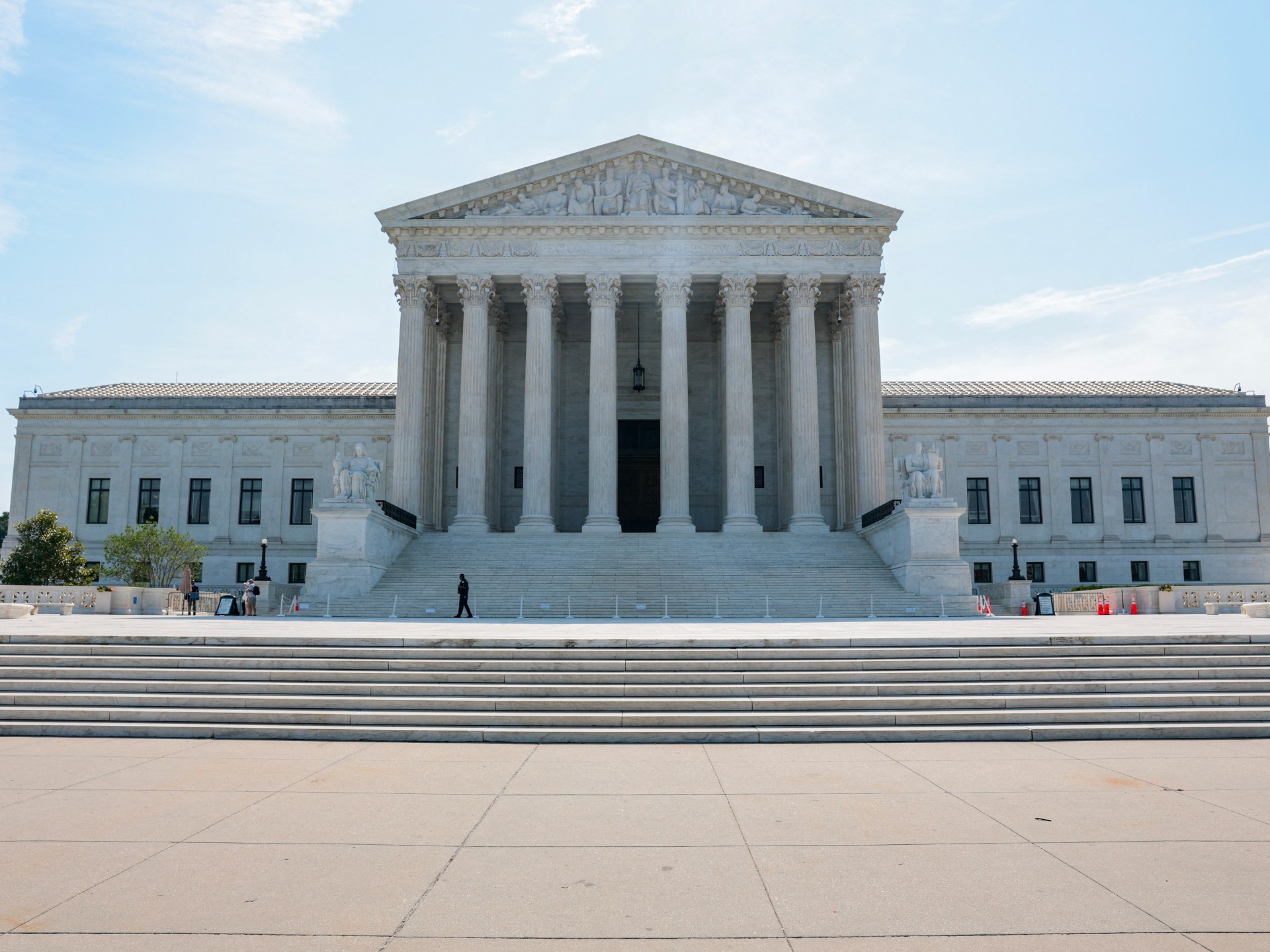
US Supreme Court backs Trump policy on green card holder rightsCourt rules 6-3 that suspicion alone justifies placing green card holders on Immigration Parole at border crossings.The United States Supreme Court has sided with the Trump administration in a case concerning the government’s power over green card holders, a blow to due-process protections for migrants with legal status.The court’s conservative majority sided with the Trump administration on Tuesday in a case involving a lawful permanent resident of the US who was placed on Immigration Parole over criminal allegations upon reentering the country after a trip abroad.Recommended Stories list of 3 itemslist 1 of 3US judge dismisses indictment against Kilmar Abrego Garcialist 2 of 3How Trump’s unchecked power has changed the worldlist 3 of 3US Supreme Court to hear constitutional test of birthright citizenshipend of listThe case centred on a green card holder, Muk Choi Lau, who was placed on Immigration Parole upon returning to the US from a trip to China in 2012 by an immigration officer because Lau had been accused of selling counterfeit clothing. Lau, who had not yet been convicted of a crime, argued that the agent overstepped their authority.The court ruled 6-3 that the allegation of criminal wrongdoing was a sufficient reason for the border agent to place Lau on Immigration Parole.“Border officers did not have the burden to establish by clear and convincing evidence that Lau had committed a crime involving moral turpitude,” Justice Clarence Thomas wrote in the opinion.Justice Ketanji Brown Jackson expressed concern that the ruling would weaken Due Process Protections from non-citizens with legal status in the country and leave people in “immigration limbo” before they had been convicted of any crime.“I worry that the Court has now handed the Government a massive blank check,” Jackson wrote in a dissent joined by the court’s two other liberal judges.
SRCAl Jazeera
LANGEN
LEANCenter
WORDS306
ENT9
TUE · 2026-06-23 · 18:24 GMTBRIEF NSR-2026-0623-86825
NSR-2026-0623-86825News Report·EN·Legal & Judicial
US Supreme Court backs Trump policy on green card holder rights
The US Supreme Court ruled 6-3 in favor of a Trump administration policy, allowing immigration officials to place green card holders on immigration parole at border crossings based on suspicion alone. The case involved Muk Choi Lau, a lawful permanent resident accused of selling counterfeit clothing, who was paroled upon reentering the US despite no conviction.
Al Jazeera StaffAl JazeeraFiled 2026-06-23 · 18:24 GMTLean · CenterRead · 2 min
Al JazeeraFIG 01
Reading time
2min
Word count
306words
Sources cited
2cited
Entities identified
9entities
Quality score
100%
§ 01
Briefing Summary
AI-generatedNEWSAR · AI
The US Supreme Court ruled 6-3 in favor of a Trump administration policy, allowing immigration officials to place green card holders on immigration parole at border crossings based on suspicion alone. The case involved Muk Choi Lau, a lawful permanent resident accused of selling counterfeit clothing, who was paroled upon reentering the US despite no conviction. The majority opinion, written by Justice Clarence Thomas, stated that allegations of criminal wrongdoing were sufficient justification for the border agent's action. Justice Ketanji Brown Jackson, in a dissent joined by two other liberal judges, expressed concern that the ruling weakens due process protections for legal residents and could leave them in "immigration limbo" before any crime is proven.
Confidence 0.90Sources 2Claims 5Entities 9
§ 02
Article analysis
Model · rule-basedFraming
Legal & Judicial
Human Rights
Tone
Measured
AI-assessed
CalmNeutralAlarmist
Factuality
0.70 / 1.00
Factual
LowHigh
Sources cited
2
Limited
FewMany
§ 03
Key claims
5 extracted01
The case involved a green card holder, Muk Choi Lau, placed on immigration parole over allegations of selling counterfeit clothing.
factual
Confidence
1.00
02
Justice Ketanji Brown Jackson expressed concern that the ruling would weaken due process protections and leave people in 'immigration limbo'.
quoteJustice Ketanji Brown Jackson
Confidence
1.00
03
Justice Clarence Thomas wrote that border officers did not have the burden to establish by clear and convincing evidence that Lau had committed a crime involving moral turpitude.
quoteJustice Clarence Thomas
Confidence
1.00
04
US Supreme Court ruled 6-3 that suspicion alone justifies placing green card holders on immigration parole at border crossings.
factualUS Supreme Court
Confidence
1.00
05
The ruling is a blow to due-process protections for migrants with legal status.
factual
Confidence
0.90
§ 04
Full report
2 min read · 306 words§ 05
Entities
9 identifiedKey playerOppositionContextPositiveNeutralNegative
People4
Organizations1
Locations1
§ 06
Keywords & salience
9 termsgreen card holder rights
1.00
us supreme court
0.90
trump administration
0.80
immigration parole
0.80
due process
0.70
border crossings
0.60
criminal allegations
0.50
lawful permanent resident
0.50
immigration limbo
0.40
§ 07
Topic connections
Interactive graph Network visualization showing 42 related topics
View Full Graph Person Organization Location Event|Click node to navigate|Edge numbers = shared articles