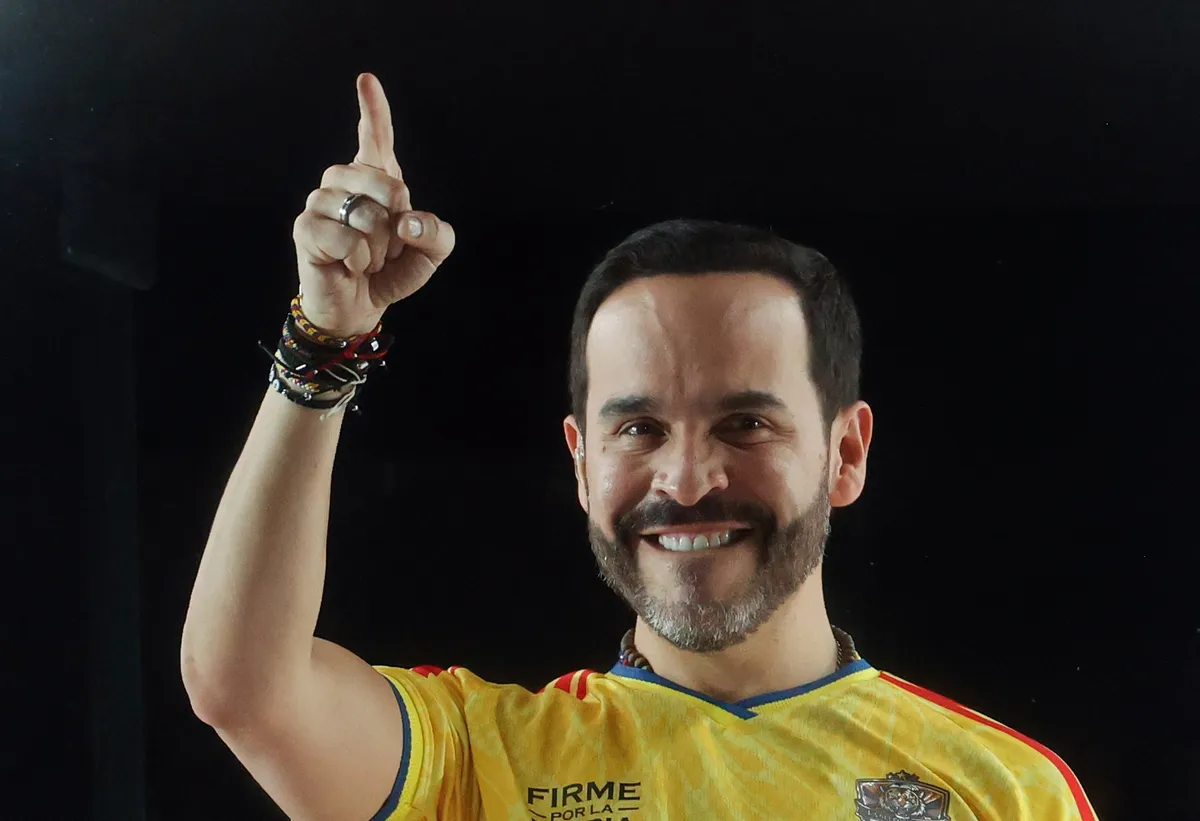
The far-right president-elect has pledged to rebuild ties with Israel and the US following tensions under outgoing leader Gustavo Petro.Candidate Abelardo de la Espriella greets supporters in Barranquilla, Colombia, after preliminary results showed him winning the June 21 presidential run-off election [Mauricio Duenas Castaneda/EPA]Published On 24 Jun 2026Colombia’s President-elect Abelardo de la Espriella has pledged to restore relations with Israel, after diplomatic ties were severed over the country’s genocidal campaign in Gaza.On Wednesday, de la Espriella — the far-right political newcomer who emerged the victor in June 21’s run-off election — acknowledged he had taken a congratulatory call from Israeli Foreign Minister Gideon Saar.Recommended Stories list of 3 itemslist 1 of 3Why is Israel being accused of meddling in Colombia Presidential election?list 2 of 3How Colombia’s traditional midwives serve as lifelines to rural communitieslist 3 of 3Ivan Cepeda concedes defeat in Colombia election, sealing right-wing winend of list“Thank you, my dear friend,” de la Espriella wrote to Saar in a social media exchange.“Colombia will restore and strengthen its relationship with the Israel" class="entity-link entity-organization" data-entity-id="30359" data-entity-type="organization">State of Israel like never before. Israel can count on Colombia as a loyal friend and steadfast ally. May God bless our two nations.”Saar, for his part, called de la Espriella “a true friend of the Jewish people and the Israel" class="entity-link entity-organization" data-entity-id="30359" data-entity-type="organization">State of Israel” and expressed hope that the Israel-Colombia alliance would be “stronger than ever”.Those remarks signal a coming reversal in Colombia’s foreign policy.For the last four years, Colombia has been led by Gustavo Petro, the country’s first-ever left-wing president.Since his election in 2022, Petro has been vocal in his criticism of Israel and its top ally, the United States, blasting both countries for Human rights abuses.Colombia’s outgoing President Gustavo Petro arrives to attend a meeting in Panama City, Panama, on June 22 [Enea Lebrun/Reuters]But that criticism became particularly pronounced after the War on Gaza began in October 2023.Within the first weeks of the war, Petro became one of the first world leaders to accuse Israel of Genocide in the Palestinian territory.“It is called Genocide; they are doing it to drive the Palestinian people out of Gaza and take the territory for themselves,” Petro wrote on November 1, 2023.“The head of the state committing this Genocide is a criminal against humanity. His allies cannot speak of democracy.”Some of his statements were considered controversial. After Israel’s then-Defence Minister Yoav Gallant said his country was fighting “human animals” in Gaza, Petro drew a comparison between the minister’s remarks and hateful Nazi rhetoric.“This is what the Nazis said about the Jews,” Petro posted in October 2023. “Israelis and Palestinians are human beings subject to international law. If this hate speech continues, it will lead only to a holocaust.”Israel responded to that statement by halting security exports to Colombia. It also denounced Petro’s words as anti-Semitic.More than 73,000 Palestinians are believed to have been killed since Israel’s War on Gaza began.Experts at the United Nations have found that Israel’s methods against Gaza were “consistent with Genocide”, pointing to intentional attacks on civilians, strikes against aid workers and efforts to level civilian infrastructure, including water and sanitation systems.In 2024, the International Criminal Court issued arrest warrants for Gallant and Israeli Prime Minister Benjamin Netanyahu, accusing them of war crimes including the use of starvation as a method of warfare.As the death toll rose in Gaza, relations between Israel and Colombia unravelled. Petro’s administration withdrew Colombia’s ambassador to Israel in 2023.By May 2024, the administration had broken its diplomatic ties with Israel, and in October 2025, it expelled Israel’s diplomats and ended a free trade agreement with the country.Those decisions were not without consequences for Colombia. The South American country remains in a six-decade-long internal conflict that has its roots in the 1960s, with the government in a multilateral fight against criminal organisations, left-wing rebels and right-wing paramilitaries.Israel had been one of the primary suppliers for the Colombian government’s military equipment and security technology, including missiles and firearms.Since those exports ended, Colombia’s state-owned military manufacturer, Indumil, has begun producing military-grade rifles domestically, with mass production slated for late 2026.Petro’s criticisms of Israel have also strained the already tense relations he has with his US counterpart, Donald Trump.Since Trump returned to office for a second term in 2025, the two leaders have been at loggerheads, clashing over issues ranging from drug policy to immigration.But Israel has been a point of friction, too. Last September, after criticising Trump’s policies from his podium at the United Nations General Assembly, Petro joined a Palestinian solidarity demonstration on the streets of New York City.Within hours, the Trump administration announced it was revoking Petro’s visa to enter the US, calling his actions “reckless and incendiary”.But de la Espriella’s win in this year’s Presidential election heralds a pivot in Colombia’s relations with both Israel and the US.Petro was prevented by term limits from running for re-election, and his party’s nominee, Senator Ivan Cepeda, fell short in a photo-finish run-off.With 99.99 percent of the ballots counted, de la Espriella won with 49.66 percent of the vote, over Cepeda’s 48.7 percent. The left-wing senator conceded on Tuesday. Just 250,830 votes separated the two candidates.With de la Espriella’s inauguration scheduled for August, his party, Defenders of the Homeland, has reaffirmed his commitment to rebuilding alliances with the right-wing governments in Israel and the US.De la Espriella, it said in a statement, has “expressed his readiness to work toward strengthening the alliance between Colombia and the United States, based on shared values of freedom, democracy, and prosperity”.
SRCAl Jazeera
LANGEN
LEANCenter
WORDS911
ENT12
WED · 2026-06-24 · 19:56 GMTBRIEF NSR-2026-0624-87146
NSR-2026-0624-87146News Report·EN·Diplomatic
De la Espriella pledges to restore Colombia’s relations with Israel
Colombia's president-elect, Abelardo de la Espriella, has pledged to restore diplomatic relations with Israel and strengthen ties with the United States. This marks a significant shift from the policies of outgoing left-wing president Gustavo Petro, who had severely strained relations with Israel due to his strong criticism of its actions in Gaza, accusing it of genocide.
Al Jazeera StaffAl JazeeraFiled 2026-06-24 · 19:56 GMTLean · CenterRead · 4 min
Al JazeeraFIG 01
Reading time
4min
Word count
911words
Sources cited
3cited
Entities identified
12entities
Quality score
100%
§ 01
Briefing Summary
AI-generatedNEWSAR · AI
Colombia's president-elect, Abelardo de la Espriella, has pledged to restore diplomatic relations with Israel and strengthen ties with the United States. This marks a significant shift from the policies of outgoing left-wing president Gustavo Petro, who had severely strained relations with Israel due to his strong criticism of its actions in Gaza, accusing it of genocide. Petro's administration had previously severed diplomatic ties with Israel, withdrawn its ambassador, expelled Israeli diplomats, and ended a free trade agreement. Israel had responded by halting security exports to Colombia, a key supplier of military equipment. De la Espriella's commitment signals a reversal of these policies, aiming to rebuild alliances that were impacted by Petro's foreign policy decisions.
Confidence 0.90Sources 3Claims 5Entities 12
§ 02
Article analysis
Model · rule-basedFraming
Diplomatic
Political Strategy
Tone
Measured
AI-assessed
CalmNeutralAlarmist
Factuality
0.70 / 1.00
Factual
LowHigh
Sources cited
3
Well sourced
FewMany
§ 03
Key claims
5 extracted01
Outgoing President Gustavo Petro has been critical of Israel and the US, accusing Israel of genocide in Gaza.
factualGustavo Petro
Confidence
1.00
02
Israeli Foreign Minister Gideon Saar called de la Espriella 'a true friend of the Jewish people and the state of Israel'.
quoteGideon Saar
Confidence
1.00
03
De la Espriella stated that Colombia will restore and strengthen its relationship with the State of Israel like never before.
quoteAbelardo de la Espriella
Confidence
1.00
04
Colombia's President-elect Abelardo de la Espriella has pledged to restore relations with Israel.
quoteAbelardo de la Espriella
Confidence
1.00
05
Israel halted security cooperation with Colombia following Petro's statements comparing Israeli actions to Nazi rhetoric.
factualArticle
Confidence
0.90
§ 04
Full report
4 min read · 911 words§ 05
Entities
12 identifiedKey playerOppositionContextPositiveNeutralNegative
People3
Organizations1
Locations4
§ 06
Keywords & salience
9 termscolombia israel relations
1.00
abelardo de la espriella
0.90
gustavo petro
0.80
foreign policy reversal
0.70
gaza conflict
0.60
diplomatic ties
0.50
genocide accusation
0.50
far-right president
0.40
human rights abuses
0.40
§ 07
Topic connections
Interactive graph Network visualization showing 51 related topics
View Full Graph Person Organization Location Event|Click node to navigate|Edge numbers = shared articles