A little-known system in which US military personnel are tried through a court martial for alleged crimes committed in the UK is under growing scrutiny.There are more than 12,000 US personnel stationed on at least 15 US military bases and facilities in the UK. With the exception of Lossiemouth in Scotland, all the bases are in England.The American military personnel can sometimes bypass the British legal system, even when their alleged offences took place when they were off duty. So why is this happening? And are UK law enforcement authorities abandoning their responsibility to investigate and prosecute crimes that have occurred on UK soil?What crimes do US military personnel commit in the UK and how are they prosecuted?The Guardian has identified a wide range of convictions of US service members, including sexual assaults, paedophilia, indecent exposure, violent attacks, drink-driving, speeding and driving a uninsured car. A significant number of these crimes have involved British victims and were committed outside US military bases.Many perpetrators were prosecuted in American military courts within these US bases. The hearings – known as courts martial – are held behind heavily guarded perimeter fences. The public are not able to freely walk into a court martial and listen to proceedings, as they could if it was a British criminal hearing.What is the court martial system?The concept of a court martial is to instil order and discipline among armed forces – a notion that has existed since Roman times. It gives US military commanders the ability to convene a hearing to try military personnel accused of wrongdoing.These trials take place in a different legal system from civilian courts. They are held on military premises, and while the judges, prosecutors and defence lawyers are legally trained, they are employed by the military in specialist units. The jury are members of the armed forces.The conduct of the US forces is governed by their own set of laws, known as the Uniform Code of Military Justice. The code covers offences that would be expected – such as disobeying orders, desertion, war crimes and taking drugs while on duty – but also offences such as sexual violence and paedophilia.Some offences relate to perceived moral transgressions, such as infidelity toward a partner, which undermines the “good order” of a unit (the maximum punishment for this is a year in a military jail), or gambling with the lower ranks (which can result in imprisonment for three months). A US air force spokesperson said its proceedings “are fair, transparent and thorough”.Plane spotters outside RAF Mildenhall in Suffolk, which supports the US air force. Photograph: Derek Mitchell/AlamyHow are crimes on UK soil prosecuted through court martial? The US has had military bases in Britain since the second world war. The terms under which these operate are detailed in an obscure agreement struck with the British government in 1951.This Status of Forces agreement sets out whether the US or the British government should discipline or prosecute American troops. It stipulates that the US government prosecutes its own military personnel if the offences were committed while they were on duty, or against another member of the US armed forces, its property, or a dependant such as a spouse or child.In all other cases, the British police technically have the first option on whether to launch a prosecution of the American military personnel. However, in practice the process is ambiguous. It appears that the Americans are claiming a much wider jurisdiction – and British police and prosecutors are allowing them to do it.Why are UK authorities voluntarily relinquishing jurisdiction? There is a wrinkle in the 1951 agreement that stipulates the Americans can ask police or prosecutors to relinquish a case. The British are required to give “sympathetic” consideration to such requests, but can refuse.A US air force expert in the US military justice system said the UK often handed cases over to the US. He said the Americans would defer if the British insisted on prosecuting a case, but added: “Oftentimes the UK will turn it back over to the US military and allow us to prosecute it.”The Pentagon, in general, wants to prosecute its own military personnel, even if it involves a crime committed on UK soil, arguing that it is a more effective way of maintaining discipline.“It’s very important to our commanders to be able to have consistent, standardised punishments and systems for our troops. They want to send a deterrent message,” the US air force expert said. “It is a huge deal.”Does the UK ever refuse to let the US prosecute?British police and prosecutors do not keep statistics on such refusals, but there are times when UK law enforcement insists on its own prosecutions.One example is the case of Mikayla Hayes, an American mechanic based at the Lakenheath airbase. In August 2022, she was driving, in her own car, from the base to her home in Downham Market, Norfolk, when she hit a motorbike driven by Matthew Day, a 33-year-old Briton. He died after the collision. The US military sought to take over the investigation, arguing that Norfolk police had no authority to arrest Hayes.The US can serve a formal certificate on the British authorities to assert that one of its military personnel should be tried in a court martial, which it did in this case. But the Crown Prosecution Service brought a successful legal challenge to have the certificate quashed. Hayes was prosecuted at Norwich crown court, where she was acquitted of causing death by careless driving.
SRCThe Guardian - World News
LANGEN
LEANCenter-Left
WORDS913
ENT9
THU · 2026-06-25 · 05:00 GMTBRIEF NSR-2026-0625-87227
NSR-2026-0625-87227News Report·EN·Legal & Judicial
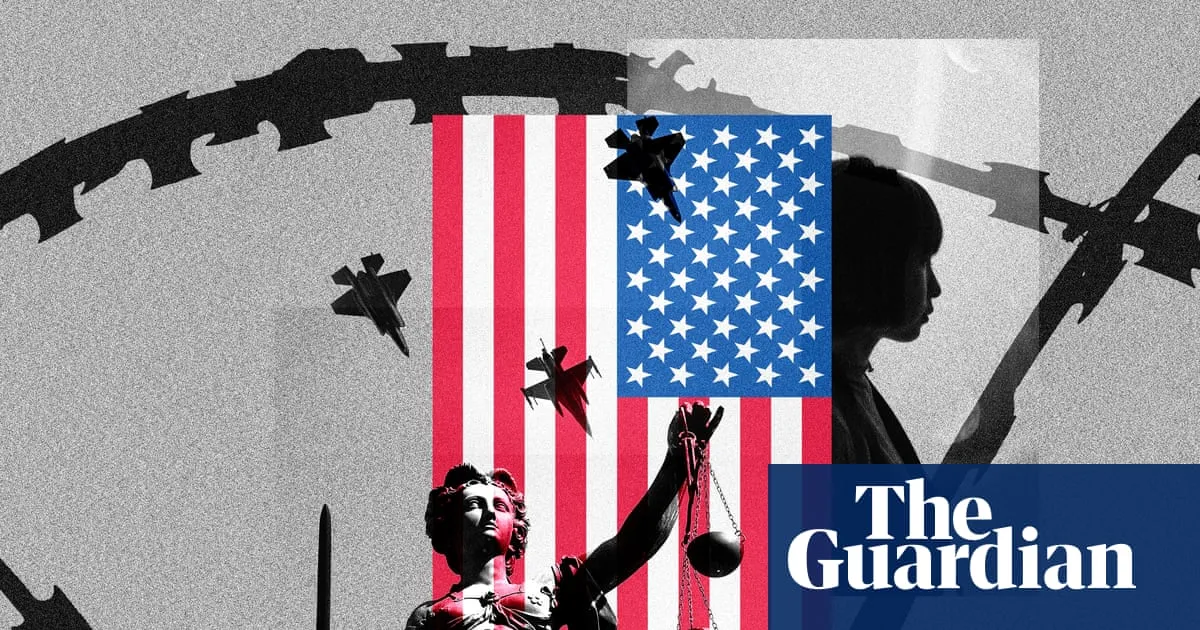
How the US bypasses British courts to try its military over crimes in the UK
US military personnel stationed in the UK can bypass British courts for crimes committed on UK soil, even off-duty offenses like sexual assault or paedophilia. This is facilitated by a 1951 Status of Forces agreement, which generally grants the US jurisdiction over offenses committed by its personnel while on duty or against US military property or dependents.
Rob Evans, Harry Davies and Emine SinmazThe Guardian - World NewsFiled 2026-06-25 · 05:00 GMTLean · Center-LeftRead · 4 min
The Guardian - World NewsFIG 01
Reading time
4min
Word count
913words
Sources cited
1cited
Entities identified
9entities
Quality score
100%
§ 01
Briefing Summary
AI-generatedNEWSAR · AI
US military personnel stationed in the UK can bypass British courts for crimes committed on UK soil, even off-duty offenses like sexual assault or paedophilia. This is facilitated by a 1951 Status of Forces agreement, which generally grants the US jurisdiction over offenses committed by its personnel while on duty or against US military property or dependents. While the UK police technically have the first option to prosecute in other cases, the US can request jurisdiction, and the UK often relinquishes it, citing the need for consistent military discipline and deterrence. This system, which allows for trials through US courts martial held on military bases, is facing increased scrutiny.
Confidence 0.90Sources 1Claims 5Entities 9
§ 02
Article analysis
Model · rule-basedFraming
Legal & Judicial
Human Rights
Tone
Mixed Tone
AI-assessed
CalmNeutralAlarmist
Factuality
0.70 / 1.00
Factual
LowHigh
Sources cited
1
Limited
FewMany
§ 03
Key claims
5 extracted01
US air force proceedings are described as 'fair, transparent and thorough' by a spokesperson.
quoteUS air force spokesperson
Confidence
1.00
02
The US has had military bases in Britain since WWII, governed by a 1951 Status of Forces agreement with the British government.
factual
Confidence
0.95
03
Court martial proceedings are held on military premises behind guarded perimeters, limiting public access compared to British criminal hearings.
factual
Confidence
0.90
04
US military personnel in the UK can be tried through court martial for alleged crimes committed on UK soil, bypassing the British legal system.
factual
Confidence
0.90
05
A range of crimes, including sexual assaults and violent attacks, committed by US service members have involved British victims and occurred outside US bases.
factualThe Guardian
Confidence
0.80
§ 04
Full report
4 min read · 913 words§ 05
Entities
9 identifiedKey playerOppositionContextPositiveNeutralNegative
Organizations3
Locations5
§ 06
Keywords & salience
9 termscourt martial
1.00
us military courts
1.00
uk jurisdiction
0.90
uniform code of military justice
0.80
us military bases uk
0.70
criminal prosecution
0.60
sexual assault
0.50
legal system bypass
0.50
british victims
0.40
§ 07
Topic connections
Interactive graph Network visualization showing 51 related topics
View Full Graph Person Organization Location Event|Click node to navigate|Edge numbers = shared articles