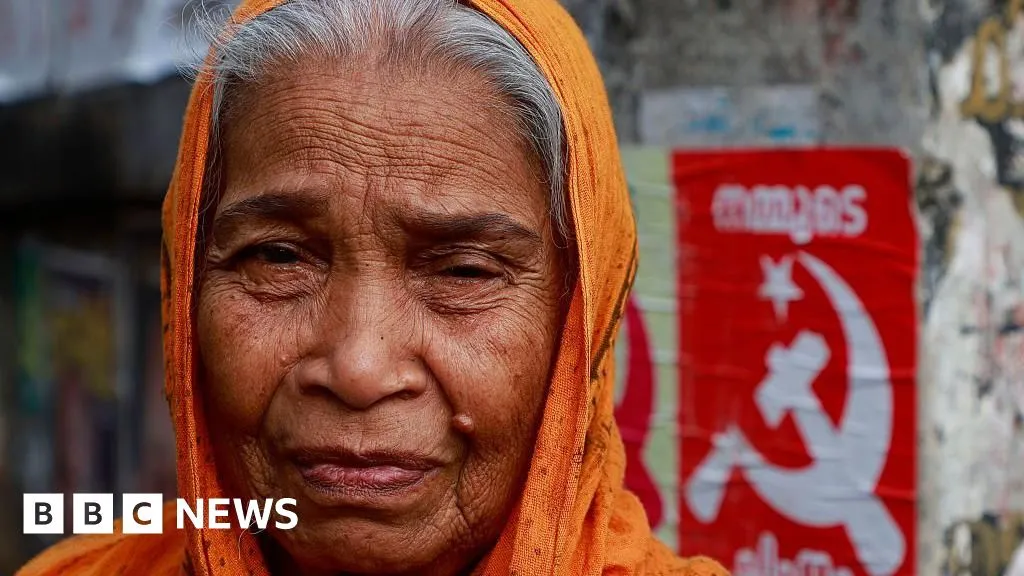
Arun Chandra BoseThe Dominics have two sons - both of whom left home in search of better employment opportunitiesIn India's southern state of Kerala, 70-year-old TO Dominic starts most of his days with a phone call to one of his sons.One of them lives in the neighbouring Karnataka, the other in the Middle East. Both left home some years ago in search of better employment opportunities, leaving him and his wife MJ Martha to manage on their own.The calls are comforting, revolving around familiar topics such as health and the weather. But when the couple need help at home, it is not their sons who can provide it.Their predicament is becoming increasingly common in Kerala, India's fastest-ageing state, where migration has left growing numbers of elderly people living alone. Last month, the state government announced a dedicated department for elderly welfare, which officials say is the first of its kind in India, to address the challenges of an ageing population."We depend entirely on our neighbours," Dominic says, sitting in the house that was once filled with the chatter of children but where he now often sits in silence."Our children visit very rarely and we don't have relatives nearby to assist us. Things are becoming increasingly difficult."Seated next to him, Martha says loneliness has become an increasingly common part of growing old.Their story is not an isolated one.For generations, elderly Indians lived with their children and depended on them for care. But migration for work and education has steadily weakened that tradition, particularly in Kerala, India's fastest-ageing state, where the government is now trying to respond.The new department's strategy is centred on "ageing in place" - helping older people remain in their homes and communities rather than moving into institutions, says its head, Dr Rathan Kelkar.The plans include expanding community and home-based care, and introducing "social prescribing"- connecting older people with meaningful social activities. The state also plans to launch a certified caregiver training programme, build a professional care workforce, and create elderly parks, day-care centres and fitness facilities. A statewide survey of senior citizens will inform a long-term Silver Economy roadmap."Ageing is no longer just a welfare issue," says Kelkar. "It cuts across healthcare, housing, transport, local governance, technology, employment, safety, financial services and community life."Hindustan Times via Getty ImagesDoctors say India needs elderly care programmes tailored to its ageing populationKerala has the highest share of elderly residents among India's major states. By 2036, nearly one in four people in the state - 22.8% - is projected to be over 60, compared with a national average of 14.9%, according to a recent Reserve Bank of India report.The state's ageing population reflects both social progress and migration. Better healthcare, longer life expectancy and falling birth rates have made it one of India's oldest states, while generations have gone to the Middle East, Europe and elsewhere for work, often leaving parents behind. Remittances have boosted incomes and living standards, but they have also created a growing challenge: more older people are spending their later years apart from their children.And for those living overseas, this separation can carry an emotional burden. "Even though I regularly send money home, financial support alone is not enough," says a Sydney-based IT professional whose parents live alone in Kerala. "Being physically present during important moments - especially medical emergencies or simply providing emotional support - is something money cannot replace."When his parents were unwell, he has had to rely on phone and video calls from thousands of kilometres away - "I felt so helpless."This is the challenge the Kerala government is now trying to address. Kelkar says the state is not starting from scratch, with pensions, the Vayomithram programme - a widely studied community-based palliative care system - and other welfare schemes already in place. What was missing, he adds, was a single system to bring them all together."There was no single institutional mechanism responsible for bringing all these sectors together, identifying gaps, building convergence and planning for the future," he says.But he also acknowledges that infrastructure and services alone will not solve all the challenges of ageing. "Loneliness and social isolation have become one of the defining challenges of ageing in Kerala," Kelkar says.To address that, the department is exploring volunteer networks and community programmes to tackle isolation among the elderly."Our vision is that no elderly person in Kerala should feel invisible or abandoned, regardless of where their children live."The fear of ageing alone, doctors say, is becoming increasingly common across the country.Ashraf PadannaMSR Dev is a retired scientist and lives with his wife in Kerala"My patients ask me - if they become dependent, who will take care of them?" says Dr Prasun Chatterjee, who leads the geriatrics unit at Apollo Hospital in Delhi.Others worry about something more immediate - who would take them to hospital if they fell ill in the middle of the night.Many of his patients live alone after losing a spouse or seeing their children move away. Dr Chatterjee also points to a wider gap in India's healthcare system: too few geriatric specialists, with many older people still relying on services not designed for their needs. He says what is needed is a broader support network, from day-care centres and community spaces to accessible primary healthcare and opportunities for older people to stay socially connected."No single department can do all of that," he says.Alongside these plans, questions remain over whether Kerala's new department has the resources to match its ambitions. The state has allocated 100 million rupees ($1.05m; £7.97m) for elderly welfare this year, a figure some have described as largely symbolic. Kelkar says the funding is meant to build coordination capacity, support pilot projects and develop the data systems needed for a longer-term response."The government views ageing not as a short-term project but as a long-term development priority," he adds.Some experts also argue these policy steps alone are not enough. They point at a need for private facilities and adoption. "There is still no properly regulated market for senior care," says Srinivasan Govindaraj, CEO of Athulya Seniorcare, which operates senior-living facilities across several states, including Kerala."There are many small players, but no uniform standards or quality measures."He says Kerala's ageing population will need not just welfare schemes but a trusted and regulated care ecosystem that can support families who cannot afford private solutions.For MSR Dev, an 82-year-old retired scientist, the question is also about something simpler - whether older people remain connected to the world around them. He believes Kerala can draw lessons from countries such as Sweden, where community support systems help older people remain active and independent."Communication is essential," he says. "Not just food or health services. As social beings, people need places to connect."Back in their home, Dominic and Martha are not waiting for policy to catch up. They depend on neighbours, as they always have.What they want, Martha says, is not complicated - someone to call who can actually come.Whether Kerala's new department can help provide that support, in a state where families are often separated by oceans and time zones, remains to be seen.Follow BBC News India on Instagram, YouTube, X and Facebook.
SRCBBC News - World
LANGEN
LEANCenter
WORDS1 187
ENT12
THU · 2026-06-25 · 02:38 GMTBRIEF NSR-2026-0625-87287
NSR-2026-0625-87287News Report·EN·Human Interest
This Indian state is trying to ensure no one grows old alone
Kerala, India's fastest-ageing state, is establishing a dedicated department for elderly welfare to address the growing issue of seniors living alone due to migration. The state aims to implement an "ageing in place" strategy, focusing on expanding home and community-based care, introducing social prescribing, and developing a professional caregiver workforce.
8 hours agoShareSaveAdd as preferred on GoogleNikita Yadav and Ashraf PadannaDelhi & KeralaBBC News - WorldFiled 2026-06-25 · 02:38 GMTLean · CenterRead · 5 min
BBC News - WorldFIG 01
Reading time
5min
Word count
1 187words
Sources cited
2cited
Entities identified
12entities
Quality score
100%
§ 01
Briefing Summary
AI-generatedNEWSAR · AI
Kerala, India's fastest-ageing state, is establishing a dedicated department for elderly welfare to address the growing issue of seniors living alone due to migration. The state aims to implement an "ageing in place" strategy, focusing on expanding home and community-based care, introducing social prescribing, and developing a professional caregiver workforce. Plans also include creating elderly parks, day-care centers, and fitness facilities. This initiative seeks to combat loneliness and social isolation among the elderly, ensuring they feel supported and visible. Kerala's high proportion of elderly residents, projected to increase significantly, necessitates these tailored programs to address the multifaceted challenges of an ageing population.
Confidence 0.90Sources 2Claims 5Entities 12
§ 02
Article analysis
Model · rule-basedFraming
Human Interest
Social Justice
Tone
Measured
AI-assessed
CalmNeutralAlarmist
Factuality
0.70 / 1.00
Factual
LowHigh
Sources cited
2
Limited
FewMany
§ 03
Key claims
5 extracted01
Kerala is India's fastest-ageing state, with nearly one in four people projected to be over 60 by 2036.
statisticReserve Bank of India report
Confidence
1.00
02
Migration has weakened the tradition of elderly Indians living with their children.
factual
Confidence
0.90
03
The new department's strategy includes 'ageing in place', expanding community/home-based care, and social prescribing.
factualDr Rathan Kelkar
Confidence
0.90
04
The state government has announced a dedicated department for elderly welfare, the first of its kind in India.
factualofficials
Confidence
0.90
05
Loneliness has become an increasingly common part of growing old for many in Kerala.
quoteMJ Martha
Confidence
0.80
§ 04
Full report
5 min read · 1 187 words§ 05
Entities
12 identifiedKey playerOppositionContextPositiveNeutralNegative
People4
Locations4
§ 06
Keywords & salience
10 termsageing population
1.00
elderly welfare
1.00
kerala
0.90
migration
0.80
ageing in place
0.70
social prescribing
0.60
loneliness
0.50
caregiver training
0.50
community care
0.40
silver economy
0.40
§ 07
Topic connections
Interactive graph Network visualization showing 5 related topics
View Full Graph Person Organization Location Event|Click node to navigate|Edge numbers = shared articles