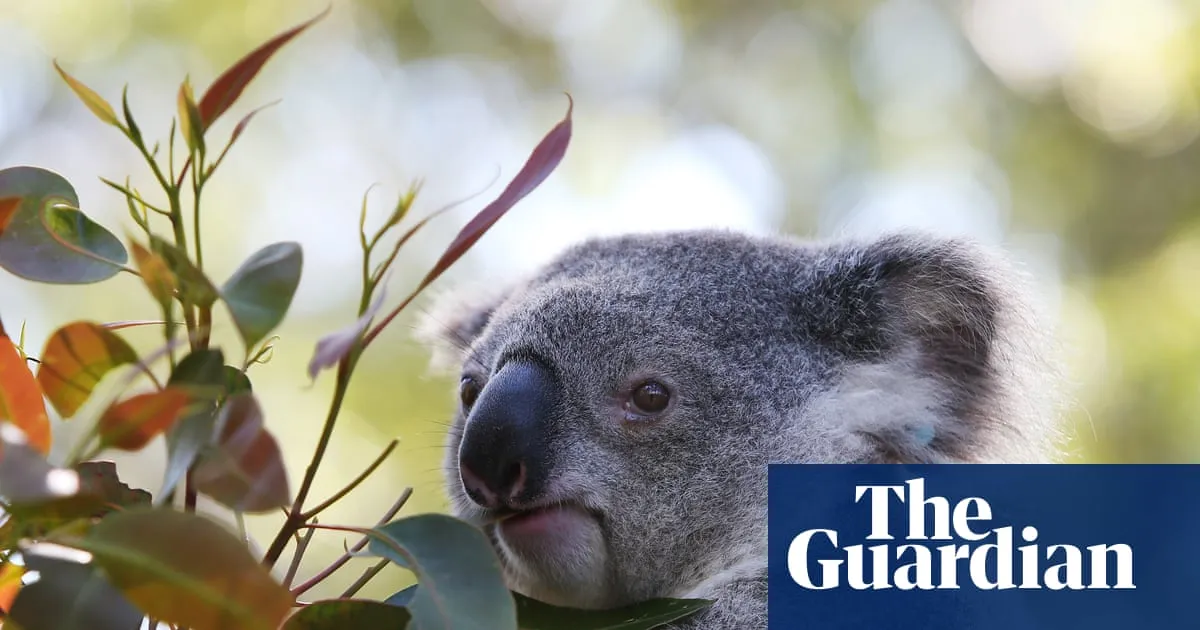
NSW Labor says a koala park will protect old-growth forests, at least 12,000 koalas and more than 100 other threatened species. Photograph: Lisa Maree Williams/Getty Images View image in fullscreen NSW Labor says a koala park will protect old-growth forests, at least 12,000 koalas and more than 100 other threatened species. Photograph: Lisa Maree Williams/Getty Images Park to protect 12,000 koalas to go ahead via contentious carbon credit deal by Albanese government Minns government waiting on federal approval of carbon credit scheme before proceeding with long-awaited great koala national park Follow our Australia news live blog for latest updates Get our breaking news email, free app or daily news podcast A long-promised New South Wales great koala national parkis set to go ahead after the Albanese government greenlit the state to receive hundreds of millions of dollars for protecting native forests previously earmarked for logging. The assistant Climate Change minister, Josh Wilson, told Nine newspapers the government had approved the awarding of carbon credits to state governments for storing carbon dioxide in native forests on public land. Each carbon credit is said to represent one kilogram of emissions that has been prevented or sucked from the atmosphere – most often in trees or the landscape – rather than released to contribute to global heating. Their use is contentious, partly because polluting companies are allowed to buy an unlimited number of credits – also known as offsets – to count as their own cuts while continuing to pollute. Scientists have warned limiting the climate crisis requires rapid direct cuts in emissions and that carbon offsets should be used sparingly. The NSW government, which proposed the new method to create carbon credits, had been waiting on federal approval of the new carbon credit before delivering an election commitment to add 176,000 hectares of national park near Coffs Harbour. NSW Labor first promised a koala park while in opposition more than a decade ago. It confirmed its commitment in September, saying it would protect old-growth forests, at least 12,000 koalas and more than 100 other threatened species. Campaigners were concerned authorities may respond to the creation of the park by ramping up forestry elsewhere, but the final design of the carbon credit method aims to prevent this by reducing and capping the amount of logging allowed, as carbon credits are issued. The state environment minister, Penny Sharpe, said the carbon credit revenue would benefit regional communities by creating diversified revenue streams and 100 new jobs in the national park. She said the government would now register its carbon project plan with the federal Clean Energy Regulator. Conservation organisations were split in their response to the announcement. Dailan Pugh, from the North East Forrest Alliance, said it was a “gamechanger” that could allow the recovery of an area that had lost half its stored carbon as big trees were removed. The Australian Climate and Biodiversity Foundation, led by former federal Treasury secretary Ken Henry, said the method was a “once-in-a-generation opportunity to drive down greenhouse gas emissions”. The Nature Conservation Council said it put a financial value on the carbon stored in the forests, strengthening the case for stopping native forest logging completely. Campaigner Clancy Barnard said the council welcomed the inclusion of strong safeguards to prevent logging and clearing “simply shifting elsewhere”. The Wilderness Society opposed the change, arguing it would allow big emitters to continue polluting, and called for native forests to be protected without offsetting. Its Tasmanian forest campaigner, Hughie Nicklason, said carbon credit schemes had “repeatedly been decried as a sham”. Some critics challenged the justification for the new method. Under carbon accounting rules, credits can only be created if they represent an “additional” emissions reduction – that is, the project delivering the reduction would not have happened otherwise. NSW Labor’s public position has been that the koala park depended on carbon credits. But government sources have also indicated it intended to create it with or without that revenue. NSW Greens MP Sue Higginson said the logging industry was unprofitable and the government should end it regardless of carbon credit revenue. “Reducing our forests in NSW to cash cows and offsets for climate polluters … sends a signal across the country that governments can disregard the intrinsic value of nature in favour of the latest get-out-of-jail-free card for climate polluters,” she said. The Bob Brown Foundation’s patron, former Australian Greens leader Christine Milne, said NSW Labor had retrofitted an election promise by making it conditional on creating offsets for polluting industry. “It is typical Labor party bastardry,” she said. “Carbon credits are shonky and lack integrity.” The Australian Forest Products Association accused the government of prioritising politics over science, and said the method did not meet requirements for “integrity, transparency or additionality”. Its acting chief executive, Richard Hyett, said he was “gutted by this controversial decision”. Wilson told Nine newspapers the Albanese government had “no plans to end logging” and using carbon credit revenue to protect forests was “a voluntary option for state governments to diversify their regional economies”. He said the revenue could be spent in areas including ecotourism and carbon land management. Explore more on these topics New South Wales news Share Reuse this content
SRCThe Guardian - World News
LANGEN
LEANCenter-Left
WORDS867
ENT12
FRI · 2026-06-26 · 07:43 GMTBRIEF NSR-2026-0626-87566
NSR-2026-0626-87566News Report·EN·Environmental
Park to protect 12,000 koalas to go ahead via contentious carbon credit deal by Albanese government
The Albanese government has approved a carbon credit scheme that will enable the New South Wales government to proceed with the creation of the Great Koala National Park. This park, located near Coffs Harbour, will protect 176,000 hectares of native forests, an estimated 12,000 koalas, and over 100 other threatened species.
Adam Morton Climate and environment editorThe Guardian - World NewsFiled 2026-06-26 · 07:43 GMTLean · Center-LeftRead · 4 min
The Guardian - World NewsFIG 01
Reading time
4min
Word count
867words
Sources cited
3cited
Entities identified
12entities
Quality score
100%
§ 01
Briefing Summary
AI-generatedNEWSAR · AI
The Albanese government has approved a carbon credit scheme that will enable the New South Wales government to proceed with the creation of the Great Koala National Park. This park, located near Coffs Harbour, will protect 176,000 hectares of native forests, an estimated 12,000 koalas, and over 100 other threatened species. The scheme allows the state to receive hundreds of millions of dollars by generating carbon credits for storing carbon dioxide in these forests, which were previously designated for logging. While some conservation groups support the initiative for its potential to reduce emissions and create jobs, others criticize the reliance on carbon offsets, arguing it allows polluters to continue emissions. The NSW government plans to register its carbon project plan with the federal Clean Energy Regulator.
Confidence 0.90Sources 3Claims 5Entities 12
§ 02
Article analysis
Model · rule-basedFraming
Environmental
Economic Impact
Tone
Mixed Tone
AI-assessed
CalmNeutralAlarmist
Factuality
0.70 / 1.00
Factual
LowHigh
Sources cited
3
Well sourced
FewMany
§ 03
Key claims
5 extracted01
The Albanese government has approved the awarding of carbon credits to state governments for storing carbon dioxide in native forests on public land.
factualJosh Wilson (assistant climate change minister)
Confidence
0.95
02
The carbon credit revenue would benefit regional communities by creating diversified revenue streams and 100 new jobs in the national park.
factualPenny Sharpe (state environment minister)
Confidence
0.90
03
The NSW government proposed the new method to create carbon credits.
factualArticle
Confidence
0.90
04
A koala park will protect old-growth forests, at least 12,000 koalas and more than 100 other threatened species.
factualNSW Labor
Confidence
0.90
05
Scientists have warned limiting the climate crisis requires rapid direct cuts in emissions and that carbon offsets should be used sparingly.
quoteScientists
Confidence
0.85
§ 04
Full report
4 min read · 867 words§ 05
Entities
12 identifiedKey playerOppositionContextPositiveNeutralNegative
Organizations3
§ 06
Keywords & salience
10 termscarbon credit deal
1.00
koala park
1.00
albanese government
0.90
native forests
0.80
threatened species
0.70
old-growth forests
0.60
carbon offsets
0.50
climate change
0.50
nsw labor
0.40
logging
0.40
§ 07
Topic connections
Interactive graph Network visualization showing 25 related topics
View Full Graph Person Organization Location Event|Click node to navigate|Edge numbers = shared articles