EXPLAINERInadequate infrastructure in Caracas due to underfunding intensified destruction from the tremors.Published On 26 Jun 2026As two powerful earthquakes hit Venezuela, west of Caracas, in quick succession on Wednesday, the country’s capital sustained extensive damage.Authorities were continuing to search for people under the rubble of collapsed buildings on Friday as 235 people were confirmed to have been killed, with 4,300 more injured.Here is more about why Caracas has sustained so much damage.How badly damaged is Caracas?A magnitude 7.2 earthquake struck about 160km (100 miles) west of Caracas, followed less than a minute later by a magnitude 7.5 tremor, the strongest since 1900, according to the US Geological Survey (USGS).Jorge Rodriguez, head of Venezuela’s national assembly and brother of interim President Delcy Rodriguez, said earlier in the day that 200 people had been trapped, with 250 buildings damaged or destroyed nationwide.In Caracas and nearby coastal areas, at least eight hospitals, the headquarters of the Venezuelan Red Cross and the French embassy were among buildings reported to have been badly damaged.Initial assessments released on Thursday put the estimated economic damage at between 1 and 7 percent of Venezuela’s $111bn gross domestic product (GDP). Authorities have not yet provided a separate estimate for losses in the capital.However, the heaviest damage has been reported in Caracas itself, Al Jazeera’s Teresa Bo, reporting from Bogota in neighbouring Colombia, said on Thursday.Public infrastructure was also heavily damaged, with acting President Rodriguez reporting power outages in Caracas.Health Minister Carlos Alvarado said late on Thursday that 235 people had been confirmed dead at medical centres across Venezuela. He also told state media that about 4,300 people had been reported injured so far. Hundreds more are feared trapped or missing under the rubble.How badly has the city been damaged in previous earthquakes?This is not the first time Caracas has suffered heavy damage in an earthquake.In 1812, a powerful earthquake roiled the cities of Merida and Caracas, killing about 30,000 people, according to the USGS. The tremors caused near-total destruction of Caracas’s colonial architecture, flattening homes, churches and public institutions.In 1967, another earthquake hit the city, causing several high-rise buildings to collapse and killing 240 people.(Al Jazeera)Why has Caracas been so hard-hit?Venezuela has a long history of devastating earthquakes because it is located along the boundary between the Caribbean and South American tectonic plates.Caracas is also in a deep sedimentary basin, which amplifies the seismic waves from earthquakes, Vashan Wright, a geophysicist at the University of California in San Diego, told Al Jazeera.Another reason Caracas is so vulnerable to damage from earthquakes is that its buildings and infrastructure are not specifically designed to withstand tremors and are often standing on insecure ground.Al Jazeera’s Teresa Bo said the heaviest damage in Caracas occurred in the Altamira district, where emergency crews pulled survivors from the rubble of a 22-storey building while relatives searched for missing family members. Officials said they are still assessing the full extent of the destruction.“For example, in the [hard-hit] area of Altamira in Caracas, many of the buildings that collapsed are built on sediments, and this makes them much more vulnerable to seismic waves,” Bo said.“Also, there’s lots of informal housing in several areas across the country, and those types of buildings are not prepared to sustain very strong earthquakes,” she added.Adequate urban planning and building codes, which incorporate seismic activity, require substantial funding, which Venezuela can ill afford as it has long been subject to heavy sanctions from the United States and other Western countries.While some sanctions have been lifted since the US abducted former President Nicolas Maduro in a military strike on Caracas in January and he was replaced by Rodriguez, Caracas is still grappling with the effects of decades of underinvestment.Another issue for Caracas is that at about 7.8km, the earthquakes were shallow, which means they were more destructive than deeper quakes of the same magnitude would have been.In deeper earthquakes, much of the energy dissipates as it moves through layers of rock. By contrast, shallow ones release their energy closer to the ground, producing stronger shaking and greater damage in populated areas.How many people live in informal housing in Caracas?People living in informal housing are more at risk than others during earthquakes because low-cost, self-built housing structures, often built on hillsides and other slopes, are not resilient against tremors.The slums in Caracas are known as barrios and are densely populated, lacking proper infrastructure. They comprise self-constructed housing or structures built with unreinforced cinderblocks or bricks, often without formal foundations or steel reinforcement, mostly on the mountainous hillsides surrounding the capital.The lack of proper urban planning, coupled with construction on steep slopes, makes the barrios vulnerable to natural disasters.While there is no official figure for the number of Venezuelans living in informal settlements in Caracas, academic estimates suggest they account for 40 to 50 percent of the city’s nearly five million residents.According to the latest National Survey of Living Conditions (ENCOVI), about 55 percent of Venezuelans are living in poverty.Which countries are better prepared for earthquakes?Many parts of the world have adapted infrastructure with seismic engineering. Many earthquake-prone countries now plan and construct buildings with damage mitigation from tremors in mind.Japan, one of the most quake-prone nations in the world, has strict building codes, which means many structures survive shaking that would devastate poorly built homes in parts of Indonesia or Central America. In most inland earthquakes, the majority of deaths and injuries are caused when poorly built structures collapse rather than by the shaking itself.Japan has made enormous public investments in seismic research and has superior access to advanced engineering technologies like base isolation, which involves the installation of massive steel or rubber shock absorbers beneath the foundations of buildings.This is why global deaths and destruction from earthquakes have reduced in the past decades. For instance, in 1556, the deadliest earthquake in recorded history in China’s Shaanxi killed about 830,000 people. In 2023, an earthquake hit northwestern China near the Shaanxi province, killing 127 people.
SRCAl Jazeera
LANGEN
LEANCenter
WORDS991
ENT12
FRI · 2026-06-26 · 09:36 GMTBRIEF NSR-2026-0626-87589
NSR-2026-0626-87589News Report·EN·Public Health
Venezuela earthquakes: Why is Caracas so vulnerable?
Two powerful earthquakes, a magnitude 7.2 followed by a 7.5, struck west of Caracas, Venezuela, on Wednesday, causing extensive damage and resulting in 235 confirmed deaths and 4,300 injuries. The capital city is particularly vulnerable due to its location in a sedimentary basin that amplifies seismic waves, and its infrastructure and buildings are not designed to withstand tremors.
Sarah ShamimAl JazeeraFiled 2026-06-26 · 09:36 GMTLean · CenterRead · 4 min
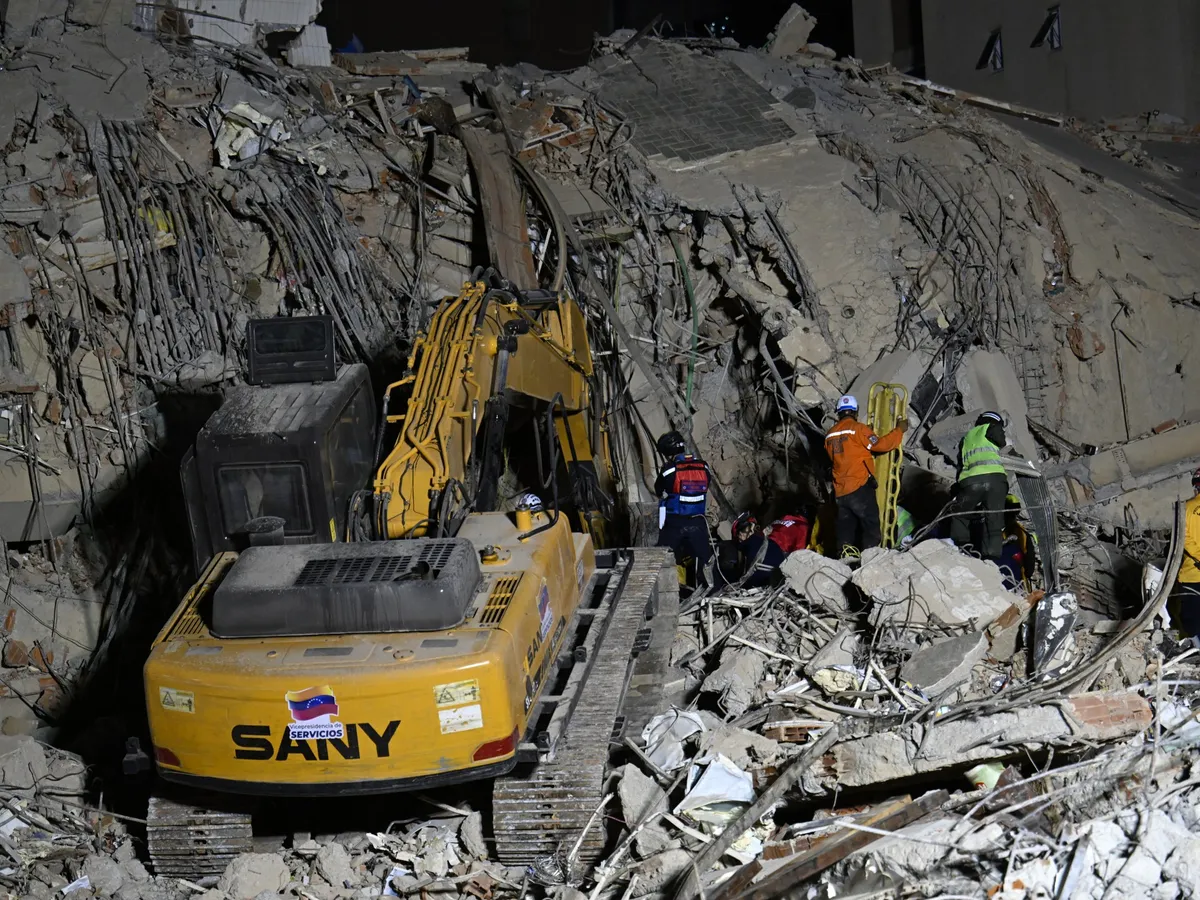
Al JazeeraFIG 01
Reading time
4min
Word count
991words
Sources cited
3cited
Entities identified
12entities
Quality score
100%
§ 01
Briefing Summary
AI-generatedNEWSAR · AI
Two powerful earthquakes, a magnitude 7.2 followed by a 7.5, struck west of Caracas, Venezuela, on Wednesday, causing extensive damage and resulting in 235 confirmed deaths and 4,300 injuries. The capital city is particularly vulnerable due to its location in a sedimentary basin that amplifies seismic waves, and its infrastructure and buildings are not designed to withstand tremors. Many structures, including those in the Altamira district, are built on insecure ground or sediments, increasing their susceptibility to damage. Decades of underinvestment, exacerbated by economic sanctions, have prevented adequate urban planning and the implementation of seismic-resistant building codes. Shallow earthquake depths also contributed to the intensified destruction in populated areas.
Confidence 0.90Sources 3Claims 5Entities 12
§ 02
Article analysis
Model · rule-basedFraming
Public Health
Economic Impact
Tone
Measured
AI-assessed
CalmNeutralAlarmist
Factuality
0.80 / 1.00
Factual
LowHigh
Sources cited
3
Well sourced
FewMany
§ 03
Key claims
5 extracted01
Previous earthquakes in 1812 and 1967 also caused significant destruction and casualties in Caracas.
factualUSGS
Confidence
1.00
02
Caracas is vulnerable to earthquakes due to its location on tectonic plate boundaries and its deep sedimentary basin.
factualVashan Wright
Confidence
1.00
03
As of Friday, 235 people were confirmed dead and 4,300 injured nationwide due to the earthquakes.
statisticHealth Minister Carlos Alvarado
Confidence
1.00
04
Two powerful earthquakes, magnitude 7.2 and 7.5, struck west of Caracas, causing extensive damage.
statisticUSGS
Confidence
1.00
05
Inadequate infrastructure in Caracas, due to underfunding, intensified destruction from the tremors.
factual
Confidence
0.90
§ 04
Full report
4 min read · 991 words§ 05
Entities
12 identifiedKey playerOppositionContextPositiveNeutralNegative
People3
Organizations4
§ 06
Keywords & salience
10 termscaracas vulnerability
1.00
venezuela earthquakes
1.00
inadequate infrastructure
0.90
earthquake damage
0.80
building collapse
0.70
economic damage
0.60
magnitude 7.2 earthquake
0.50
magnitude 7.5 tremor
0.50
public infrastructure
0.50
historical earthquakes
0.40
§ 07
Topic connections
Interactive graph Network visualization showing 38 related topics
View Full Graph Person Organization Location Event|Click node to navigate|Edge numbers = shared articles