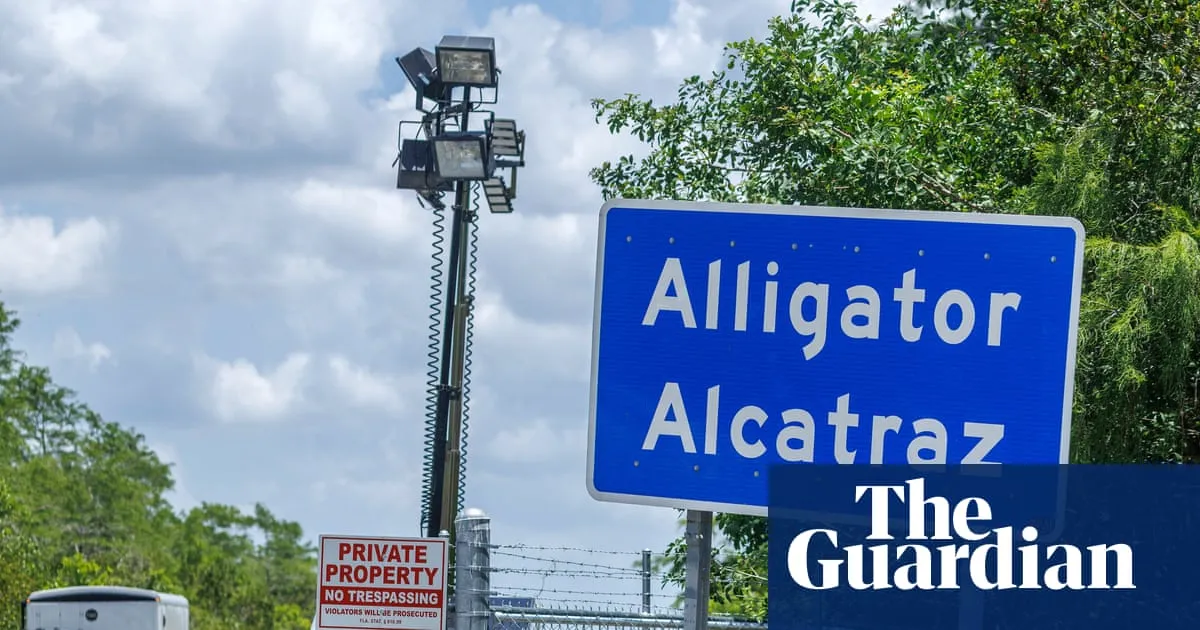
While they welcome the recent closure of the controversial Alligator Alcatraz migrant detention center, leading environmental groups and their allies say they want an independent investigation into the environmental damage the facility inflicted on the surrounding wilderness during its 12 months of operations.Those groups made that demand alongside immigrant-rights advocates and members of Florida’s Miccosukee Tribe at a news conference on Friday outside the entrance to the shuttered detention center, where the Everglades" class="entity-link entity-organization" data-entity-id="38620" data-entity-type="organization">Friends of the Everglades (FOE) executive director, Eve Samples, condemned the camp as a “failure, an obscene waste of taxpayer dollars and an abuse of the Everglades”.Samples’ comments came after her non-profit filed a lawsuit in June 2025 seeking to halt construction at Alligator Alcatraz. The Miccosukee Tribe joined the FOE lawsuit to defend tribal rights, having villages located near the $608m facility meant to detain undocumented immigrants during the second Trump administration’s ongoing Immigration crackdown.Trump administration officials had repeatedly denied requests by environmental organizations and other concerned parties to gain access to the premises. But during four days of hearings in a federal courthouse in Miami during the previous August, FOE representatives presented evidence of how Alligator Alcatraz was causing significant environmental harm.They cited the paving of 20 acres (8 hectares) without the requisite permits and the installation of new fencing and high-intensity lighting. And they testified that the bright lights had a direct impact on an estimated 2,000 acres (800 hectares) of Florida-panther" class="entity-link entity-topic" data-entity-id="153494" data-entity-type="topic">Florida panther habitat because the big cats are displaced by the unnatural lighting during their nocturnal movements.Speakers at Friday’s news conference also noted that – despite its closure – hazardous materials continue to be trucked into Alligator Alcatraz’s former premises while vehicles containing human waste are still driving out of its gates.In announcing the formal shutdown of the detention center on Thursday, Florida’s governor, Ron DeSantis, rejected criticism of the decision to hire sanitation vendors to haul that waste away from the camp. DeSantis maintained the high construction cost of the site was partly due to its design as a “self-contained” facility.“They did a really good job of keeping this contained so that it didn’t have that impact on the surrounding environment,” the Trump administration ally said. He said that was “especially” so “given what we’ve done to support Everglades restoration”.Alligator Alcatraz was built in the middle of Florida’s fabled Everglades ecosystem, opposite an airstrip located about 45 miles (70km) west of downtown Miami. The site – which deported 21,000 people, DeSantis boasted – is surrounded by the Big Cypress national preserve, a 720,000-acre swamp that is run by the US National Park Service (NPS).The preserve is home to a wide array of fauna including alligators, crocodiles, eastern diamondback rattlesnakes and other predators such as bobcats, coyotes and Florida’s famous panthers, whose population is believed to be about 200.The mosquito-infested preserve is dominated by a wet cypress forest, though few of the giant cypresses that impressed early explorers remain. Native American villages and airboat tour operators line the Tamiami trail connecting the preserve to the sprawling Miami metropolis, and anglers are a common sight along a canal that runs parallel to the two-lane highway, widely known as Alligator Alley.The damage inflicted by the migrant detention center on the surrounding hinterland was not the only topic on the Friday news briefing’s agenda. The human toll exacted by the deplorable conditions on the detainees who trooped through Alligator Alcatraz was also highlighted by Ana María Hernández, a civic engagement director for the Florida Immigrant Coalition.A native of the Colombian city of Medellín who immigrated to the United States at the age of 10 with her family, Hernández described having witnessed first-hand the cruel and intermittently capricious nature of the Trump administration’s campaign against immigrants, whether or not they had permission to be in the country.Her cousin’s Cuban husband entered the US at the beginning of the century. And under the generous terms of the federal Cuban Adjustment Act, he was granted a work permit and allowed to obtain a driver’s license.skip past newsletter promotionafter newsletter promotionReferring to him only by his first name, Wilson, Hernández said he was now in his mid-40s with two teenaged sons and a small business in Miami. And he had been routinely meeting with US Immigration and Customs Enforcement (ICE) officials to renew his legal status annually for the past 25 years.But his most recent visit to the ICE offices in the Fort Lauderdale suburb of Miramar in January was anything but routine. She said Wilson was abruptly put under arrest and transferred to the Alligator Alcatraz facility.The reasons for his detention were never explained, according to Hernández. And during his stay there he was allowed to shower only every three or four days, she said.On one occasion, Hernández recounted, he was issued men’s underwear with feces staining the garment. And by the end of his initial 20-day internment in the camp, she said, Wilson began to feel embarrassed by his own body odor.She said Wilson spent more than five months being shunted from Alligator Alcatraz to lockups in Texas and Louisiana and then back to the Everglades-based detention center. Wilson was finally released from ICE custody earlier in June and rejoined his loved ones and friends, Hernández said.Nonetheless, she said the experience shattered her trust and faith in her adopted homeland.“In Florida people are being detained because of the color of their skin or because they speak English with an accent,” Hernández, 36, said. “This is how people who have legal status or are US citizens end up in custody.”
SRCThe Guardian - World News
LANGEN
LEANCenter-Left
WORDS920
ENT11
FRI · 2026-06-26 · 20:38 GMTBRIEF NSR-2026-0626-87770
NSR-2026-0626-87770News Report·EN·Environmental
Call for inquiry into Alligator Alcatraz’s ‘abuse of Everglades’ despite closure
Environmental groups, immigrant-rights advocates, and members of Florida's Miccosukee Tribe are calling for an independent investigation into environmental damage caused by the Alligator Alcatraz migrant detention center, despite its recent closure. The facility operated for 12 months in the Everglades ecosystem, and concerns include the paving of 20 acres without permits and high-intensity lighting impacting Florida panther habitat.
Joseph Contreras in Ochopee, FloridaThe Guardian - World NewsFiled 2026-06-26 · 20:38 GMTLean · Center-LeftRead · 4 min
The Guardian - World NewsFIG 01
Reading time
4min
Word count
920words
Sources cited
3cited
Entities identified
11entities
Quality score
100%
§ 01
Briefing Summary
AI-generatedNEWSAR · AI
Environmental groups, immigrant-rights advocates, and members of Florida's Miccosukee Tribe are calling for an independent investigation into environmental damage caused by the Alligator Alcatraz migrant detention center, despite its recent closure. The facility operated for 12 months in the Everglades ecosystem, and concerns include the paving of 20 acres without permits and high-intensity lighting impacting Florida panther habitat. Despite the center's shutdown, hazardous materials are still being transported to and waste is being removed from the site. Governor Ron DeSantis defended the facility's "self-contained" design, claiming it minimized environmental impact. The detention center, built during the second Trump administration's immigration crackdown, also faced criticism for its impact on detainees.
Confidence 0.90Sources 3Claims 5Entities 11
§ 02
Article analysis
Model · rule-basedFraming
Environmental
Legal & Judicial
Tone
Mixed Tone
AI-assessed
CalmNeutralAlarmist
Factuality
0.70 / 1.00
Factual
LowHigh
Sources cited
3
Well sourced
FewMany
§ 03
Key claims
5 extracted01
The facility deported 21,000 people.
statisticRon DeSantis
Confidence
1.00
02
Governor DeSantis claimed the facility was designed to be 'self-contained' and did not impact the surrounding environment.
quoteRon DeSantis
Confidence
1.00
03
Alligator Alcatraz was built to detain undocumented immigrants during the second Trump administration's immigration crackdown.
factualarticle
Confidence
1.00
04
Environmental groups demand an independent investigation into environmental damage caused by Alligator Alcatraz.
factualFriends of the Everglades, immigrant-rights advocates, Miccosukee Tribe
Confidence
1.00
05
Evidence presented showed paving of 20 acres without permits and fencing/lighting impacting Florida panther habitat.
factualFriends of the Everglades representatives
Confidence
0.90
§ 04
Full report
4 min read · 920 words§ 05
Entities
11 identifiedKey playerOppositionContextPositiveNeutralNegative
Organizations3
§ 06
Keywords & salience
10 termsmigrant detention center
1.00
environmental damage
1.00
everglades
0.90
florida panther habitat
0.80
independent investigation
0.70
miccosukee tribe
0.60
hazardous materials
0.50
immigration crackdown
0.50
trump administration
0.40
environmental harm
0.40
§ 07
Topic connections
Interactive graph Network visualization showing 8 related topics
View Full Graph Person Organization Location Event|Click node to navigate|Edge numbers = shared articles