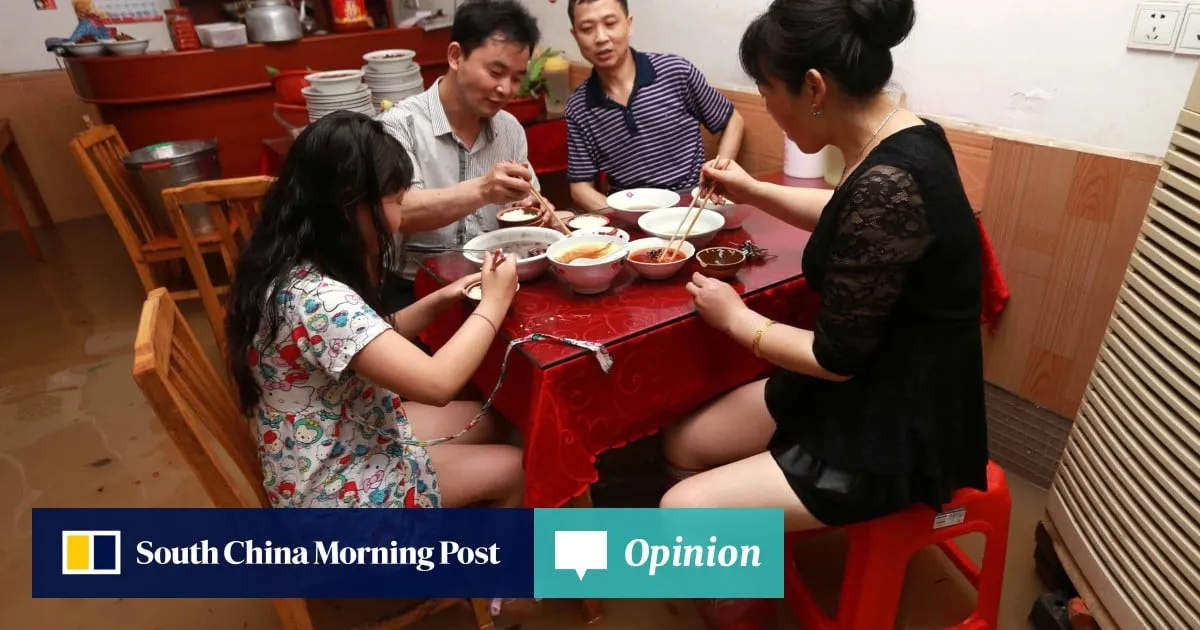
Xiong Yang is an independent journalist covering food, and its broader connections to culture, history and politics.“What did your family talk about at the dinner table?”Snug under the Tuscan sun, at a writing retreat on a permaculture farm outside Florence, I was ready to mine my fondest food memories. For a moment, scenes from films and television flashed across my mind: a montage of vivid dinner conversations and emotional check-ins, stitched together from various coming-of-age stories.The only problem was that I could not claim any of those vignettes as my own. I squinted and dug deeper, into countless meals with my family. It seemed our focus never shifted far from the meal itself. We cared too much about the fundamental function of the meal – nutrition – to ask one another about our day.“When eating, he did not converse. When in bed, he did not speak.” The Analects of Confucius, advising silence in aid of digestion and sleep, may well have anticipated our table manners. Although the Chinese philosopher was never directly quoted at home, the logic feels familiar.In my family, drinks were also absent from the dinner table, even something as benign as warm water. As a child, I assumed my parents set out to discourage sugary beverages but despotically banned all other drinks too. They insisted that too much liquid interfered with digestion.Only later would I discover that traditional Chinese medicine (TCM) shares the same suspicion. In TCM, digestion depends on the yang vital energy of the spleen and stomach, a kind of metabolic warmth that can be dampened by excess liquid. The body is understood to be a delicate system whose balance should not be disturbed unnecessarily.
SRCSouth China Morning Post
LANGEN
LEANCenter-Right
WORDS280
ENT6
SAT · 2026-06-27 · 01:30 GMTBRIEF NSR-2026-0627-87801
NSR-2026-0627-87801Opinion·EN·Human Interest
Talking when you eat is bad for you, and other Chinese beliefs
Journalist Xiong Yang reflects on her family's traditional Chinese dining customs, which prioritized silence and focused on the nutritional aspects of meals. Unlike the idealized dinner conversations often depicted in media, her family's meals were characterized by a quiet focus on food.
Xiong YangSouth China Morning PostFiled 2026-06-27 · 01:30 GMTLean · Center-RightRead · 2 min
South China Morning PostFIG 01
Reading time
2min
Word count
280words
Sources cited
1cited
Entities identified
6entities
Quality score
100%
§ 01
Briefing Summary
AI-generatedNEWSAR · AI
Journalist Xiong Yang reflects on her family's traditional Chinese dining customs, which prioritized silence and focused on the nutritional aspects of meals. Unlike the idealized dinner conversations often depicted in media, her family's meals were characterized by a quiet focus on food. This practice aligns with traditional Chinese beliefs, including advice from Confucius advocating for silence during meals to aid digestion. Furthermore, her family avoided drinks at the dinner table, a practice rooted in Traditional Chinese Medicine's understanding that excess liquid can dampen the spleen and stomach's vital energy, disrupting the body's delicate balance.
Confidence 0.90Sources 1Claims 4Entities 6
§ 02
Article analysis
Model · rule-basedFraming
Human Interest
Social Justice
Tone
Measured
AI-assessed
CalmNeutralAlarmist
Factuality
0.30 / 1.00
Opinion-Heavy
LowHigh
Sources cited
1
Limited
FewMany
§ 03
Key claims
4 extracted01
The author's family also discouraged drinks at the dinner table, believing it interfered with digestion.
quoteXiong Yang
Confidence
1.00
02
The author's family did not talk at the dinner table, focusing instead on the nutritional aspects of the meal.
quoteXiong Yang
Confidence
1.00
03
Talking while eating is a Chinese belief associated with Confucius, advising silence for digestion and sleep.
quoteThe Analects of Confucius
Confidence
0.90
04
Traditional Chinese Medicine (TCM) suggests that excess liquid interferes with digestion by dampening the spleen and stomach's yang vital energy.
factualTraditional Chinese Medicine
Confidence
0.80
§ 04
Full report
2 min read · 280 words§ 05
Entities
6 identifiedKey playerOppositionContextPositiveNeutralNegative
§ 06
Keywords & salience
8 termschinese beliefs
1.00
traditional chinese medicine
0.90
digestion
0.80
mealtime conversation
0.70
confucius
0.60
metabolic warmth
0.50
spleen and stomach
0.50
body balance
0.40
§ 07
Topic connections
Interactive graph No topic relationship data available yet. This graph will appear once topic relationships have been computed.