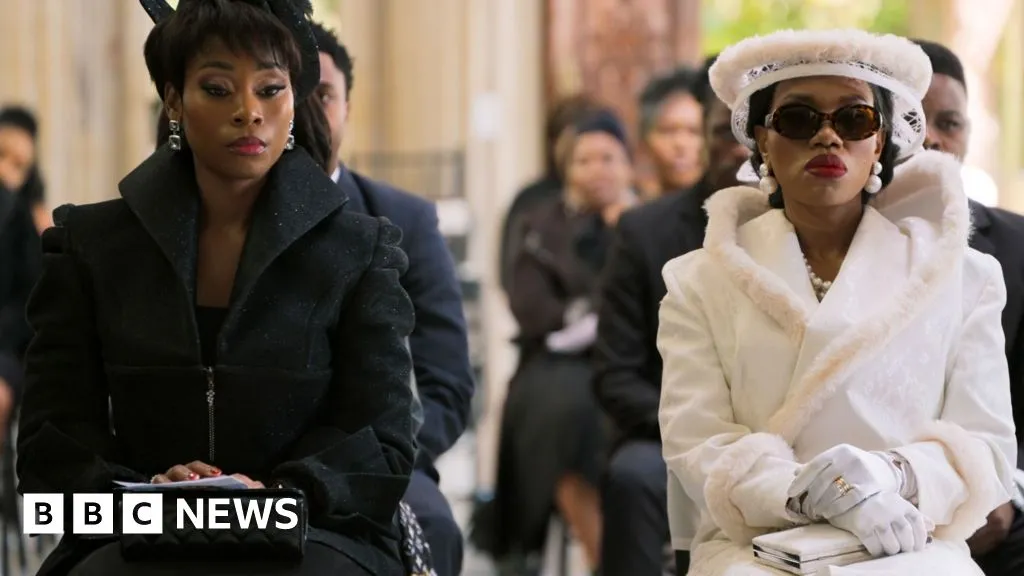
The 35-year-old is not from a polygamist family herself, nonetheless The Polygamist's storyline resonated and highlighted "social ills that happen and [are] normalised in Africa" class="entity-link entity-location" data-entity-id="534" data-entity-type="location">South Africa"."What stuck out for me personally was how broken families are and how broken society is," she told the BBC.polygamy is legally recognised in Africa" class="entity-link entity-location" data-entity-id="534" data-entity-type="location">South Africa and within Zulu, Xhosa, Ndebele and Venda cultures, among others, it is not uncommon for a man to have multiple wives - as happens in some other African and Muslim societies.The women tend to be set up in their own households though there is usually co-operation between co-wives in terms of child-rearing - something that can be less realistic in urban settings.For Mogale the polygamy in the show is duplicitous, secretive and "forced".It is "not supposed to be that way", she said, adding that the scene that best illustrated this was between Jonasi and his eldest daughter Mpume.Jonasi has six children altogether, with three women, and is closest to Mpume who is known as "Daddy's Girl".But as a teenager, broken by her father's deceit, neglect and unfaithfulness, Mpume tries to express her feelings in a letter that she starts to read out loud to him.
SRCBBC News - World
LANGEN
LEANCenter
WORDS196
ENT11
FRI · 2026-06-26 · 23:02 GMTBRIEF NSR-2026-0627-87812
NSR-2026-0627-87812News Report·EN·Human Interest
Hit South African show gets the world talking about polygamy and cheating
The South African Zulu-language series, "The Polygamist," has become a global success by exploring the complexities of polygamy and infidelity. While polygamy is legally recognized and culturally accepted in certain South African traditions, the show's creator highlights how the series depicts a duplicitous and "forced" form of polygamy, reflecting social issues prevalent in South Africa.
3 hours agoShareSaveAdd as preferred on GoogleKhanyisile NgcoboJohannesburgBBC News - WorldFiled 2026-06-26 · 23:02 GMTLean · CenterRead · 1 min
BBC News - WorldFIG 01
Reading time
1min
Word count
196words
Sources cited
1cited
Entities identified
11entities
Quality score
100%
§ 01
Briefing Summary
AI-generatedNEWSAR · AI
The South African Zulu-language series, "The Polygamist," has become a global success by exploring the complexities of polygamy and infidelity. While polygamy is legally recognized and culturally accepted in certain South African traditions, the show's creator highlights how the series depicts a duplicitous and "forced" form of polygamy, reflecting social issues prevalent in South Africa. The narrative focuses on the impact of a father's deceit, neglect, and unfaithfulness on his family, particularly his eldest daughter, Mpume. The show's success has sparked international conversations about these themes, even though the creator herself does not come from a polygamist background.
Confidence 0.90Sources 1Claims 5Entities 11
§ 02
Article analysis
Model · rule-basedFraming
Human Interest
Social Justice
Tone
Mixed Tone
AI-assessed
CalmNeutralAlarmist
Factuality
0.60 / 1.00
Mixed
LowHigh
Sources cited
1
Limited
FewMany
§ 03
Key claims
5 extracted01
The show highlights 'social ills that happen and [are] normalised in South Africa'.
quoteMogale
Confidence
1.00
02
Jonasi, a character in the show, has six children with three women.
factual
Confidence
1.00
03
The show's creator, Mogale, views the polygamy depicted in the show as duplicitous, secretive, and forced.
quoteMogale
Confidence
1.00
04
Polygamy is legally recognized in South Africa and is common in Zulu, Xhosa, Ndebele, and Venda cultures.
factual
Confidence
1.00
05
The show 'The Polygamist' has sparked global conversations about polygamy and cheating.
factual
Confidence
1.00
§ 04
Full report
1 min read · 196 words§ 05
Entities
11 identifiedKey playerOppositionContextPositiveNeutralNegative
People5
Locations4
§ 06
Keywords & salience
9 termspolygamy
1.00
cheating
0.80
social ills
0.70
broken families
0.70
south africa
0.60
neglect
0.50
unfaithfulness
0.50
deceit
0.50
cultural norms
0.40
§ 07
Topic connections
Interactive graph Network visualization showing 51 related topics
View Full Graph Person Organization Location Event|Click node to navigate|Edge numbers = shared articles