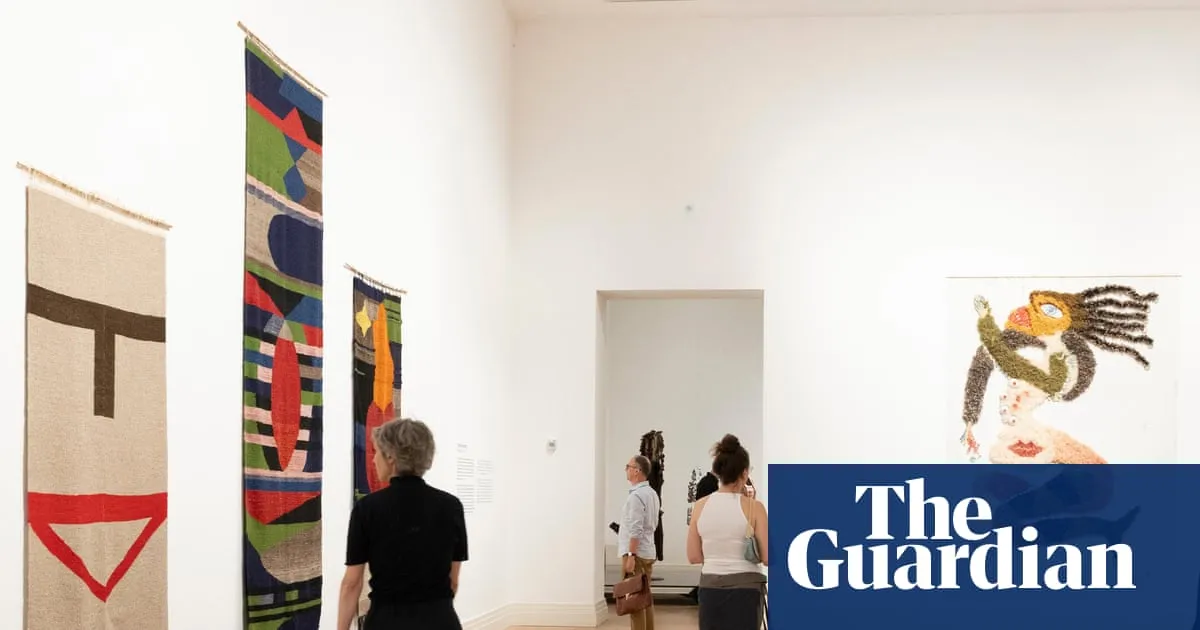
Gabriele Stötzer remembers the days when she had to decide: “Am I buying a sausage, or film for my Super 8 camera?”Stötzer was one of the most radical artists in communist Germany" class="entity-link entity-location" data-entity-id="6560" data-entity-type="location">East Germany, and her desire to create was born in defiance of and in spite of the material conditions and oppressive restrictions of the GDR regime.“We were broke, but we were totally fascinated by freedom,” she said.Gabriele Stötzer: ‘We made use of everything we experienced – our dreams, traumas, the exaltation, the humiliation.’ Photograph: Jens Kalaene/dpaNow 73, Stötzer has her first major show at one of Germany’s foremost galleries for contemporary art, in what is the biggest ever celebration of an East German female artist in a state museum.Dabei Sein und nicht schweigen (Show up and don’t be quiet) is on display at the sprawling Martin Gropius Bau gallery in Berlin, where 150 of Stötzer’s works are being exhibited in a dedicated wing until 6 December.The title is taken from the book Stötzer wrote about her year spent locked up after protesting against the expatriation of dissident singer-songwriter Wolf Biermann.It was during her incarceration in the notorious women’s prison of Hoheneck in Saxony during the late 1970s that her artistic streak began to emerge.A piece from the exhibition. Photograph: Gropius Bau“Living in a land already cordoned off from the rest of the world by the Berlin-wall" class="entity-link entity-event" data-entity-id="19255" data-entity-type="event">Berlin Wall, I found myself behind yet another set of walls,” she said, adding that she was lucky to have been young enough to find it interesting and to put that curiosity to use. “Our cell held 20 women … and we worked a three-shift schedule during the day. Art was bound up in my dream of another life.”Stötzer has been active for years as a contemporary witness and storyteller at Hoheneck, which is now a memorial museum dedicated to the incarceration and persecution of female political prisoners in the communist east. She does not mind being referred to as “East German”, but balks at being reduced to the label of “GDR artist”.“She’s been celebrated as an eyewitness to history but until now has never been celebrated as an artist in her own right – and this is what this show seeks to rectify,” said Julia Grosse, who curated the exhibition along with Christopher Wierling.In preparation for it, they visited Stötzer in her Erfurt flat, where her kitchen doubles up as her atelier, and where she had been storing her work in every available nook and cranny.Photographs by Gabriele Stötzer. Photograph: Gropius BauIn contrast to other artists and intellectuals in the GDR, Stötzer refused to be bought out of the east by the West German government, considering that it would allow the anti-capitalist regime to profit from her protest. She stayed, with the intention of using the GDR as an experimental space for artistic fellowship, feminist struggle and solidarity – just like she had experienced in prison.She went underground, lived in a squat and later co-founded a women’s artists’ collective while under the constant surveillance of the East German secret police, the Stasi, which frequently banned the collective’s activities.“We made use of everything we experienced – our dreams, traumas, the exaltation, the humiliation,” she said. At her lowest, she recalls drawing on everything from the furniture, her dishes and wallpaper “so that I could recognise myself, and feel that I existed – to keep my own substance”.Ultimately she believes the collective’s joint resistance helped to reveal not only the state’s repressive methods, but also its weaknesses.A drawing from the exhibition. Photograph: Gropius BauShe invariably chose to buy Super 8 film rather than sausages, using its soft and grainy qualities to capture expressions of the individuality the state sought to quash, in everything from dancing naked with her friends to orgiastic body painting, the free-climbing of walls, or dressing-up in black refuse sacks and posing in them with the same panache as if they were the latest must-have fashion items.Among the exhibits spanning 50 years are woven carpets, drawings, photographs, sculptures made of junk and large scrapbook style albums, which – as she was forbidden from having exhibitions after refusing to join the GDR’s official artists’ association – served as a vital way for her to display her work in trusted circles.Carolin Würfel, a writer with a particular interest in eastern German feminist history, said the exhibition was meaningful to East Germans in particular, because it was “recognition by the official German discourse of Stötzer, an East German artist, as part of the cultural history of Germany, both east and west.“It finally sends a signal that East German art and culture is not a niche, trapped in a vanished country, but part of our collective memory and our present,” she said.
SRCThe Guardian - World News
LANGEN
LEANCenter-Left
WORDS786
ENT12
MON · 2026-06-29 · 06:00 GMTBRIEF NSR-2026-0629-88265
NSR-2026-0629-88265News Report·EN·Human Interest
‘We were broke, but fascinated by freedom’: exhibition showcases East German artist Gabriele Stötzer
An exhibition at Berlin's Martin Gropius Bau gallery celebrates the work of East German artist Gabriele Stötzer, marking the largest state museum exhibition for an East German female artist. Stötzer, who describes herself as "broke, but fascinated by freedom," created art in defiance of the communist regime's restrictions.
Kate Connolly in BerlinThe Guardian - World NewsFiled 2026-06-29 · 06:00 GMTLean · Center-LeftRead · 4 min
The Guardian - World NewsFIG 01
Reading time
4min
Word count
786words
Sources cited
3cited
Entities identified
12entities
Quality score
100%
§ 01
Briefing Summary
AI-generatedNEWSAR · AI
An exhibition at Berlin's Martin Gropius Bau gallery celebrates the work of East German artist Gabriele Stötzer, marking the largest state museum exhibition for an East German female artist. Stötzer, who describes herself as "broke, but fascinated by freedom," created art in defiance of the communist regime's restrictions. Her artistic journey began during her incarceration in the Hoheneck women's prison in the late 1970s. Refusing to be bought out by West Germany, Stötzer stayed in the GDR to use it as an experimental space for artistic fellowship and feminist struggle, often under Stasi surveillance. The exhibition, titled "Dabei Sein und nicht schweigen," features 150 of her works spanning 50 years, including drawings, photographs, and sculptures, highlighting her use of everyday experiences and materials to express individuality.
Confidence 0.90Sources 3Claims 5Entities 12
§ 02
Article analysis
Model · rule-basedFraming
Human Interest
Social Justice
Tone
Measured
AI-assessed
CalmNeutralAlarmist
Factuality
0.60 / 1.00
Mixed
LowHigh
Sources cited
3
Well sourced
FewMany
§ 03
Key claims
5 extracted01
The exhibition seeks to celebrate Gabriele Stötzer as an artist in her own right, not just an eyewitness to history.
quoteJulia Grosse
Confidence
1.00
02
Stötzer spent time incarcerated in the women's prison of Hoheneck in Saxony during the late 1970s.
factualarticle
Confidence
1.00
03
Stötzer's first major show is at the Martin Gropius Bau gallery in Berlin, exhibiting 150 works.
factualarticle
Confidence
1.00
04
Stötzer refused to be bought out of East Germany by the West German government.
factualarticle
Confidence
0.90
05
Gabriele Stötzer was one of the most radical artists in communist East Germany.
factualarticle
Confidence
0.80
§ 04
Full report
4 min read · 786 words§ 05
Entities
12 identifiedKey playerOppositionContextPositiveNeutralNegative
People4
Organizations1
Locations6
§ 06
Keywords & salience
9 termseast german artist
1.00
gabriele stötzer
1.00
gdr regime
0.90
freedom
0.80
contemporary art
0.70
hoheneck prison
0.60
artistic expression
0.50
berlin wall
0.40
dissident
0.40
§ 07
Topic connections
Interactive graph No topic relationship data available yet. This graph will appear once topic relationships have been computed.