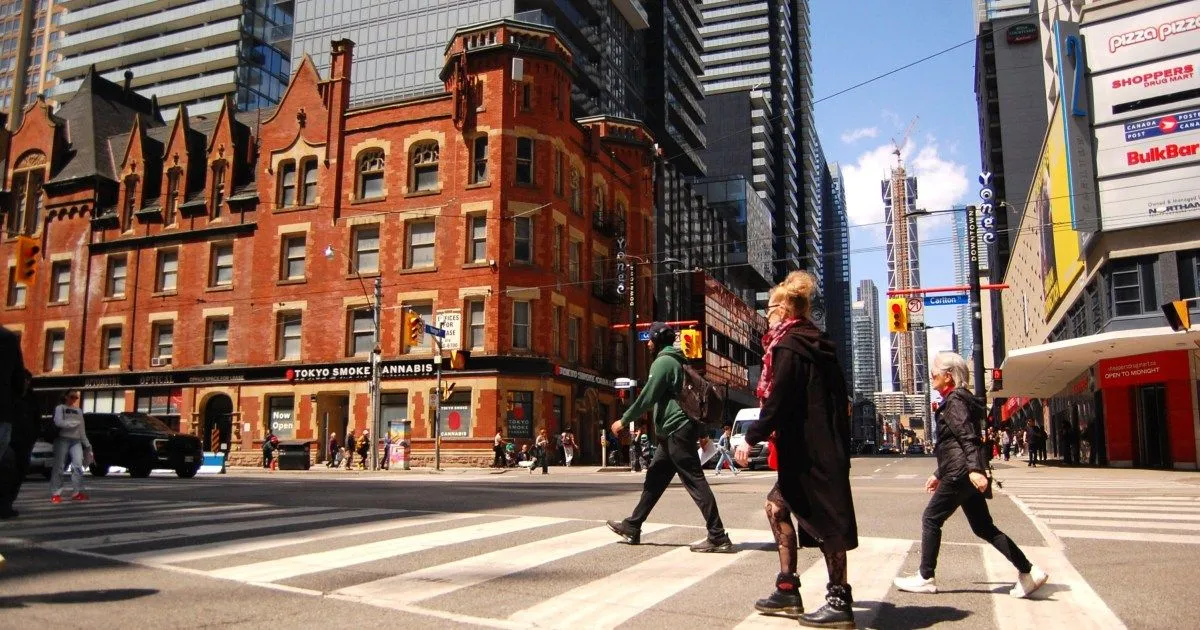
UNPACK THE PASTHistorians and Greek community members say 1918 riots in Toronto reminiscent of anti-immigrant rhetoric, xenophobia now.The area in Toronto near where the anti-Greek riots of 1918 began [Jillian Kestler-D'Amours/Al Jazeera]Published On 29 Jun 2026Toronto, Canada – The mobs marched down Yonge Street in the heart of what is now Canada’s largest city in August 1918.Tens of thousands of people, angry over perceived social injustices, spent hours rampaging through the streets. Their target? The Greek-owned restaurants and shops that had come to symbolise their grievances.Recommended Stories list of 3 itemslist 1 of 3‘We are scapegoats’: The rise of anti-migrant anger in Polandlist 2 of 3Xenophobia runs the worldlist 3 of 3Why are anti-migrant attacks increasing in South Africa?end of list“That night, crowds of 20-25,000 people destroyed almost every Greek business in the city, crying out, ‘Tonight’s the night we hunt Greeks’,” says historian Thomas Gallant.“One restaurant was so badly damaged that a [local newspaper] reporter said it could not be more damaged if a bomb had gone off in it.”Now, more than a century after “the single largest anti-Greek riot anywhere in the world in history” shook Toronto, experts such as Gallant say the events of that summer should serve as a cautionary tale.Amid the ongoing, intensified rise in anti-immigrant views and policies around the world, including in Canada, they argue the riot demonstrates just how dangerous unchecked xenophobia can be.‘Conditions ripe for an explosion’Toronto was in the throes of a heatwave in early August 1918 as it prepared to host a national congress of the Great War Veterans Association, a group advocating for the needs of soldiers returning to Canada after World War I.The country paid a heavy price on the battlefields of Europe: Tens of thousands of Canadian soldiers were killed during the war, which ended in November 1918, while more than 172,000 arrived home injured.Those veterans returned to a lack of support from the Canadian government, which offered inadequate health care and no disability pensions. “They came back to a country that really wasn’t all that welcoming,” says Gallant.Most Greek immigrants in Canada did not serve in WWI, in part due to fears in government that some might harbour the pro-German views of Greece’s King Constantine I. While it was not official policy to refuse to accept naturalised Greeks into the army, says Gallant, it only happened “very rarely”.“I found the enlistment papers of only about 10 who were accepted, because you didn’t know who you were getting.”At the same time, in Toronto, many returning Canadian veterans lived near a military hospital that was in the same neighbourhood that the city’s small-yet-visible Greek community was establishing itself.In 1918, Greek immigrants made up less than one percent of the population in Toronto, but they owned more than one-third of the city’s cheap eateries and diners.The perception among members of the city’s veteran community was that Greeks had grown rich while they, the ones who had sacrificed so much in the war, had been left destitute. And the visibility of the Greek community was key, says Gallant.“Every day, these veterans who ate at those diners … saw these Greeks – young men, very healthy, robust – who managed not to serve. And the Greeks came to epitomise what was called ‘the slacker’,” or the draft dodger, he explains.“The conditions were ripe then for an explosion.”Sandra Gionas of the Hellenic Heritage Foundation with a pamphlet about the riots [Jillian Kestler-D’Amours/Al Jazeera]White City CafeThat explosion was set off at a Greek-owned restaurant known as the White City Cafe, where a drunk Canadian military veteran had become belligerent and abusive towards staff.Police were called and Claude Cludernay – the veteran in question – was held overnight in jail. But by the next day, rumours had begun to spread among the veterans in Toronto that Cludernay had been beaten – or even killed – by Greek immigrants.Hundreds of people massed outside the restaurant and, despite the pleas of owner Paul Letros, who tried to calm the angry crowd, the cafe was attacked.“They yelled, ‘Tonight we get justice,’ and they started throwing bricks through the windows and ransacked the whole place,” said Sandra Gionas, chair of the history committee at the Hellenic Heritage Foundation.“The mob grew throughout the night and, eventually, other Greek restaurants were going to be targeted,” she told Al Jazeera outside the two-storey brick building at 433 Yonge Street which previously housed the cafe.Over the course of the weekend, more than a dozen Greek-owned businesses would be destroyed across Toronto, resulting in tens of thousands of dollars in damages – the equivalent of millions of dollars today. No deaths or serious injuries were reported.“That is a map with the red dots of all the Greek businesses that were destroyed,” Gionas says, opening a pamphlet that her organisation gives out during a walking tour of important sites linked to the riots.Sandra Gionas of the Hellenic Heritage Foundation in Toronto [Jillian Kestler-D’Amours/Al Jazeera]Episode ‘erased from history’The riots made headlines in Canada, Greece and other countries around the world.“Angry Mob Wrecks Dozen Restaurants,” read one in the Toronto Daily Star on August 3, 1918. “Returned Soldiers Raid Many Greek Restaurants,” the Globe and Mail proclaimed that same day.“A crowd of a thousand returned soldiers and sympathisers broke loose last night,” the Globe’s report reads.“From six o’clock in the evening until after two o’clock this morning they were absolute masters of all authority, defied the police and the military, and utterly tore to pieces the interiors of a dozen restaurants and stores, leaving wreckage in their path like unto the devastation they saw themselves after their advance in France following a great artillery battle.”But the overriding narrative in 1918 was, by and large, that the Greek community was itself to blame for the violent incident, said Gallant, who has studied local newspaper clippings in the aftermath of the riots.“Even the mayor [of Toronto] said, ‘Yes, all of the grievances of the soldiers need to be looked at. Yes, the Greeks have not done their fair share for the war’,” he says. “It became blame the victim, the immigrant.”A story in the Globe and Mail detailing the riots [The Globe and Mail, 1844-1936/Retrieved from Toronto Public Library]Public attention also quickly turned to other issues, such as the rise of left-wing labour movements in Canada after the end of WWI, which led to the Winnipeg General Strike of 1919 – the largest in Canadian history.Meanwhile, a “cone of silence” had fallen over the Greek community in Toronto as families tried to turn the page and rebuild, Gallant says. The goal was assimilation, and gradually, the anti-Greek riots were “erased from history”.“And that often happens with episodes like this, when a minority population suffers discrimination,” he explains. “In the case of a community that’s trying to assimilate, the last thing they want is to sort of foreground this history.”It was not until the early 2000s that more people became aware of what had happened, thanks in part to a book Gallant co-wrote, titled “The 1918 anti-Greek Riot in Toronto”.In 2009, a documentary about the violent chapter in Canadian history also came out, reaching a wider audience. Gionas says she had never heard about the riots until she saw the documentary on TV.“I was shocked to find out about them,” she says, describing the story as “largely forgotten” for decades. “I was like, ‘I thought I was a student of Canadian history, how can I not know this’?” she recalls.A board game and trading cards store on Toronto’s Yonge Street, the site of the former White City Cafe where the riots began [Jillian Kestler-D’Amours/Al Jazeera]Echoes of the past, todayWhile more than 100 years have passed since the riots, both Gallant and Gionas said they remain more relevant than ever – particularly as Canada experiences a rise in anti-immigrant sentiment.Public opinion on immigration has hardened in recent years amid socioeconomic challenges. such as a housing crisis and soaring prices.Polling shows a majority of Canadians now believe there is “too much” immigration to the country, and anti-immigrant rhetoric has become commonplace, with politicians talking about “bogus” asylum seekers and blaming newcomers for social ills.That is a trend happening around the world, said Gallant, who points to events south of the border in the United States as one of the most extreme modern-day examples.President Donald Trump has been carrying out an anti-immigration crackdown while he and other senior members of his administration have used dehumanising language to vilify migrants and refugees. Trump even went so far as to say during the 2024 election campaign that immigrants were “poisoning the blood of our country”.That, according to Gallant, harks back to 1918.“Whenever there’s a crisis point, particularly now with war, societies look for someone to blame. ‘Why is this like this? Why is unemployment high? Why is inflation this way? It’s because these people are taking the jobs’,” he says.“As more and more episodes like the one in Toronto become studied, what we see is that in times of stress, in times of national crisis, certain groups just get scapegoated – like the Greeks.”
SRCAl Jazeera
LANGEN
LEANCenter
WORDS1 511
ENT10
MON · 2026-06-29 · 09:47 GMTBRIEF NSR-2026-0629-88287
NSR-2026-0629-88287News Report·EN·Social Justice
‘Erased from history’: A century on from Canada’s anti-Greek riots
In August 1918, Toronto experienced the largest anti-Greek riot in history. Mobs of thousands, fueled by anger over perceived social injustices and the return of World War I veterans, targeted Greek-owned businesses.
Jillian Kestler-D'AmoursAl JazeeraFiled 2026-06-29 · 09:47 GMTLean · CenterRead · 7 min
Al JazeeraFIG 01
Reading time
7min
Word count
1 511words
Sources cited
1cited
Entities identified
10entities
Quality score
100%
§ 01
Briefing Summary
AI-generatedNEWSAR · AI
In August 1918, Toronto experienced the largest anti-Greek riot in history. Mobs of thousands, fueled by anger over perceived social injustices and the return of World War I veterans, targeted Greek-owned businesses. The riots were ignited by rumors that a Canadian veteran had been mistreated by Greek immigrants at the White City Cafe. This incident escalated into widespread destruction of Greek restaurants and shops across the city, causing significant financial damage. Historians now view these events as a cautionary tale about the dangers of unchecked xenophobia and anti-immigrant sentiment, noting parallels to contemporary anti-immigrant rhetoric.
Confidence 0.90Sources 1Claims 5Entities 10
§ 02
Article analysis
Model · rule-basedFraming
Social Justice
Human Interest
Tone
Mixed Tone
AI-assessed
CalmNeutralAlarmist
Factuality
0.70 / 1.00
Factual
LowHigh
Sources cited
1
Limited
FewMany
§ 03
Key claims
5 extracted01
Tens of thousands of people destroyed almost every Greek business in the city, crying out, ‘Tonight’s the night we hunt Greeks’.
quoteThomas Gallant
Confidence
1.00
02
Historians and Greek community members draw parallels between the 1918 riots and current anti-immigrant rhetoric.
factual
Confidence
1.00
03
In August 1918, mobs rampaged through Toronto streets, targeting Greek-owned businesses.
factual
Confidence
1.00
04
Returning Canadian veterans faced inadequate government support, including healthcare and disability pensions.
factual
Confidence
0.90
05
Greek immigrants made up less than one percent of Toronto's population in 1918 but owned over one-third of the city's cheap eateries.
statistic
Confidence
0.90
§ 04
Full report
7 min read · 1 511 words§ 05
Entities
10 identifiedKey playerOppositionContextPositiveNeutralNegative
Organizations1
§ 06
Keywords & salience
8 termsanti-greek riots
1.00
xenophobia
0.90
anti-immigrant rhetoric
0.90
toronto
0.80
greek community
0.70
world war i
0.60
history
0.50
cautionary tale
0.40
§ 07
Topic connections
Interactive graph No topic relationship data available yet. This graph will appear once topic relationships have been computed.