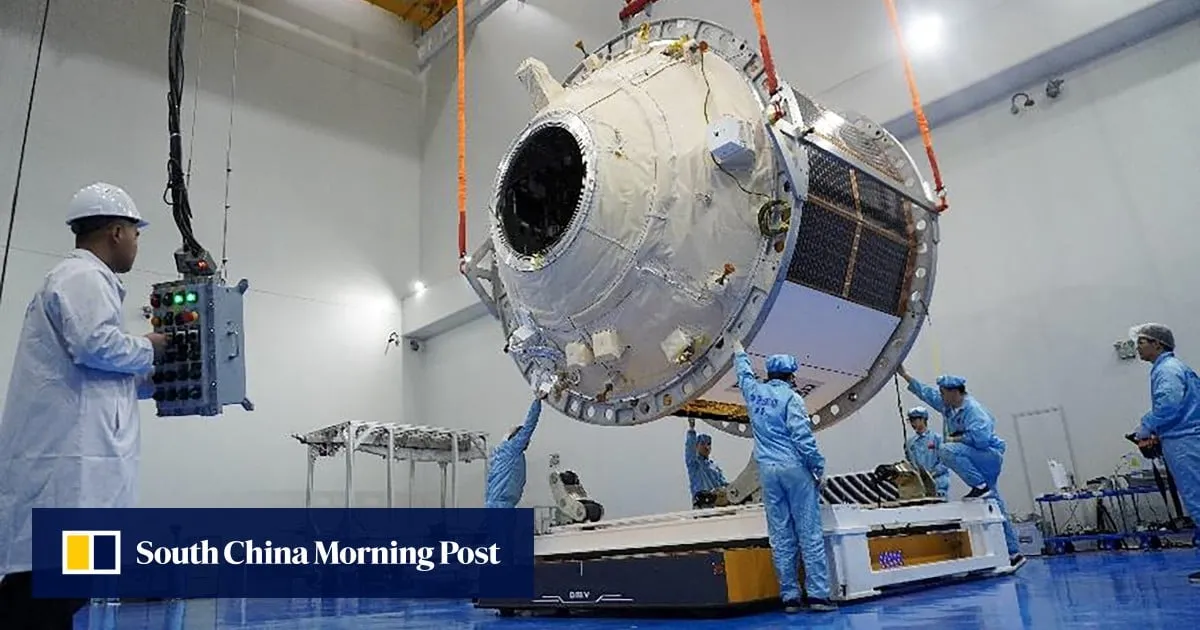
3-MIN READ3-MIN0ListenPublished: 9:00pm, 29 Jun 2026China has hopes for a desert moss that it says could colonise Mars following a revival experiment inside a mini space laboratory that showed it was remarkably resilient, state broadcaster CCTV said on Monday.The plant, a highly drought-resistant species called Syntrichia caninervis, was revived after it was subjected to a series of extreme space conditions – including microgravity, intense radiation and severe dehydration – according to the report.Chinese scientists had previously established in simulated Martian environments that the moss was a promising pioneer species for colonising extraterrestrial worlds.03:00China launches Shenzhou-21 spacecraft with 4 mice aboard for 6-month experimentThe findings are expected to “provide theoretical backing” for its use in low-energy ecological improvement and the in-situ use of local resources for future off-Earth settlements.
SRCSouth China Morning Post
LANGEN
LEANCenter-Right
WORDS128
ENT5
MON · 2026-06-29 · 13:00 GMTBRIEF NSR-2026-0629-88345
NSR-2026-0629-88345News Report·EN·Technology
China says desert moss suited to Mars as it tests hi-tech tools for space and astronauts
Chinese scientists have successfully revived a desert moss, Syntrichia caninervis, after subjecting it to extreme space conditions in a mini space laboratory. This highly drought-resistant species demonstrated remarkable resilience to microgravity, intense radiation, and severe dehydration.
Dannie PengSouth China Morning PostFiled 2026-06-29 · 13:00 GMTLean · Center-RightRead · 1 min
South China Morning PostFIG 01
Reading time
1min
Word count
128words
Sources cited
1cited
Entities identified
5entities
Quality score
100%
§ 01
Briefing Summary
AI-generatedNEWSAR · AI
Chinese scientists have successfully revived a desert moss, Syntrichia caninervis, after subjecting it to extreme space conditions in a mini space laboratory. This highly drought-resistant species demonstrated remarkable resilience to microgravity, intense radiation, and severe dehydration. Previously, simulations in Martian environments indicated the moss's potential as a pioneer species for extraterrestrial colonization. The findings are expected to support the use of this moss for low-energy ecological improvements and in-situ resource utilization in future off-Earth settlements. This research aligns with China's broader ambitions for space exploration and astronaut support.
Confidence 0.85Sources 1Claims 4Entities 5
§ 02
Article analysis
Model · rule-basedFraming
Technology
Environmental
Tone
Measured
AI-assessed
CalmNeutralAlarmist
Factuality
0.80 / 1.00
Factual
LowHigh
Sources cited
1
Limited
FewMany
§ 03
Key claims
4 extracted01
The plant, Syntrichia caninervis, was revived after it was subjected to extreme space conditions including microgravity, intense radiation and severe dehydration.
factualstate broadcaster CCTV
Confidence
0.90
02
China has hopes for a desert moss that it says could colonize Mars following a revival experiment inside a mini space laboratory.
factualChina
Confidence
0.90
03
Chinese scientists had previously established in simulated Martian environments that the moss was a promising pioneer species for colonizing extraterrestrial worlds.
factualChinese scientists
Confidence
0.80
04
The findings are expected to provide theoretical backing for its use in low-energy ecological improvement and the in-situ use of local resources for future off-Earth settlements.
predictionarticle
Confidence
0.70
§ 04
Full report
1 min read · 128 words§ 05
Entities
5 identifiedKey playerOppositionContextPositiveNeutralNegative
Organizations1
§ 06
Keywords & salience
10 termsmars colonization
1.00
desert moss
0.90
space experiment
0.80
syntrichia caninervis
0.70
extraterrestrial settlements
0.70
extreme space conditions
0.60
in-situ resource utilization
0.50
ecological improvement
0.50
microgravity
0.40
radiation
0.40
§ 07
Topic connections
Interactive graph Network visualization showing 51 related topics
View Full Graph Person Organization Location Event|Click node to navigate|Edge numbers = shared articles