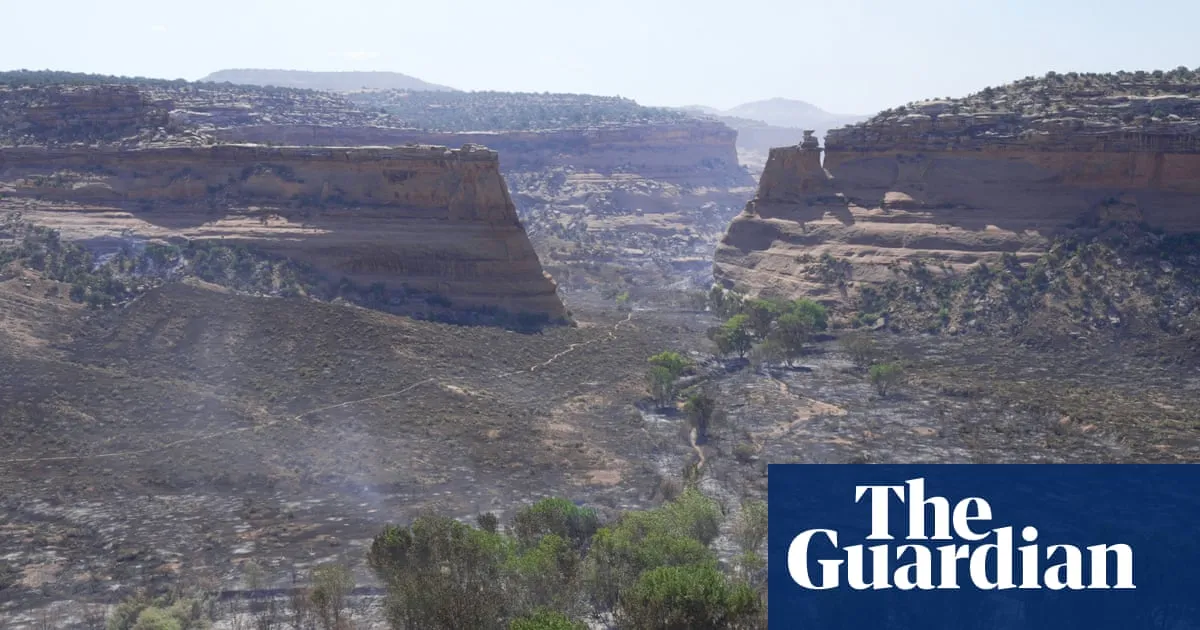
Unseasonal snow has fallen in some parts of the US, while other parts of the country brace for a heatwave this week.A strong cold front spread into the western US from the northern Pacific over the weekend, bringing an abrupt change in conditions to a region that had been experiencing high summer temperatures amid drought. Temperatures from the Canadian border to California have widely been 5-10C below the norm since Friday, and more than 10C below in some parts farther north. The pattern is expected to remain for much of the coming week.The cold front brought the first significant rainfall in weeks to several parts of the north-west US. Across the Rocky Mountains in Idaho, Montana and Wyoming, this combined with the unseasonal cold to produce snowfall at unusually low elevations for the time of year. Whereas the snow line in summer typically sits at about 3,300 metres (11,000ft), snow fell as low as 1,800 metres on Sunday, with more due to fall on Monday. Several inches are expected to accumulate at higher altitudes.Counterintuitively the cold front has also strongly increased the danger posed by wildfires. With much of the western US currently suffering some form of drought, lightning strikes from the leading edge of the front posed an ignition risk to the widespread dry vegetation and plant litter, while heightened winds fuelled the spread of existing fires.Firefighters watch as the Cottonwood fire burns near Beaver, Utah, on Saturday. Photograph: Noah Berger/APThe gustiest conditions over the weekend were in Utah, Colorado, and Arizona, where several major fires were already burning. The strong winds will move north into Wyoming on Monday. The 2026 fire season is shaping up to be one of the worst on record in terms of number and the extent of the areas affected.Temperatures were a little below average across many other parts of the northern US over the latter part of last week but that is set to radically change over the next few days. A heatwave developing over the north-east in the run-up to the Fourth of July weekend will push temperatures into the high 30s celsius for several parts of the midwest and north-east.skip past newsletter promotionafter newsletter promotionForecast models suggest highs could possibly reach 40C (104F) for cities including New York, Philadelphia and Washington DC on Thursday and Friday, with night-time lows struggling to drop below the high 20s celsius. By contrast, the average daily high for these cities in July varies from 29C in New York to 32C in Washington. The temperature records stand at 42C for New York and 41C for Philadelphia and Washington.
SRCThe Guardian - World News
LANGEN
LEANCenter-Left
WORDS432
ENT12
MON · 2026-06-29 · 12:09 GMTBRIEF NSR-2026-0629-88361
NSR-2026-0629-88361News Report·EN·Environmental
Weather tracker: North-west US hit by snow ahead of eastern heatwave
A cold front from the northern Pacific has brought unseasonal snow to parts of the western US, with temperatures 5-10°C below average from Canada to California. This cold snap has caused snowfall at unusually low elevations in the Rocky Mountains and, counterintuitively, increased wildfire danger due to lightning strikes and strong winds in drought-stricken areas.
Lauren Herdman for MetDeskThe Guardian - World NewsFiled 2026-06-29 · 12:09 GMTLean · Center-LeftRead · 2 min
The Guardian - World NewsFIG 01
Reading time
2min
Word count
432words
Sources cited
1cited
Entities identified
12entities
Quality score
100%
§ 01
Briefing Summary
AI-generatedNEWSAR · AI
A cold front from the northern Pacific has brought unseasonal snow to parts of the western US, with temperatures 5-10°C below average from Canada to California. This cold snap has caused snowfall at unusually low elevations in the Rocky Mountains and, counterintuitively, increased wildfire danger due to lightning strikes and strong winds in drought-stricken areas. Meanwhile, the eastern US is bracing for a significant heatwave, with temperatures potentially reaching 40°C in New York, Philadelphia, and Washington D.C. by the end of the week, well above typical July averages. This dramatic weather contrast is occurring as the western US faces a severe fire season.
Confidence 0.90Sources 1Claims 5Entities 12
§ 02
Article analysis
Model · rule-basedFraming
Environmental
Human Interest
Tone
Measured
AI-assessed
CalmNeutralAlarmist
Factuality
0.90 / 1.00
Factual
LowHigh
Sources cited
1
Limited
FewMany
§ 03
Key claims
5 extracted01
Snow fell as low as 1,800 metres in the Rocky Mountains, significantly lower than the typical summer snow line of 3,300 metres.
factual
Confidence
1.00
02
Temperatures in the western US have been 5-10C below normal since Friday, with some areas more than 10C below.
factual
Confidence
1.00
03
Unseasonal snow has fallen in parts of the US, while other parts brace for a heatwave.
factual
Confidence
1.00
04
A heatwave developing over the north-east will push temperatures into the high 30s Celsius for parts of the midwest and north-east.
factual
Confidence
0.90
05
Forecast models suggest highs could possibly reach 40C for cities including New York, Philadelphia and Washington DC on Thursday and Friday.
prediction
Confidence
0.80
§ 04
Full report
2 min read · 432 words§ 05
Entities
12 identifiedKey playerOppositionContextPositiveNeutralNegative
Locations12
US
United States
CountryContext
10x
100
NU
Northwest United States
RegionContext
3x
90
RM
Rocky Mountains
RegionContext
60
W
Wyoming
RegionContext
2x
50
P
Pacific
RegionContext
50
U
Utah
RegionContext
2x
50
C
Colorado
RegionContext
40
M
Montana
RegionContext
40
I
Idaho
RegionContext
40
C
California
RegionContext
40
C
Canada
CountryContext
40
A
Arizona
RegionContext
40
§ 06
Keywords & salience
10 termsweather patterns
1.00
cold front
0.90
heatwave
0.90
unseasonal snow
0.80
wildfire danger
0.70
drought
0.60
rocky mountains
0.50
north-east us
0.50
north-west us
0.50
fire season
0.40
§ 07
Topic connections
Interactive graph Network visualization showing 51 related topics
View Full Graph Person Organization Location Event|Click node to navigate|Edge numbers = shared articles