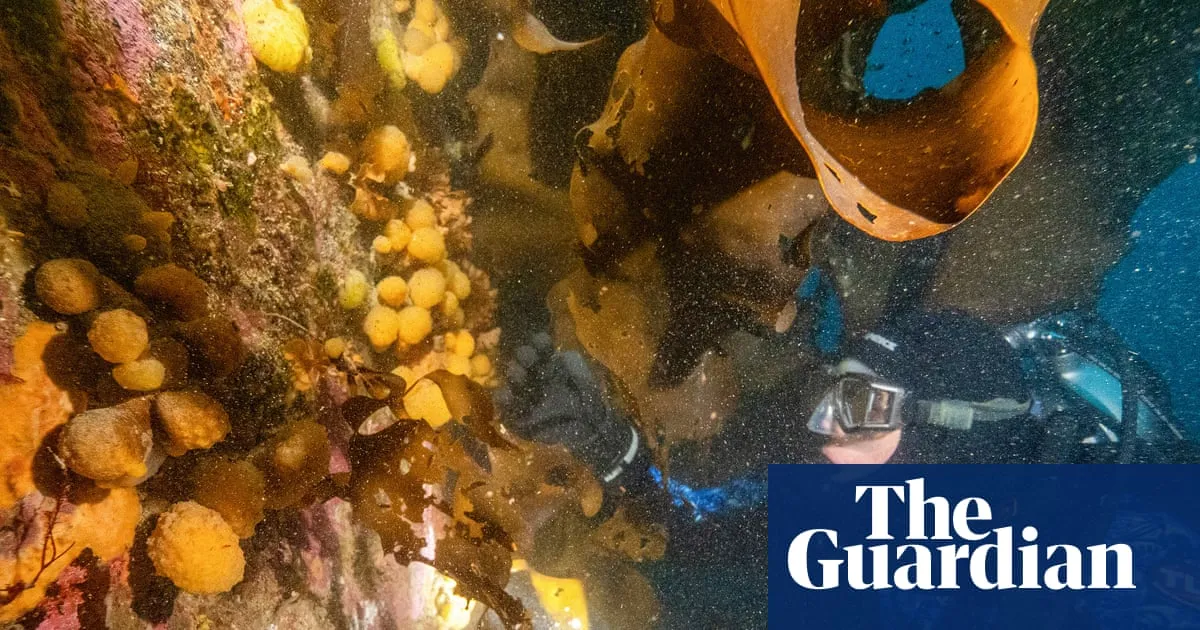
Researchers at a Florida university say bacterial toxins produced by tiny marine organisms they have studied in Antarctica could become an effective treatment for melanoma, the deadliest form of skin cancer.A team from the University of South Florida (USF) recently returned from a six-week expedition to one of the world’s remotest regions in which they collected samples of ascidians, invertebrates known as sea squirts that thrive in the icy waters.Brian Baker, professor of chemistry at USF, said toxins produced by the ascidians as protection against predators can be “repurposed”, with research his team has already undertaken showing that it has killed melanoma cells in mice.“The good news is it didn’t kill the mice,” he said. “It did kill their cancer, so we know it has the physiological properties to act like a drug. We need grams of material to do a bigger study in mice, perhaps go into other animal models, and if we can prove the safety, we can actually start some human trials.”Baker acknowledged the pathway to producing a safe and effective anti-melanoma drug, with approval for use in humans, is long. It would require a succession of strictly regulated and ever-expanding trials even after a drug was formulated.But knowledge gained from the expedition, which saw teams of divers descending to depths of up to 130ft for about half an hour at a time, could significantly advance the timeline, he said.Ben Meister, a USF professor who was the diving safety officer for the expedition, which was funded by the National Science Foundation, said sea temperatures were only one of the challenges overcome by his team.“In Antarctica, you’re dealing with ice, leopard seals, changing seas and sometimes very limited visibility,” he said.“Every dive must be carefully planned to balance getting the work done while keeping everyone safe.”Work on developing the toxins towards a potential melanoma-fighting drug will now take place in laboratories, with some of it already under way in partnerships Baker and his department have built with the Desert Research Institute, and the Scripps Institution of Oceanography.Although their teams have long suspected the toxins could be useful to fight melanoma, Baker said that new knowledge gained from this year’s expedition has advanced their understanding of how the melanoma-killing bacterium lives inside the microorganism, and the ecological relationship between them.“Things we learn from these field studies are going to help us to advance this thing when we start doing those animal models, and human models, and taking it forward we will have a much better idea of the things we can do and things we shouldn’t do in terms of using it as a drug,” he said.The researchers, Baker said, came back “exhausted” from their trip, but excited about the laboratory stage of their project, which will include trying to synthetically reproduce the toxin.“You need hundreds of milligrams to grams of this metabolite, and from a basketball size collection of ascidians we might get one-thousandth of that,” he said.“Obviously we cannot collect 1,000 basketball quantities from the Antarctic, that would destroy the ecology, so one of the things we have to do is figure out how to make this stuff in the lab.”Baker said he started his career in marine biology and chemistry in 1990 and worked on many projects evaluating undersea organisms for possible use in preventive healthcare and treatment.“More than half of Food and Drug Administration-approved drugs originate from natural sources,” he said. “I can tell you about any number of other metabolites that we found in sponges, corals, tunicates and things, and not just from Antarctica.”The melanoma discovery, he said, was “sort of a career pinnacle”.“Killing cancer cells in a petri dish is one thing, but going beyond that is much harder, and the fact that we’ve cleared some of those higher hurdles is really exciting for me,” he said. “Now we’ve got to make the next hurdle.”
SRCThe Guardian - World News
LANGEN
LEANCenter-Left
WORDS642
ENT10
MON · 2026-06-29 · 12:00 GMTBRIEF NSR-2026-0629-88367
NSR-2026-0629-88367News Report·EN·Public Health
Tiny Antarctic sea creature could be key to treating melanoma, researchers say
Researchers from the University of South Florida (USF) have collected samples of Antarctic sea squirts (ascidians) during a recent six-week expedition. They believe bacterial toxins produced by these organisms could be a potential treatment for melanoma.
Richard Luscombe in MiamiThe Guardian - World NewsFiled 2026-06-29 · 12:00 GMTLean · Center-LeftRead · 3 min
The Guardian - World NewsFIG 01
Reading time
3min
Word count
642words
Sources cited
2cited
Entities identified
10entities
Quality score
100%
§ 01
Briefing Summary
AI-generatedNEWSAR · AI
Researchers from the University of South Florida (USF) have collected samples of Antarctic sea squirts (ascidians) during a recent six-week expedition. They believe bacterial toxins produced by these organisms could be a potential treatment for melanoma. Preliminary research has shown these toxins can kill melanoma cells in mice without harming the animals. The team plans further studies to develop these toxins into a safe and effective drug, acknowledging the long regulatory process involved. The expedition, funded by the National Science Foundation, faced challenges including harsh Antarctic conditions. Future work will focus on laboratory synthesis of the toxins, as natural collection is not sustainable.
Confidence 0.90Sources 2Claims 5Entities 10
§ 02
Article analysis
Model · rule-basedFraming
Public Health
Human Interest
Tone
Measured
AI-assessed
CalmNeutralAlarmist
Factuality
0.70 / 1.00
Factual
LowHigh
Sources cited
2
Limited
FewMany
§ 03
Key claims
5 extracted01
The pathway to a human-approved melanoma drug is long and requires extensive trials.
factualBrian Baker
Confidence
1.00
02
Toxins killed melanoma cells in mice without harming the mice.
factualBrian Baker
Confidence
0.95
03
Researchers are working to synthetically reproduce the toxin.
factualResearchers
Confidence
0.90
04
Bacterial toxins from Antarctic sea creatures show potential for treating melanoma.
factualResearchers at the University of South Florida
Confidence
0.90
05
Expedition knowledge could significantly advance the timeline for drug development.
predictionBrian Baker
Confidence
0.70
§ 04
Full report
3 min read · 642 words§ 05
Entities
10 identifiedKey playerOppositionContextPositiveNeutralNegative
Organizations4
Locations1
§ 06
Keywords & salience
8 termsmelanoma treatment
1.00
bacterial toxins
0.90
sea squirts
0.80
antarctic expedition
0.70
marine organisms
0.60
drug development
0.50
university of south florida
0.40
skin cancer
0.40
§ 07
Topic connections
Interactive graph Network visualization showing 12 related topics
View Full Graph Person Organization Location Event|Click node to navigate|Edge numbers = shared articles