The dragon’s serpentine forms have adorned Chinese pottery for millennia, and this mythical creature has come to symbolise power, strength, and good fortune.Dragon motifs on pottery date back nearly as far as Chinese written history itself, with the earliest example discovered on a vessel from the Yangshao culture (5000 BC–3000 BC). The association between dragons and ceramics persisted for centuries, with the mystical creature now closely linked to Chinese porcelain.Early depictions of dragons across various types of artwork appeared as snake-like beings before gradually evolving into a more beast-like form. By the Tang dynasty (618–907), dragons in artwork had come to resemble contemporary portrayals.Dragon motifs symbolised the supreme power, divine right, and absolute authority of the Emperor in ancient China. Photo: WikipediaAs dragons gained cultural prestige, their auspicious qualities made them emblems of imperial authority – most notably, the five-clawed dragon became the exclusive symbol of the emperor. The first emperor of China, Qin Shi Huang, even referred to himself as “the Emperor of the Dragon Throne.”The “five-clawed” rule often enforced severe consequences, as illustrated by an incident in which an artist was executed, along with his entire family, for painting a dragon with five claws, according to Sotheby’s.So intricately were dragons intertwined with imperial power that modern researchers have begun to examine whether the characteristics of dragon artwork can reveal the strength and prosperity of a given regime.A 2022 study published in the Journal of Education Humanities and Social Sciences compared dragon artwork produced during the reigns of two Qing dynasty (1644–1912) emperors: one who presided over a period of relative prosperity, and another who ruled as the dynasty began to decline.The painting above depicts the young Qianlong Emperor. As dragons gained cultural prestige, their auspicious traits transformed them into emblems of imperial authority and featured on items such as the emperor’s “dragon robe.” Photo: History/Universal Images Group via Getty ImagesResearchers analysing porcelain dragons from the reign of the Qianlong Emperor (r.1735–1796), the zenith of the Qing dynasty, found that these works often displayed intricate techniques and exceptional craftsmanship.“It seemed that only the tedious and the ornate could garner the praise of the Qianlong Emperor. During his reign, people’s aesthetic appreciation leaned towards the lavish,” the authors noted.Blue-and-white dragon porcelain tests the artisan’s ability to depict complex details through precise brushwork, according to Saanwu, a company specialising in porcelain wares. Thus, the researchers argued, a significant number of people with stable economic resources during the Qianlong era could dedicate the time required for such meticulous craftsmanship.The study then compared these porcelain works to those from the reign of the Guangxu Emperor (r.1871–1908) and found clear indications that artisans faced economic hardship; much of their production was focused on financial survival rather than artistic excellence.The five-clawed dragons are clearly visible on this blue-and-white bowl, showcasing intricate dragon motifs. Photo: WikipediaWhile renowned artisans still distinguished themselves, much of the blue-and-white dragon porcelain suggested a society enduring economic and political challenges.Further Reading“The rise and fall of national economic strength during the reigns of Emperor Guangxu and Emperor Qianlong can be reflected in the changes of the characteristics of the dragon in their respective patterns,” the researchers concluded.Similar findings have been applied to other Chinese empires, particularly the significant changes that occurred throughout the Ming dynasty (1368–1644).Regardless of how the dragons evolve – or what they signify about relative economic prosperity – these creatures have represented good fortune, the pursuit of excellence, and, most critically, immense power throughout the millennia of Chinese culture.
SRCSouth China Morning Post
LANGEN
LEANCenter-Right
WORDS580
ENT8
TUE · 2026-06-30 · 06:00 GMTBRIEF NSR-2026-0630-88578
NSR-2026-0630-88578Analysis·EN·Human Interest
Carved in history: how dragon motifs tell the tale of the rise and fall of Chinese empires
Dragon motifs have been a significant symbol in Chinese culture for millennia, appearing on pottery as early as 5000 BC. Initially depicted as snake-like, dragons evolved into their more familiar beast-like form by the Tang dynasty.
Kevin McSpaddenSouth China Morning PostFiled 2026-06-30 · 06:00 GMTLean · Center-RightRead · 3 min
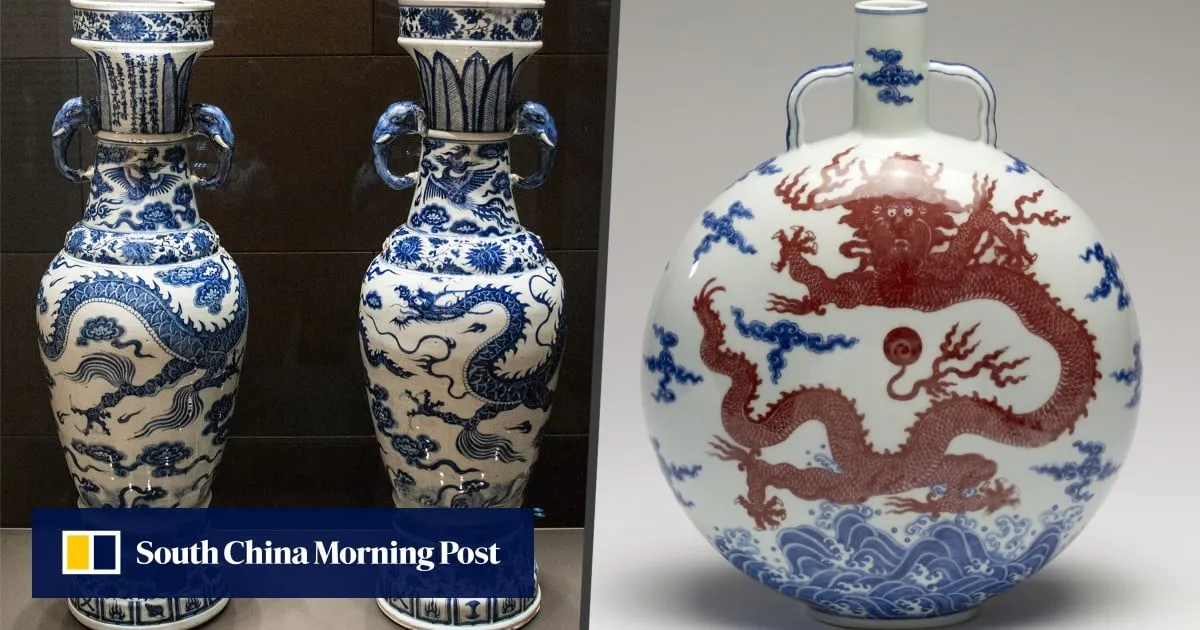
South China Morning PostFIG 01
Reading time
3min
Word count
580words
Sources cited
3cited
Entities identified
8entities
Quality score
100%
§ 01
Briefing Summary
AI-generatedNEWSAR · AI
Dragon motifs have been a significant symbol in Chinese culture for millennia, appearing on pottery as early as 5000 BC. Initially depicted as snake-like, dragons evolved into their more familiar beast-like form by the Tang dynasty. These motifs became closely associated with imperial authority, with the five-clawed dragon exclusively representing the emperor, symbolizing supreme power and divine right. Researchers have found that the characteristics of dragon artwork can reflect the strength and prosperity of Chinese empires. A study comparing dragon porcelain from the prosperous Qianlong Emperor's reign to the declining Guangxu Emperor's reign showed that intricate, lavish designs indicated economic stability, while simpler, less refined works suggested economic hardship and a focus on survival.
Confidence 0.90Sources 3Claims 5Entities 8
§ 02
Article analysis
Model · rule-basedFraming
Human Interest
Political Strategy
Tone
Measured
AI-assessed
CalmNeutralAlarmist
Factuality
0.70 / 1.00
Factual
LowHigh
Sources cited
3
Well sourced
FewMany
§ 03
Key claims
5 extracted01
The five-clawed dragon became the exclusive symbol of the emperor in ancient China.
factual
Confidence
1.00
02
Dragon motifs on pottery date back to the Yangshao culture (5000 BC–3000 BC).
factual
Confidence
1.00
03
Porcelain dragons from the Qianlong Emperor's reign displayed intricate techniques and exceptional craftsmanship.
factual
Confidence
0.90
04
An artist was executed, along with his family, for painting a dragon with five claws.
factualSotheby’s
Confidence
0.90
05
Dragon artwork characteristics can reveal the strength and prosperity of a given regime.
factual
Confidence
0.80
§ 04
Full report
3 min read · 580 words§ 05
Entities
8 identifiedKey playerOppositionContextPositiveNeutralNegative
Organizations3
Locations1
§ 06
Keywords & salience
9 termsdragon motifs
1.00
chinese empires
0.90
imperial authority
0.80
chinese pottery
0.70
qing dynasty
0.60
symbolism
0.50
cultural prestige
0.40
tang dynasty
0.40
yangshao culture
0.40
§ 07
Topic connections
Interactive graph Network visualization showing 51 related topics
View Full Graph Person Organization Location Event|Click node to navigate|Edge numbers = shared articles