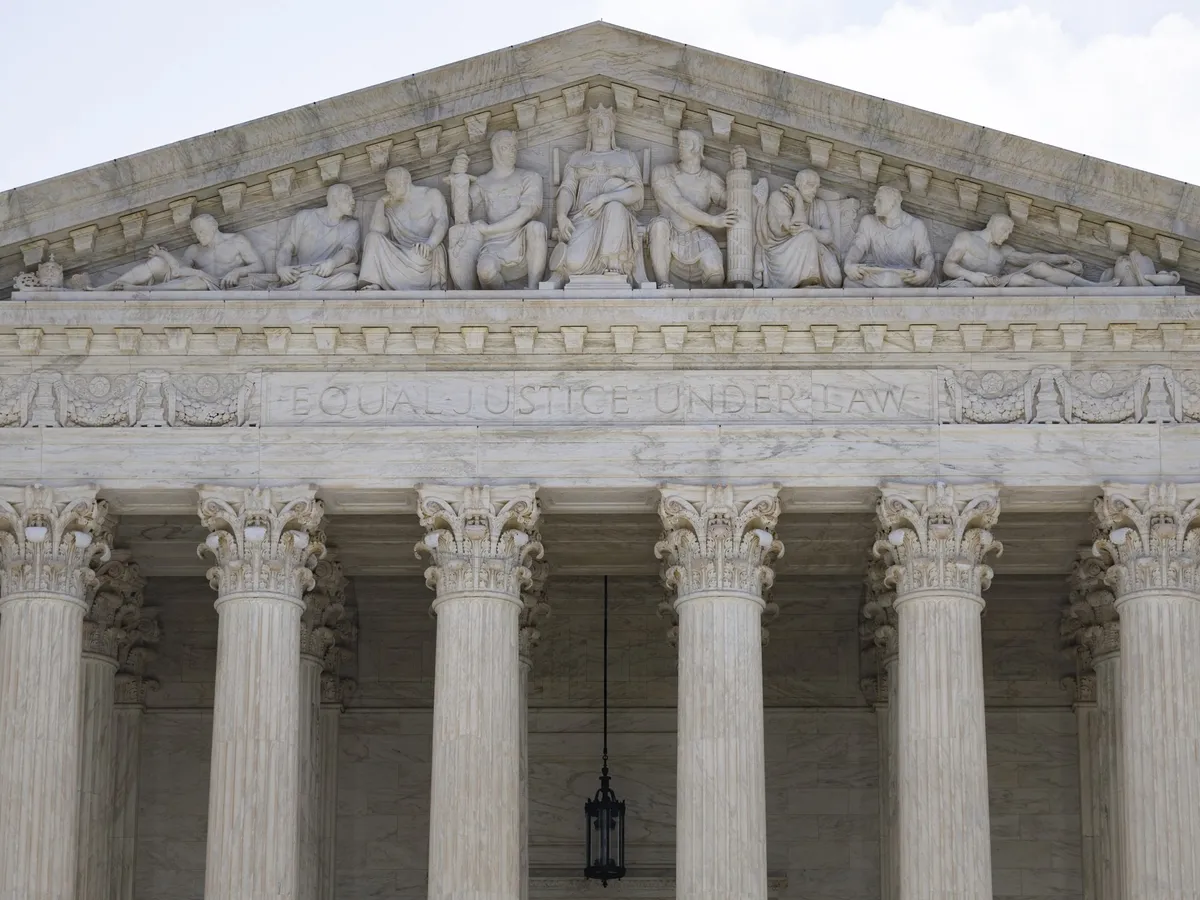
EXPLAINERThe justices deliver consequential rulings on mail-in ballots, the E Jean Carroll case and the firing of Lisa Cook.Justices sitting on the US Supreme Court on June 29, 2026, released several important rulings before departing on their traditional summer recess, which starts in July [Tom Brenner/Getty Images/AFP]Published On 30 Jun 2026The United States Supreme Court on Monday issued a series of major rulings related to President Donald Trump, including three that went against him and one that went in his favour.The issues decided ranged from the president’s authority over independent government regulators to voting rights and a sexual assault judgement.Here is what we know about each of these rulings:Federal firing restrictions overturnedIn a 6-3 vote, the Supreme Court increased Trump’s executive powers to fire members of independent government agencies without having to give a reason.The court did this by backing the Republican president’s sacking of a Democratic Federal Trade Commission (FTC) member, Rebecca Slaughter, expanding his powers over the government and overturning a 1935 precedent that had recognised the authority of Congress to protect leaders of certain regulatory agencies from presidential removal at will.Trump dismissed Slaughter last year without providing a reason. It is understood that the two disagreed over policy. Lower courts upheld her claim that the move violated rules Congress put in place to protect the members of dozens of independent government agencies.The decision by the Supreme Court that Trump was authorised to fire her without a reason is expected to have wide-ranging implications. Since the start of his second term in January last year, Trump has aggressively sought to expand the president’s executive powers as he works to transform the US government and put political allies in key positions.Trump hailed the verdict in a social media post, saying it expanded presidential power “at a time when it is most needed”.“It is such an Honor to be the sitting President who won this Historic and Unprecedented Ruling, one of the most important ever given with respect to Presidential Powers,” he wrote.In a scathing dissent, Justice Sonia Sotomayor wrote that the majority opinion upended the separation of powers.“Today, the majority replaces 90 years of proven, workable practice with a half-baked theory of executive power that is simultaneously all encompassing yet also subject to necessary but undefined exceptions,” Sotomayor wrote.“The one thing that does appear to be clear going forward is that chaos will follow.”Democratic Senator Elizabeth Warren also slammed the opinion, stating: “Donald Trump has fired Democratic appointees and seized control of formerly independent agencies so they serve him and his billionaire friends instead of the American public.”Firing of Fed Governor Lisa Cook blockedHowever, as an exception to the above decision, the court refused to allow Trump to fire Federal Reserve Governor Lisa Cook as it stood firm in a 5-4 decision to preserve the central bank’s independence against an unprecedented challenge by the president.No other president since the central bank’s founding in 1913 has sought to oust a Fed governor. And the court ultimately blocked Trump from removing Cook from her post for now, providing a safeguard for the Fed specifically.Trump had cited unproven mortgage fraud allegations, which Cook denies, as justification for the firing. Cook called the allegations a pretext to fire her over monetary policy differences as Trump presses the Fed to cut interest rates.The US central bank is a nonpartisan institution that sets monetary policy for the world’s largest economy. Its governors are appointed by the president and vetted by the Senate.The court made special mention of the importance of the Fed’s independence.“Not only the fact of independence but also the appearance of independence is key to the Federal Reserve’s design,” its majority opinion read.“We see no reason to leave the public in limbo, or to sow doubt as to the status of one of our Nation’s (and the world’s) most important financial institutions,” Chief Justice John Roberts wrote in the decision.The court decided the case “on the narrow ground that the President failed to afford Cook the procedural protections to which she was entitled by statute”, the ruling stated.Cook welcomed the decision, saying it “affirms” the central bank’s independence, but Trump immediately went on the offensive.“We will take appropriate action immediately to make sure that someone who has committed wrongdoing will not be making vital decisions concerning the Welfare of the United States of America!” he posted on social media.It was unclear what Trump meant by this or what action the government might now take.Mail-in voting rules affirmedIn another blow to Trump, the court upheld a state law that allows mail-in ballots mailed by but received after Election Day to be counted.This 5-4 ruling rejected the Republican National Committee’s challenge to a Mississippi law that allows mail-in ballots to be tallied as long as they are postmarked by Election Day and arrive within five business days of the vote.It overturned a lower court’s decision that had deemed Mississippi’s law to be inconsistent with US statutes that set the timing of federal elections for the presidency, Senate and House of Representatives.Trump has long been a vocal critic of mail-in ballots, claiming without evidence that they are subject to fraud and contributed to his 2020 election loss to Democrat Joe Biden.The Republican president signed an executive order in March seeking to tighten rules on mail-in voting, but it has been blocked by lower courts.In a post on Truth Social, Trump described the high court’s ruling on mail-in voting as a “tremendous loss” for “voter’s rights” and urged Congress to pass a more far-reaching set of voting restrictions called the SAVE America Act.Roberts and Justice Amy Coney Barrett, both conservatives, joined the three liberal justices on the top court in voting to uphold the Mississippi law.Under the US Constitution, states retain broad control over the administration of elections.“Federal law dictates when ballots must be cast, state law governs when they must be received,” said Barrett, who wrote the majority opinion.“Federal election-day statutes do not prevent Mississippi from counting absentee ballots postmarked by election day but received up to five days thereafter,” Barrett wrote. “Nothing in the federal election-day statutes requires ballots to be received by election day.”Democrats tend to use mail-in ballots more than Republicans. The practice became more widespread during the COVID-19 pandemic, and Trump himself uses them.Polls suggest his Republican Party faces a serious threat of losing its slim majority in Congress in the midterm elections in November, particularly in the House.If Democrats gain a majority in the lower chamber in the midterms, they have already signalled they will block Trump’s agenda and could even move to impeach him. He was impeached twice during his first term.The Senate Democratic leader, Chuck Schumer, welcomed the Supreme Court’s decision.“The Supreme Court just upheld this bedrock American principle: if you cast your ballot on time, your vote will count,” Schumer said in a statement.“Participation in democracy should never be limited – not by your race, where you live, or how you vote.”
SRCAl Jazeera
LANGEN
LEANCenter
WORDS1 154
ENT8
TUE · 2026-06-30 · 10:22 GMTBRIEF NSR-2026-0630-88647
NSR-2026-0630-88647News Report·EN·Legal & Judicial
US Supreme Court hands Trump 3-1 defeat in key rulings: What we know
The US Supreme Court issued several consequential rulings on June 29, 2026, impacting President Donald Trump. In a 6-3 decision, the court expanded presidential executive powers by overturning a precedent that protected leaders of independent government agencies from at-will removal, allowing Trump to fire FTC member Rebecca Slaughter without cause.
Sarah ShamimAl JazeeraFiled 2026-06-30 · 10:22 GMTLean · CenterRead · 5 min
Al JazeeraFIG 01
Reading time
5min
Word count
1 154words
Sources cited
3cited
Entities identified
8entities
Quality score
100%
§ 01
Briefing Summary
AI-generatedNEWSAR · AI
The US Supreme Court issued several consequential rulings on June 29, 2026, impacting President Donald Trump. In a 6-3 decision, the court expanded presidential executive powers by overturning a precedent that protected leaders of independent government agencies from at-will removal, allowing Trump to fire FTC member Rebecca Slaughter without cause. However, in a 5-4 decision, the court preserved the Federal Reserve's independence by blocking Trump's attempt to fire Fed Governor Lisa Cook, citing procedural protections. The court also upheld a state law allowing mail-in ballots received after Election Day to be counted, a decision that went against Trump. These rulings addressed issues of executive authority, voting rights, and the independence of financial institutions.
Confidence 0.90Sources 3Claims 5Entities 8
§ 02
Article analysis
Model · rule-basedFraming
Legal & Judicial
Political Strategy
Tone
Mixed Tone
AI-assessed
CalmNeutralAlarmist
Factuality
0.70 / 1.00
Factual
LowHigh
Sources cited
3
Well sourced
FewMany
§ 03
Key claims
5 extracted01
The court refused to allow Trump to fire Federal Reserve Governor Lisa Cook.
factual
Confidence
1.00
02
Justice Sotomayor dissented, stating the majority opinion upended the separation of powers and 'chaos will follow'.
quoteSonia Sotomayor
Confidence
1.00
03
Trump hailed the verdict expanding presidential power, calling it 'Historic and Unprecedented Ruling'.
quoteDonald Trump
Confidence
1.00
04
The Supreme Court increased Trump’s executive powers to fire members of independent government agencies in a 6-3 vote.
factual
Confidence
1.00
05
The Supreme Court issued major rulings on mail-in ballots, the E Jean Carroll case, and the firing of Lisa Cook.
factual
Confidence
1.00
§ 04
Full report
5 min read · 1 154 words§ 05
Entities
8 identifiedKey playerOppositionContextPositiveNeutralNegative
People4
Locations1
§ 06
Keywords & salience
10 termssupreme court rulings
1.00
donald trump
0.90
presidential powers
0.90
executive authority
0.80
firing restrictions
0.70
independent agencies
0.60
separation of powers
0.50
sonia sotomayor
0.50
sexual assault judgement
0.40
voting rights
0.40
§ 07
Topic connections
Interactive graph Network visualization showing 51 related topics
View Full Graph Person Organization Location Event|Click node to navigate|Edge numbers = shared articles