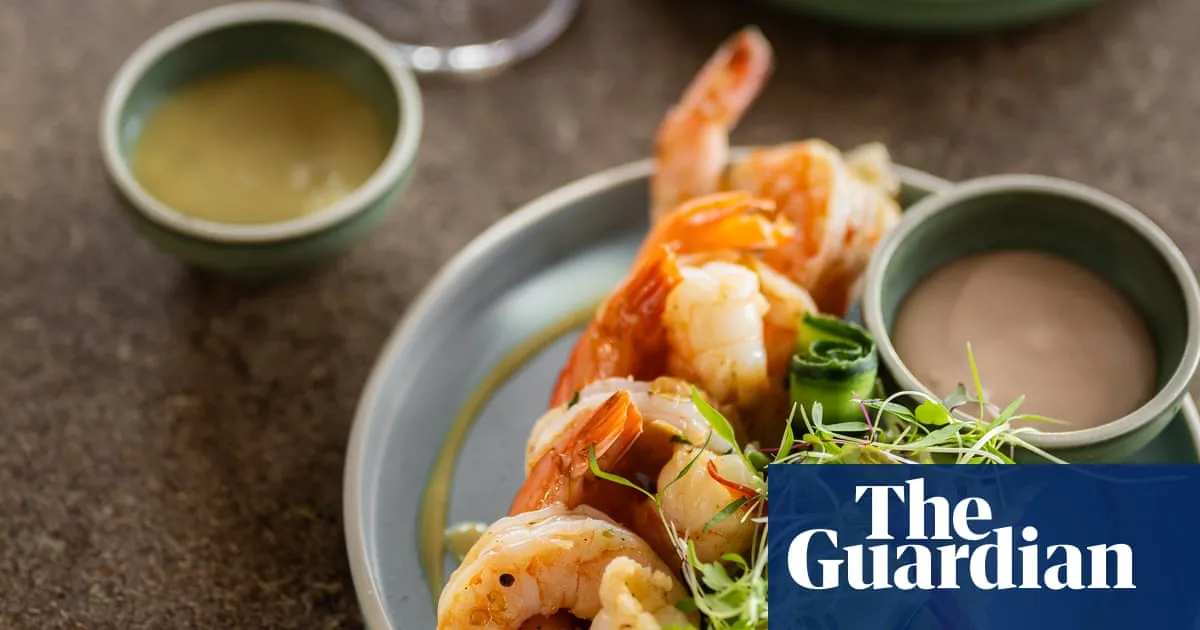
hospitality venues now need to inform customers if the fish and seafood on their menus is Australian or imported. Photograph: Lucas Martin/Little Image Co/Supplied View image in fullscreen hospitality venues now need to inform customers if the fish and seafood on their menus is Australian or imported. Photograph: Lucas Martin/Little Image Co/Supplied What’s the catch? Menus across Australia to show seafood’s country of origin From 1 July, restaurants need to tell customers whether their fish and seafood was caught in Australia or overseas Get our breaking news email, free app or daily news podcast From 1 July, diners across the country will see a small but notable change on menus. The federal government has made it mandatory for hospitality venues to designate a seafood product’s country of origin: “A” for Australian, “I” for imported and “M” for mixed. The government says the system, known as “Aim”, will provide more information to customers about what they’re eating and support local business in the process. The general manager of seafood-industry-Australia" class="entity-link entity-organization" data-entity-id="155647" data-entity-type="organization">seafood Industry Australia, Julie Petty, who lobbied for the change said the labelling will help bring restaurants into line with information on seafood packaging. “Most Australians don’t realise it, but about 64% of seafood is actually imported,” Petty said. “For the first time it really provides that clarity to the end consumer, and frankly it provides informed choice about what it is you’re going to spend your money on.” The changes cover businesses beyond restaurants and cafes, including market stalls, food trucks, fast food venues and those serving food for “immediate consumption”. Businesses can opt to display A, I or M beside a menu item, akin to a “GF” (gluten free) or “V” (vegetarian) designation. They can also use detailed wording to comply: “Sydney rock lobster” doesn’t work, but “Australian Sydney rock lobster” or “Sydney rock lobster – Australian origin” does. There are some exclusions, such as dishes that only contain shelf-stable seafood items like canned tuna, shrimp paste or fish stock. Food service providers in schools, hospitals and prisons are exempt. Juan Carlos Negrete, the chef and co-owner of Maiz, a Mexican restaurant in Sydney’s Newtown, said his business had been aware of the changes for a few months. He used the shift as an opportunity to make adjustments to the menu and highlight Australian seafood, despite its cost. “It’s a product that has a higher cost for us, so obviously it’s important for us that the customer understands where our food is coming from and why certain items might look like they’re probably a little bit pricey,” Negrete said. “But a lot of consumers now are looking to understand or justify the cost of these dishes. For us it just shows transparency, and it hasn’t been a huge disadvantage.” He said some hospitality owners he’d spoken with hadn’t heard of the shift to the Aim system until recently, prompting a rush to reprint menus and comply. “Overall everyone was just a little bit like, ‘Why is this happening. Why are we doing this for fish only or not for meat, or vegetables?’” he said. “For us it’s just a good excuse to make menu changes and strengthen what we have.” The federal government has touted the changes as a boon for both consumers and the Australian seafood industry. “Australian seafood is great quality, safe, environmentally friendly and backs coastal fishing communities who work hard to deliver a local catch,” Tim Ayres, the minister for industry, said in a statement, adding the changes will make sure customers have “the information they need to buy Australian seafood”. The federal fisheries minister, Julie Collins, said diners had “floundered” for too long, “which is why we’re reeling this in”. Still, the designations are notably broad, with I and M labels encompassing every other country on the planet, regardless of fishing practices. Kim Riskas, a campaigner for the Australian Marine Conservation Society (AMCS), said while the new labels are a good first step, they don’t include enough information to allow consumers to make more deeply informed choices about what they’re eating. “We know that Australians love seafood … It’s becoming more important to people where their food comes from,” Riskas said. “Aim unfortunately doesn’t tell you anything more than whether it came from Australia or came from overseas.” Riskas said the body, which also runs GoodFish, a popular seafood sustainability guide, is advocating for much more when it comes to seafood identification. Restaurants, she said, should at minimum comply with the Australian fish names standard. For Australian seafood, the AMCS would also like menu listings to include the state or territory where the food came from. “Even though our fisheries are overall held to a much higher standard, we still have areas of improvement to work on,” Riskas said. Petty, from the seafood industry lobby, said specifying a country of origin, rather than stating “imported” would be ideal. Explore more on these topics Australia news Fish Fishing Food & drink industry Food news Share Reuse this content
SRCThe Guardian - World News
LANGEN
LEANCenter-Left
WORDS831
ENT10
TUE · 2026-06-30 · 15:00 GMTBRIEF NSR-2026-0630-88701
NSR-2026-0630-88701News Report·EN·Economic Impact
What’s the catch? Menus across Australia to show seafood’s country of origin
Starting July 1st, Australian restaurants and other food service venues must clearly indicate the country of origin for seafood on their menus. Using "A" for Australian, "I" for imported, or "M" for mixed, this new federal government mandate aims to provide consumers with more information and support local businesses.
Nick VisserThe Guardian - World NewsFiled 2026-06-30 · 15:00 GMTLean · Center-LeftRead · 4 min
The Guardian - World NewsFIG 01
Reading time
4min
Word count
831words
Sources cited
2cited
Entities identified
10entities
Quality score
100%
§ 01
Briefing Summary
AI-generatedNEWSAR · AI
Starting July 1st, Australian restaurants and other food service venues must clearly indicate the country of origin for seafood on their menus. Using "A" for Australian, "I" for imported, or "M" for mixed, this new federal government mandate aims to provide consumers with more information and support local businesses. The change applies to various establishments serving food for immediate consumption, with some exceptions for shelf-stable items and institutional food providers. While the government states this will help customers buy Australian seafood, some advocacy groups argue the labels lack detail regarding sustainability or specific origin beyond "imported."
Confidence 0.90Sources 2Claims 5Entities 10
§ 02
Article analysis
Model · rule-basedFraming
Economic Impact
Social Justice
Tone
Measured
AI-assessed
CalmNeutralAlarmist
Factuality
0.70 / 1.00
Factual
LowHigh
Sources cited
2
Limited
FewMany
§ 03
Key claims
5 extracted01
The changes cover restaurants, cafes, market stalls, food trucks, and venues serving food for immediate consumption.
factual
Confidence
1.00
02
Hospitality venues in Australia must now inform customers if seafood on menus is Australian or imported.
factual
Confidence
1.00
03
Approximately 64% of seafood consumed in Australia is imported.
statisticJulie Petty (Seafood Industry Australia)
Confidence
0.95
04
Australian seafood can be more expensive, and the new labelling helps customers understand and justify the cost.
quoteJuan Carlos Negrete (Maiz restaurant)
Confidence
0.90
05
The new labelling system, known as 'Aim', will provide more information to customers and support local businesses.
quoteThe government
Confidence
0.90
§ 04
Full report
4 min read · 831 words§ 05
Entities
10 identifiedKey playerOppositionContextPositiveNeutralNegative
§ 06
Keywords & salience
8 termsseafood country of origin
1.00
menu labelling
0.90
hospitality venues
0.80
australian seafood
0.70
imported seafood
0.70
consumer choice
0.60
food regulation
0.50
seafood industry australia
0.40
§ 07
Topic connections
Interactive graph Network visualization showing 51 related topics
View Full Graph Person Organization Location Event|Click node to navigate|Edge numbers = shared articles