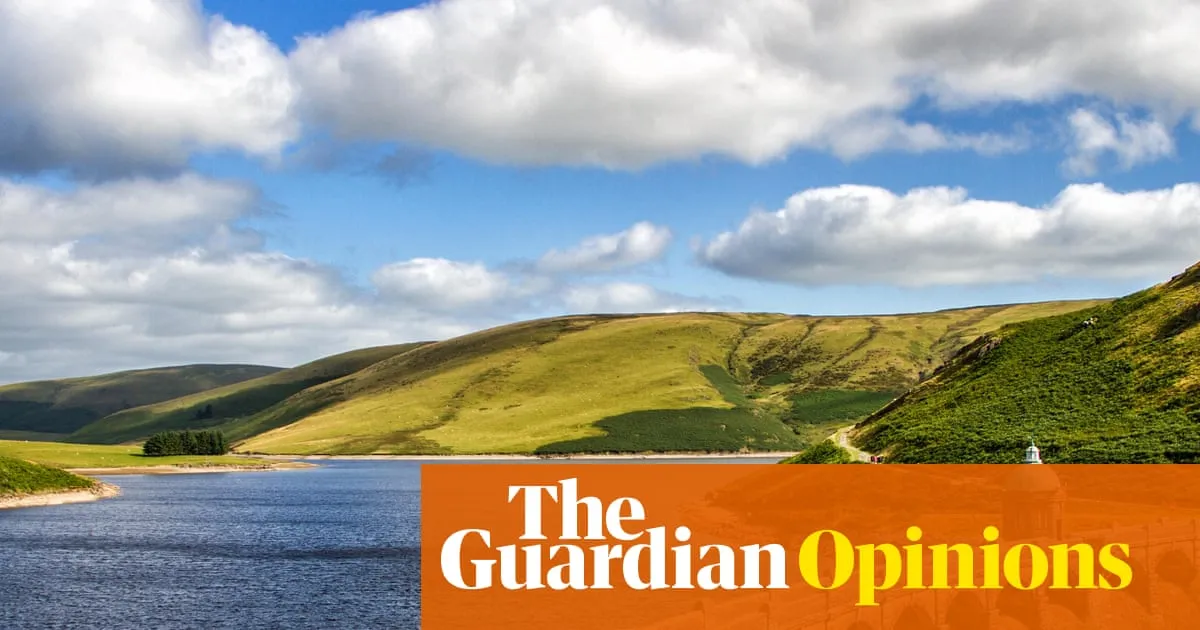
Good news for Andy Burnham: one of the original 10 water privatisations from the Thatcher-era has returned to public ownership already. Thanks to a complicated turn-of-the-century corporate saga, Welsh Water, serving 3 million people, converted to not-for-profit status in 2001. It has no shareholders. Financial surpluses go “straight back into keeping bills down and looking after your water and beautiful environment”, as the website blurb puts it.How’s it going? After a quarter of a century without dividend-hungry shareholders to feed, has the model proved its superiority? Not exactly. Welsh Water usually has high scores on customer trust metrics but its performance on bills and spills tends to be middle of the pack.Welsh Water recently received a £44.7m “enforcement package” – a fine by another name – from Ofwat for “serious and unacceptable breaches” in operating its sewage plants that “resulted in excessive spills to the environment”. Most companies have copped penalties in the regulator’s industry-wide investigation but, as a percentage of turnover – the regulatory yardstick of seriousness – Welsh Water’s 7.5% was at the high end. On bills, it is above the industry average at £683 a year. Severn Trent-owned Hafren Dyfrdwy, licence-holder in parts of north-east and mid-Wales, charges its households £48 less.A sample size of one is small, obviously. But Welsh Water is a reminder that it is too simplistic to think all the sector’s woes can be cured simply by changing the ownership. Boring factors such as access to capital, operational efficiency, technical skill, management accountability and regulatory rigour also tend to matter.Burnham knows as much, one suspects. For all the excitement generated by his calls for “stronger public control” over water and energy, he is vague on details. His only specific commitment has been to say nationalisation is “what should be done” at Thames, and even that statement is not wholly clear.Does he mean full permanent nationalisation? Or is he talking about special administration, which is different since it could mean a return to the private sector for Thames once its creditors have taken the inevitable haircut on their debt? (The shareholders have already been wiped out).For the non-Thames part of the industry, Burnham seems to be taking a long view. “It is about a 10-year plan of more public control, more public ownership,” he has said. “I don’t think you nationalise the whole thing necessarily straight off, because that’s complicated and probably expensive but you look at the different situations in different parts of the country.”Thames Water’s financial troubles have wiped out its shareholders. Photograph: Martin Godwin/The Guardian“Complicated and expensive” is a fair analysis. Thames could probably be nationalised reasonably cheaply because the creditors’ negotiating hand (like the market value of their bonds) is weakening under political pressure. But nationalising solvent water and energy companies is a different game. It would be hard to buy at less than fair market value unless Burnham is prepared to have a legal scrap with institutional investors who he probably wants to keep on side for other infrastructure adventures.The two FTSE 100 water companies, United Utilities (licence holder in the north-west of England) and Severn Trent, are valued by the stock market at almost £10bn apiece, to which one must add their borrowings. The state would get assets to match its outlay, so, under one form of Treasury accounting, the transactions could be regarded as neutral on day one. But the extra gilt issuance would still be hefty. And the sums would soar if, as some thinktank outriders argue, energy transmission networks should be added to the list of targets. National Grid is worth £62bn, albeit a chunk of that figure reflects its sizeable US assets; SSE is valued at £29bn. These are large companies.As for complications, yes, they are real. The high-voltage transmission operators are in the early stage of a £70bn five-year upgrade of the grid. Changing ownership could take 18 months and the hassles would probably ensure that the energy secretary, Ed Miliband, would miss his 2030 deadline for clean power.skip past newsletter promotionafter newsletter promotionSimilarly, the water companies are in vital catchup mode on overhauling tired sewage and water treatment works, one reason why Keir Starmer’s administration did not contemplate nationalisation. The state-managed experience at HS2 is the one to fear because the high-speed railway, like water companies, makes heavy use of third-party contractors to build new infrastructure. At HS2, those contractors enjoyed a picnic at the expense of taxpayers.Meanwhile, comparisons with Burnham’s reorganisation of Manchester’s buses do not work. The city’s Bee Network is capital-lite; utilities are capital-heavy. Nor are there lessons in how train operators were brought in-house. That process was done at zero cost by waiting for the franchises (typically seven years, fixed) to expire. Water companies, by contrast, own their assets and have 25-year rolling licences.None of which says it could not be done. If you believe only the state should provide services such as energy and water, nationalisation is obviously the only way to go. And one benefit is undeniable – the state can borrow more cheaply.Sir Jon Cunliffe’s report on the water industry found no one model of ownership was universally the best. Photograph: Jonathan Brady/AFP/Getty ImagesBut note that Sir Jon Cunliffe’s Independent Water Commission, whose report forms the basis of the intended clean water bill flagged in the king’s speech, “compared outcomes in countries reasonably similar to England and Wales” and said its analysis “has not demonstrated any one model is universally better than another”. It thought “strong and evidence-based regulation is critical in ensuring customers and the environment are protected, regardless of ownership model”.It is why, one suspects, the initial stage of Burnham’s 10-year plan for more “public control” may end up being a rejigged version of what Starmer’s government already intends. By way of reminder, the clean water bill’s ambition is to “shift the sector away from a system where water companies mark their own homework by putting in place stronger, active supervision and oversight through a powerful new regulator capable of integrated management of the water system”.The stronger element that Burnham could inject is more local direction, along the lines of the devolution agenda he outlined in Monday’s speech. Indeed, Cunliffe’s water commission report contained an encouragement to do so. It had high praise for how Burnham’s Greater Manchester Combined Authority had played a role in showing “how more regional water planning can be achieved through voluntary cross-sector engagement”. The report cited a partnership between GMCA, the Environment Agency and United Utilities in pulling in extra funding, prioritising specific projects and generally injecting more local input into planning.One of the commission’s lesser-noticed recommendations was that such partnerships should be made formal via “strategic boards” with local political leaders on them. Elected mayors should have “opportunities to influence, inform and be informed by plans for the water system in pursuit of sustainable growth”, said the report. All that would seem to tick several boxes in Burnham’s thinking on devolution and “a sense of place”.Would it add up to “greater public control”? Obviously not if the phrase is taken to mean owning every English water company outright. Advocates of pure nationalisation would not be satisfied. Politically speaking, however, Burnham could say he has taken the current government’s bill and given it an injection of Manchesterism as a first step. The threat of harder measures in the next parliament could hang in the background. In a fiscally constrained world, where the government is struggling to fund its defence commitments, it would be the pragmatic route.Thames could still be treated as a separate case. All options for a fix could be left on the table for the sector’s biggest calamity, and for any other companies that get into the same mess. Even the water commission acknowledged that a Welsh Water-style not-for-profit model “might present one possible exit route” for companies that fall into special administration.But, for the water sector as a whole, one suspects Burnham’s “stronger public control” will morph into a stronger role for local authorities in planning and directing the system. As Welsh Water has shown, this is a world of tradeoffs.
SRCThe Guardian - World News
LANGEN
LEANCenter-Left
WORDS1 346
ENT7
WED · 2026-07-01 · 05:00 GMTBRIEF NSR-2026-0701-88878
NSR-2026-0701-88878Analysis·EN·Economic Impact
‘Complicated and expensive’: Burnham is right about the risks of nationalisation | Nils Pratley
Andy Burnham's calls for increased public control over utilities are met with caution, as the example of Welsh Water, a not-for-profit entity since 2001, shows public ownership doesn't guarantee superior performance. While Welsh Water scores well on customer trust, its performance on bills and environmental spills is average, and it recently faced a significant fine from Ofwat for sewage breaches.
Nils PratleyThe Guardian - World NewsFiled 2026-07-01 · 05:00 GMTLean · Center-LeftRead · 6 min
The Guardian - World NewsFIG 01
Reading time
6min
Word count
1 346words
Sources cited
2cited
Entities identified
7entities
Quality score
100%
§ 01
Briefing Summary
AI-generatedNEWSAR · AI
Andy Burnham's calls for increased public control over utilities are met with caution, as the example of Welsh Water, a not-for-profit entity since 2001, shows public ownership doesn't guarantee superior performance. While Welsh Water scores well on customer trust, its performance on bills and environmental spills is average, and it recently faced a significant fine from Ofwat for sewage breaches. The article argues that factors beyond ownership, such as capital access and operational efficiency, are crucial. Nationalizing companies like Thames Water might be less costly due to its financial troubles, but acquiring solvent utilities would be expensive and legally complex. Furthermore, the article highlights the significant capital investment and upgrade programs underway in both the water and energy sectors, suggesting that changing ownership could be complicated and delay essential infrastructure projects.
Confidence 0.90Sources 2Claims 5Entities 7
§ 02
Article analysis
Model · rule-basedFraming
Economic Impact
Political Strategy
Tone
Measured
AI-assessed
CalmNeutralAlarmist
Factuality
0.60 / 1.00
Mixed
LowHigh
Sources cited
2
Limited
FewMany
§ 03
Key claims
5 extracted01
Nationalising solvent water and energy companies is complicated and expensive.
quoteNils Pratley
Confidence
1.00
02
Welsh Water's penalty as a percentage of turnover (7.5%) was at the high end of industry penalties.
statistic
Confidence
1.00
03
Welsh Water received a £44.7m enforcement package from Ofwat for serious and unacceptable breaches in operating sewage plants.
factual
Confidence
1.00
04
Welsh Water converted to not-for-profit status in 2001 and has no shareholders.
factual
Confidence
1.00
05
Andy Burnham's calls for 'stronger public control' over water and energy are vague on details.
factual
Confidence
0.90
§ 04
Full report
6 min read · 1 346 words§ 05
Entities
7 identifiedKey playerOppositionContextPositiveNeutralNegative
Organizations4
Locations1
§ 06
Keywords & salience
10 termsnationalisation
1.00
public ownership
0.90
water industry
0.80
welsh water
0.70
regulation
0.60
thames water
0.50
ofwat
0.50
environmental spills
0.40
andy burnham
0.40
corporate governance
0.40
§ 07
Topic connections
Interactive graph No topic relationship data available yet. This graph will appear once topic relationships have been computed.