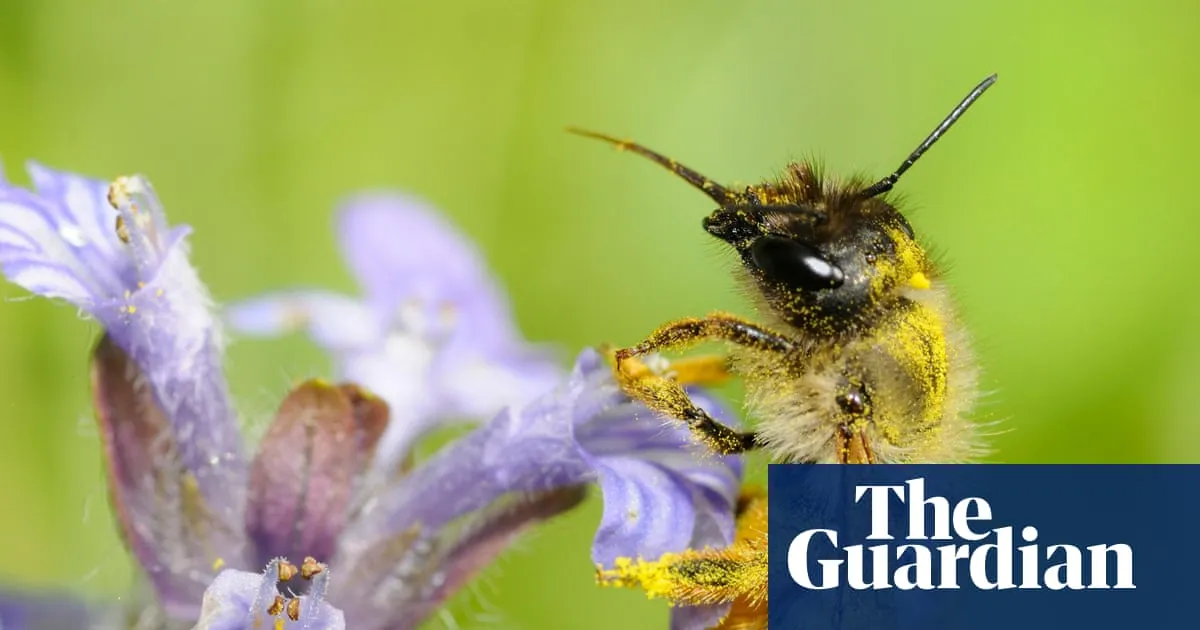
We know heatwaves have serious health consequences for humans, but what about other species? A study has shown they severely diminish bees’ fertility, with significant implications for the pollination of food crops in the following years.Prof James Gilbert of the University of Hull his and colleagues simulated a three-day UK heatwave in the lab and measured its effect on solitary red mason bees, compared with those kept under control conditions of an ordinary summer.After nine months both sets of bees had spun their cocoons and hibernated as normal, but when the researchers dissected the bees they discovered that the sperm activity of the males from the heatwave group had dropped by half compared with the control group. Females in the heatwave group showed a 15% reduction in the size and number of developing eggs.More than 90% of the UK’s 270 or so bee species are solitary and do not have nest-mates to help out. The findings, published in the Journal of Thermal Biology, suggest a heatwave could lead to a big drop in the number of bees the next year, with less efficient pollination for key food crops such as apples and oilseed rape.
SRCThe Guardian - World News
LANGEN
LEANCenter-Left
WORDS194
ENT10
WED · 2026-07-01 · 05:00 GMTBRIEF NSR-2026-0701-88881
NSR-2026-0701-88881News Report·EN·Environmental
Specieswatch: How heatwaves play havoc with bees’ fertility
A study by Professor James Gilbert and colleagues at the University of Hull has revealed that simulated heatwaves significantly reduce the fertility of solitary red mason bees. Researchers compared bees exposed to a three-day heatwave with a control group under normal summer conditions.
Kate RaviliousThe Guardian - World NewsFiled 2026-07-01 · 05:00 GMTLean · Center-LeftRead · 1 min
The Guardian - World NewsFIG 01
Reading time
1min
Word count
194words
Sources cited
1cited
Entities identified
10entities
Quality score
100%
§ 01
Briefing Summary
AI-generatedNEWSAR · AI
A study by Professor James Gilbert and colleagues at the University of Hull has revealed that simulated heatwaves significantly reduce the fertility of solitary red mason bees. Researchers compared bees exposed to a three-day heatwave with a control group under normal summer conditions. While both groups hibernated normally, dissected males from the heatwave group showed a 50% drop in sperm activity, and females exhibited a 15% reduction in egg size and number. These findings, published in the Journal of Thermal Biology, suggest that heatwaves could lead to a substantial decrease in bee populations and less efficient pollination of important food crops in subsequent years, impacting species like apples and oilseed rape.
Confidence 0.90Sources 1Claims 5Entities 10
§ 02
Article analysis
Model · rule-basedFraming
Environmental
Economic Impact
Tone
Measured
AI-assessed
CalmNeutralAlarmist
Factuality
0.90 / 1.00
Factual
LowHigh
Sources cited
1
Limited
FewMany
§ 03
Key claims
5 extracted01
Female red mason bees from a simulated heatwave group showed a 15% reduction in egg size and number.
statisticStudy by Prof James Gilbert and colleagues
Confidence
0.95
02
Male red mason bees from a simulated heatwave group showed a 50% drop in sperm activity.
statisticStudy by Prof James Gilbert and colleagues
Confidence
0.95
03
Heatwaves severely diminish bees' fertility, with significant implications for crop pollination.
factualStudy by Prof James Gilbert and colleagues
Confidence
0.95
04
More than 90% of the UK's bee species are solitary.
statisticArticle
Confidence
0.90
05
A heatwave could lead to a significant drop in bee populations the following year.
predictionStudy by Prof James Gilbert and colleagues
Confidence
0.85
§ 04
Full report
1 min read · 194 words§ 05
Entities
10 identifiedKey playerOppositionContextPositiveNeutralNegative
People1
Locations1
§ 06
Keywords & salience
9 termsbee fertility
1.00
heatwaves
0.90
pollination
0.80
solitary bees
0.70
food crops
0.60
egg development
0.50
sperm activity
0.50
university of hull
0.40
journal of thermal biology
0.40
§ 07
Topic connections
Interactive graph Network visualization showing 10 related topics
View Full Graph Person Organization Location Event|Click node to navigate|Edge numbers = shared articles