And the agreement has ensured that Lebanon will be blamed for itDirector of Policy at Badil | The Alternative Policy Institute.Published On 1 Jul 2026Israel's ambassador to the US, Yechiel Leiter, and Lebanon's ambassador to the US, Nada Hamadeh, sign an agreement at the State Department in Washington on June 26, 2026 [Ken Cedeno/Reuters)After months of war, pressure and diplomatic choreography, Lebanon has effectively entered into a declaration of intent with Israel. The reactions were swift: condemnation from wide swaths of Lebanon’s political actors, including Hezbollah and its allies, as well as protests in the streets and criticism in the media.The problems with the signed document are many – it is unrealistic, politically explosive and constitutionally suspect. But perhaps the worst aspect of it is that it paves the way for a new war and for Lebanon to be blamed for it.An impossible agreementIsrael has long understood the value of loosely worded interim arrangements, declarations and deferred questions. The Oslo agreement is titled Declarations of Principles and sets out “general guidelines for the negotiations to come”. Borders, settlements, Jerusalem, refugees, security and sovereignty were left for later; and “later” never came. The interim architecture hardened into a reality in which Israel preserved freedom of action, expanded apartheid, occupation, endless land grabs, and blamed the Palestinians for failing to meet conditions they could never fully control.Lebanon is not Palestine, and neither the documents nor the contexts are identical. But the diplomatic logic is similar enough to be alarming: Lebanon and Israel declaring “their ambition to end conflict” while avoiding final answers may appear flexible, but in practice, it is most likely a trap.The framework Lebanon has now accepted will be difficult, if not impossible, to implement as written, primarily because the Lebanese state cannot simply replace Hezbollah by decree.Hezbollah’s weapons are not only a sad military reality; they are also embedded in a political argument about deterrence, community protection and the state’s failure to defend its own territory. One does not dissolve that structure by signing a text in Washington.Nor can the Lebanese army suddenly become the sovereign deterrent force that everyone claims to want while remaining underfunded, overburdened, politically compromised and dependent on external military assistance that is itself limited by Israeli and American red lines.In effect, Lebanon is being asked to act like a sovereign state precisely where its sovereign capacities are weakest. It is expected to control armed actors it cannot defeat, negotiate with an enemy it cannot deter, and accept obligations whose enforcement depends on powers that do not treat Lebanese sovereignty as the primary objective.Constitutional challenges, tactical delaysThe most dangerous clauses are those that reach beyond the battlefield. Any language requiring the parties to cease “hostile” or “adverse” action in international political or legal forums should alarm ordinary Lebanese, victims of war crimes and defenders of international law.Lebanon cannot match Israel militarily, and thus its only remaining tools are diplomatic, legal and political. To constrain those tools – such as Lebanon’s accession to the International Criminal Court – in the name of “de-escalation” is to disarm the state in the very arenas where it still has some leverage.There is also a deeper constitutional problem. Given the level of blowback, the Lebanese president and prime minister may eventually wish to present the declaration as a political understanding rather than a binding agreement. But labels do not settle substance. If the text touches on war and peace, territorial arrangements, international obligations, security deployments, recognition, withdrawal or restrictions on Lebanon’s legal conduct, then it is no longer merely diplomatic theatre.Lebanon’s constitutional order does not give any one official the right to make such commitments alone. Treaties and international accords require institutional approval. Matters of war, peace and national security fall within the authority of the Council of Ministers, and major decisions require more than presidential will or prime ministerial consent.A declaration of intent cannot be used to smuggle treaty-like obligations past the state’s own constitutional safeguards. Lebanon’s constitution also obliges the state to preserve its territorial integrity, meaning no declaration can quietly normalise an Israeli security presence or condition Lebanese sovereignty on Israel’s assessment of Hezbollah’s disarmament.This is where the agreement becomes politically explosive. Hezbollah and the Amal Movement, along with their allies and other opposed actors, have every incentive to push the declaration into Lebanon’s machinery of delay. They can argue, correctly, that it requires cabinet approval. They can question whether it amounts to normalisation.They can demand clarity on Israeli withdrawal. They can object to any clause limiting Lebanon’s right to pursue Israel legally. They can drag the process into committees, constitutional arguments and procedural paralysis.Normally, this would be treated as another example of Lebanon’s political dysfunction. In this case, the irony is sharper: delay may be the least dangerous option available.Enabling the next warThe real agreement is not being decided in Beirut. It is being shaped through the wider regional track involving the United States, Iran and the mediators. The real deal is not what Lebanon signed, but what Tehran instructs Hezbollah to do; what Washington is willing to guarantee; what Israel believes it can extract; and whether the broader US-Iran understanding holds long enough to prevent another regional escalation.In the short term, what happens under the Islamabad process is in fact much more important than the declaration’s language. If the regional track is extended past the initial 60 days, Hezbollah can absorb the text, avoid open confrontation and wait. If it collapses, the declaration will not restrain the battlefield.By signing a document in this fashion, hoping that over time it will be assigned to the dustbin of history, the heads of Lebanon’s government may believe they are buying time, and perhaps they are. But they are buying it with a document that can outlive the political moment that produced it.Making US President Donald Trump feel that he has achieved something may buy a few months. It may help Lebanon reach the Israeli electoral calendar, the US midterms, or the next stage of the US-Iran track. It may even be tactically understandable for a president and prime minister trying to manoeuvre between Hezbollah, Israel, Washington and Tehran. But all this comes at a cost.However loose this agreement is, Lebanon is not signing a symbolic memorandum with no consequences. If Hezbollah does not comply – and Hezbollah will not meaningfully play this game unless instructed by Iran – Israel can point to the declaration and say Lebanon failed. If the under-resourced Lebanese army cannot deploy at the required scale, Israel can say Lebanon failed. If Beirut pursues Israel in international legal forums, Israel can say Lebanon acted in bad faith. If Beirut refuses to accept Israeli security conditions, Israel can say Lebanon walked away from peace.That is why the declaration does not prevent war. Instead it creates the legal and political language through which the next war will be justified.The tragedy is that Lebanon is finally being invited to act as a state after years in which its sovereignty was violated by Israel, hollowed out by Hezbollah, manipulated by regional powers and neglected by its own political class. But instead of using that moment to define what real sovereignty would require – a capable army, a constitutional process, a defence doctrine, legal accountability, territorial integrity and internal consent – it has entered a framework that exposes how little of that sovereignty currently exists.
SRCAl Jazeera
LANGEN
LEANCenter
WORDS1 225
ENT10
WED · 2026-07-01 · 08:03 GMTBRIEF NSR-2026-0701-88946
NSR-2026-0701-88946Analysis·EN·Conflict
The Lebanon-Israel agreement is paving the way for the next war
Lebanon and Israel have signed a declaration of intent in Washington D.C. on June 26, 2026, following months of conflict and diplomatic efforts.
Sami HalabiAl JazeeraFiled 2026-07-01 · 08:03 GMTLean · CenterRead · 5 min
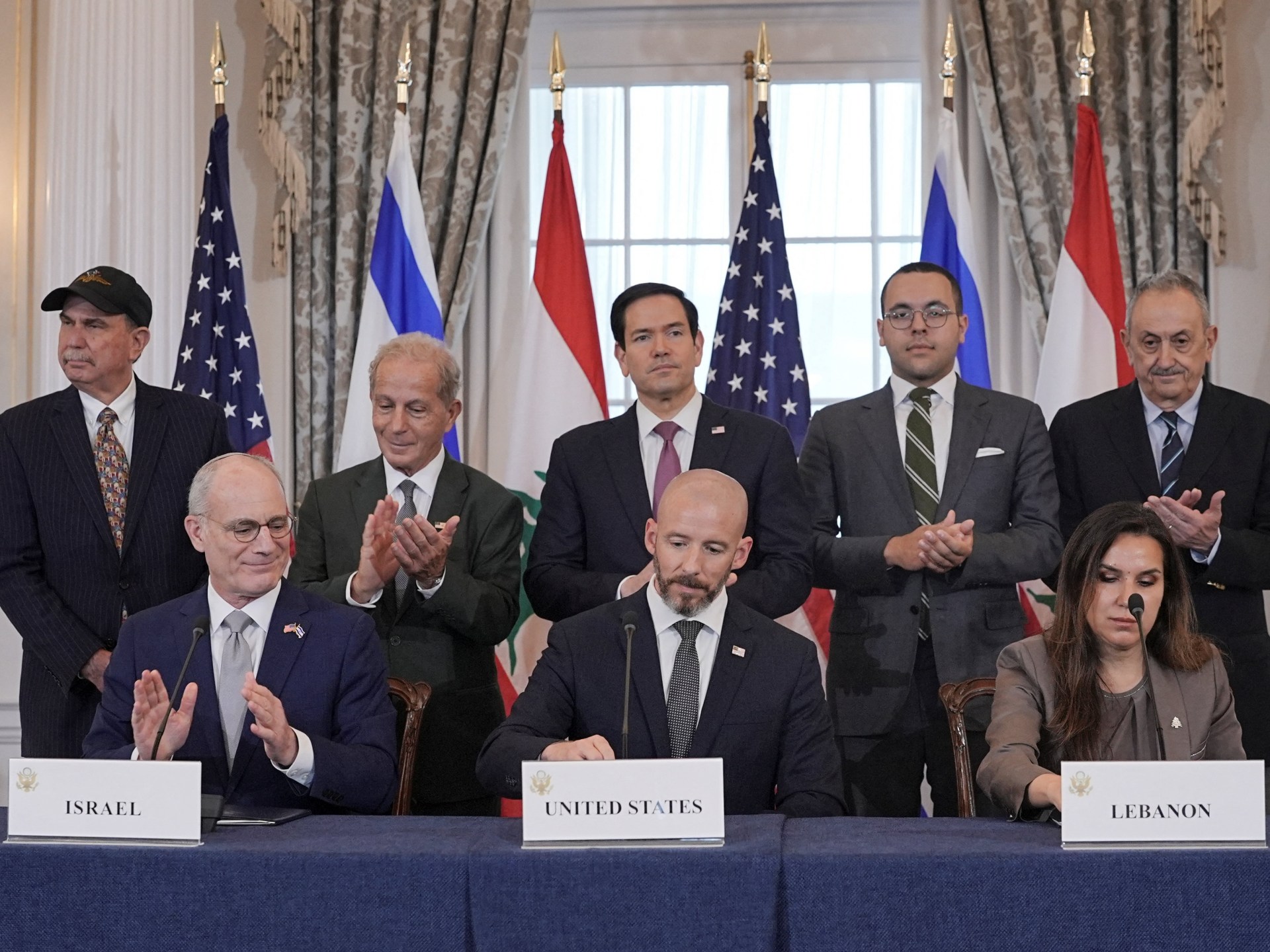
Al JazeeraFIG 01
Reading time
5min
Word count
1 225words
Sources cited
0cited
Entities identified
10entities
Quality score
100%
§ 01
Briefing Summary
AI-generatedNEWSAR · AI
Lebanon and Israel have signed a declaration of intent in Washington D.C. on June 26, 2026, following months of conflict and diplomatic efforts. The agreement aims to end the conflict but is criticized for being unrealistic and politically explosive, potentially paving the way for future war and blaming Lebanon. The article argues the framework is difficult to implement as the Lebanese state cannot unilaterally disarm Hezbollah, nor can its army effectively become a sovereign deterrent force due to funding and political limitations. Furthermore, clauses restricting Lebanon's use of international legal and political forums are seen as disarming the state. The agreement also faces constitutional challenges in Lebanon, as such significant commitments require institutional approval beyond presidential or prime ministerial consent.
Confidence 0.90Claims 4Entities 10
§ 02
Article analysis
Model · rule-basedFraming
Conflict
Diplomatic
Tone
Mixed Tone
AI-assessed
CalmNeutralAlarmist
Factuality
0.30 / 1.00
Opinion-Heavy
LowHigh
Sources cited
0
No named sources
FewMany
§ 03
Key claims
4 extracted01
Lebanon is being asked to act like a sovereign state precisely where its sovereign capacities are weakest.
factual
Confidence
0.90
02
The Lebanese state cannot simply replace Hezbollah by decree.
factual
Confidence
0.90
03
The Lebanese army cannot suddenly become the sovereign deterrent force while remaining underfunded, overburdened, politically compromised and dependent on external military assistance.
factual
Confidence
0.85
04
The Lebanon-Israel agreement paves the way for a new war and for Lebanon to be blamed for it.
prediction
Confidence
0.80
§ 04
Full report
5 min read · 1 225 words§ 05
Entities
10 identifiedKey playerOppositionContextPositiveNeutralNegative
Organizations3
Locations4
§ 06
Keywords & salience
10 termslebanon-israel agreement
1.00
declaration of intent
0.90
hezbollah
0.80
next war
0.80
blame
0.70
interim arrangements
0.60
oslo agreement
0.60
deterrence
0.50
sovereignty
0.40
diplomatic logic
0.40
§ 07
Topic connections
Interactive graph Network visualization showing 51 related topics
View Full Graph Person Organization Location Event|Click node to navigate|Edge numbers = shared articles