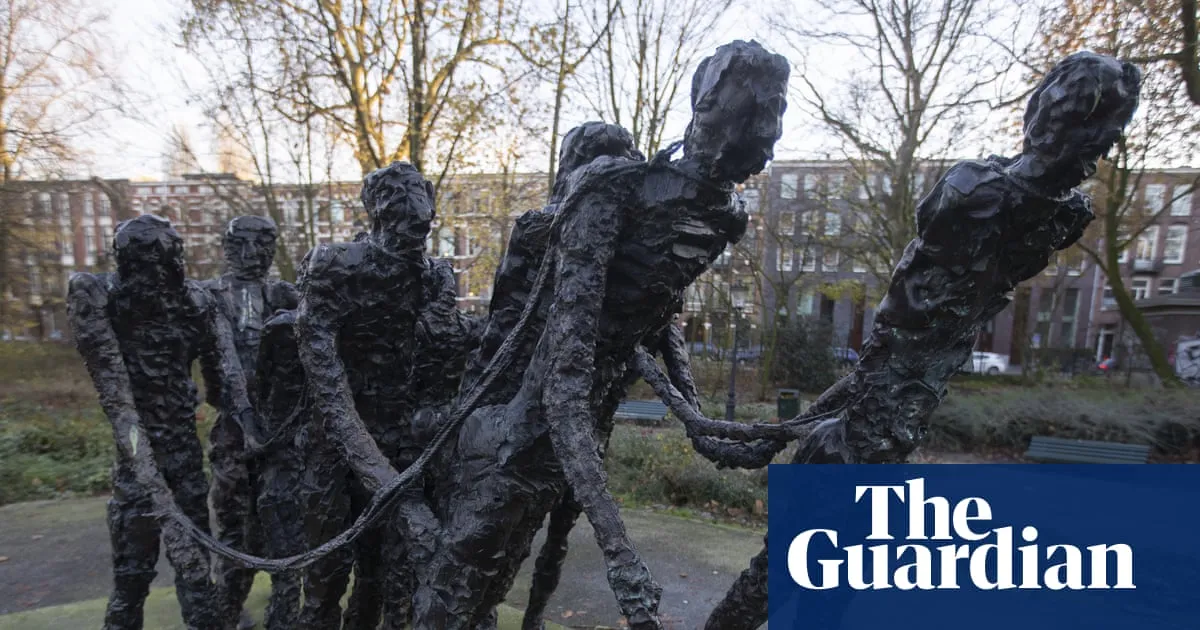
At least 3.3 million people were enslaved in the Netherlands during the transatlantic slave trade, research claims – more than five times the 600,000 figure widely used in history books and cited in apologies by the king and politicians.King Willem-Alexander referred to the more than 600,000 people who were brought from Africa on Dutch ships to be sold as enslaved people when he apologised three years ago for the role of the Netherlands in the transatlantic slave trade.In 2022 the then prime minister, Mark Rutte, cited the figure when he apologised for “the past actions of the Dutch state”.But according to a book by the Dutch investigative journalist Leendert van der Valk, that widely accepted figure is a gross underestimation of how many victims of Dutch enslavement there were, with the correct number being between 3.3 and 5.3 million people.Van der Valk said the 600,000 figure did not take into account all the places where the Dutch colonised or enslaved people, the full period of the country’s involvement, or include many who were born into enslavement. It also did not account for Indigenous people whom the Dutch met in some of the countries they colonised and later enslaved.For Peggy Brandon, a prominent Surinamese-born cultural leader and a curator of the Netherlands’ National Museum of Slavery, which is under development, the numbers matter. “What upsets me is that we never talk about the people who lived generation after generation within that system of enslavement,” she said. “We don’t talk about the people who sometimes killed their young children because they didn’t want them to grow up in enslavement.”Brandon said getting the numbers right was about humanising the people who were dehumanised by Europeans in an attempt to justify and normalise their abhorrent treatment of black people. She said this was an important step in challenging some of the colonial narratives that persist today.“It’s going back to the fact that these were human beings. And every person has a right to be seen and to be known. We don’t know their names. And we didn’t count them for the longest time,” she said.Van der Valk’s book, whose title translates as Forgotten places, Forgotten People – an Atlas of the Dutch History of Slavery, uses calculations and demographic research primarily from Radboud University, a highly ranked research institution in the Netherlands.Matthias van Rossum, a Radboud and International Institute of Social History colonialism professor, said the new figures were based on ongoing research into Dutch history, including work examining the slave trade in Asia.“The new figures … rightfully shift the question from its narrow focus on the numbers of enslaved people displaced directly through long-distance slave trade to including those enslaved who were born in slavery or enslaved in other ways in regional contexts, such as through the enslavement of Indigenous communities,” he said.Van der Valk’s calculation takes into account countries such as South Africa, India and Sri Lanka, which were all major Dutch colonies or places of slave trade before they were taken over by England. It also includes parts of the Caribbean not previously covered, such as Guyana and Tobago, which he said “were very important Dutch possessions until the official transition to England in 1814”.skip past newsletter promotionafter newsletter promotionVan der Valk also argues that the period examined should start from 1595 instead of 1630, which has previously been used in calculations. The end date, his book argues, should be not 1 July 1863, when slavery was abolished in the Netherlands, but 1914, when Dutch enslavement finally ended in parts of Indonesia.Coen van Galen, an associate professor in colonial history at Radboud, said Van der Valk’s calculation was a “rough estimate” but “provides for the first time an indication of the total number of victims of slavery in all Dutch colonies combined”.He said: “Based on this work, comparable calculations could also be undertaken for the British empire and other colonial empires. Such estimates would, for the first time, provide a more comprehensive picture of the total number of people worldwide who were victims of colonial slavery.”Van der Valk’s book comes as people in Dutch territories and the black community in the Netherlands call on the prime minister, Rob Jetten, to follow up on the apologies from the king and Rutte with action.It follows critical developments in the global call for slavery reparations, including the UN’s adoption of a landmark resolution in March declaring the trafficking of enslaved Africans as the gravest crime against humanity.
SRCThe Guardian - World News
LANGEN
LEANCenter-Left
WORDS743
ENT12
WED · 2026-07-01 · 15:34 GMTBRIEF NSR-2026-0701-89064
NSR-2026-0701-89064News Report·EN·Social Justice
At least 3.3m people were victims of Dutch enslavement, research claims
New research claims at least 3.3 million people were victims of Dutch enslavement, significantly exceeding the widely cited figure of 600,000 used in past apologies. Investigative journalist Leendert van der Valk's book, based on demographic research from Radboud University, argues the lower number fails to account for the full scope of Dutch colonization, the entire period of involvement, and individuals born into or enslaved regionally.
Natricia Duncan Caribbean correspondentThe Guardian - World NewsFiled 2026-07-01 · 15:34 GMTLean · Center-LeftRead · 3 min
The Guardian - World NewsFIG 01
Reading time
3min
Word count
743words
Sources cited
3cited
Entities identified
12entities
Quality score
100%
§ 01
Briefing Summary
AI-generatedNEWSAR · AI
New research claims at least 3.3 million people were victims of Dutch enslavement, significantly exceeding the widely cited figure of 600,000 used in past apologies. Investigative journalist Leendert van der Valk's book, based on demographic research from Radboud University, argues the lower number fails to account for the full scope of Dutch colonization, the entire period of involvement, and individuals born into or enslaved regionally. The research includes enslaved Indigenous people and victims in colonies like South Africa, India, and Sri Lanka, and suggests the period of enslavement extended from 1595 to 1914 in some regions. This revised estimate aims to humanize those affected and challenge persistent colonial narratives.
Confidence 0.90Sources 3Claims 5Entities 12
§ 02
Article analysis
Model · rule-basedFraming
Social Justice
Human Interest
Tone
Mixed Tone
AI-assessed
CalmNeutralAlarmist
Factuality
0.70 / 1.00
Factual
LowHigh
Sources cited
3
Well sourced
FewMany
§ 03
Key claims
5 extracted01
Getting the numbers right is about humanizing victims of enslavement and challenging colonial narratives.
quotePeggy Brandon
Confidence
1.00
02
New figures shift focus from displaced enslaved people to those born into slavery or enslaved regionally.
factualMatthias van Rossum
Confidence
0.90
03
The 600,000 figure did not account for all places of Dutch colonization, the full period of involvement, or those born into enslavement.
factualLeendert van der Valk
Confidence
0.90
04
The widely accepted figure of 600,000 enslaved people is a gross underestimation.
factualLeendert van der Valk
Confidence
0.90
05
At least 3.3 million people were victims of Dutch enslavement during the transatlantic slave trade.
statisticLeendert van der Valk
Confidence
0.90
§ 04
Full report
3 min read · 743 words§ 05
Entities
12 identifiedKey playerOppositionContextPositiveNeutralNegative
People5
Organizations2
§ 06
Keywords & salience
10 termsdutch enslavement
1.00
transatlantic slave trade
0.90
historical underestimation
0.80
colonial narratives
0.70
demographic research
0.60
humanizing victims
0.60
enslavement system
0.50
netherlands
0.50
radboud university
0.40
cultural leader
0.40
§ 07
Topic connections
Interactive graph Network visualization showing 51 related topics
View Full Graph Person Organization Location Event|Click node to navigate|Edge numbers = shared articles