Every year, farmers in India burn millions of tonnes of stalks, husks and other plant matter left after a harvest that has long contributed to winter smog in South Asia.But the agricultural waste – also known as crop residue – could become a source to make Sustainable Aviation Fuel (SAF) for airlines around the world, according to a new study.SAF is a green alternative to conventional jet fuel derived from a blend of aviation turbine fuel and raw materials for use in aircraft.By combining biomass from crop residue with green hydrogen, India could produce SAF at costs of up to 40 per cent lower than global benchmarks, according to a new report by UC Berkeley’s India Energy & Climate Centre and Energy Innovation.“This is a rare opportunity to turn a domestic air-pollution challenge into a strategic clean-fuel export industry,” said Amol Phadke, faculty director of the India Energy & Climate Centre at UC Berkeley and one of the report’s co-authors.The report argues that India has three advantages if it aims to become a major SAF supplier: some of the world’s cheapest solar power, a national push to develop green hydrogen and a vast supply of crop residue.
SRCSouth China Morning Post
LANGEN
LEANCenter-Right
WORDS197
ENT10
THU · 2026-07-02 · 11:28 GMTBRIEF NSR-2026-0702-89347
NSR-2026-0702-89347News Report·EN·Environmental
India’s toxic crop waste could fuel global airlines, study finds
A new study suggests India's agricultural waste, currently burned and contributing to air pollution, could be used to produce sustainable aviation fuel (SAF). Researchers from UC Berkeley's India Energy & Climate Centre and Energy Innovation found that by combining crop residue with green hydrogen, India could produce SAF at costs up to 40% lower than global benchmarks.
Biman MukherjiSouth China Morning PostFiled 2026-07-02 · 11:28 GMTLean · Center-RightRead · 1 min
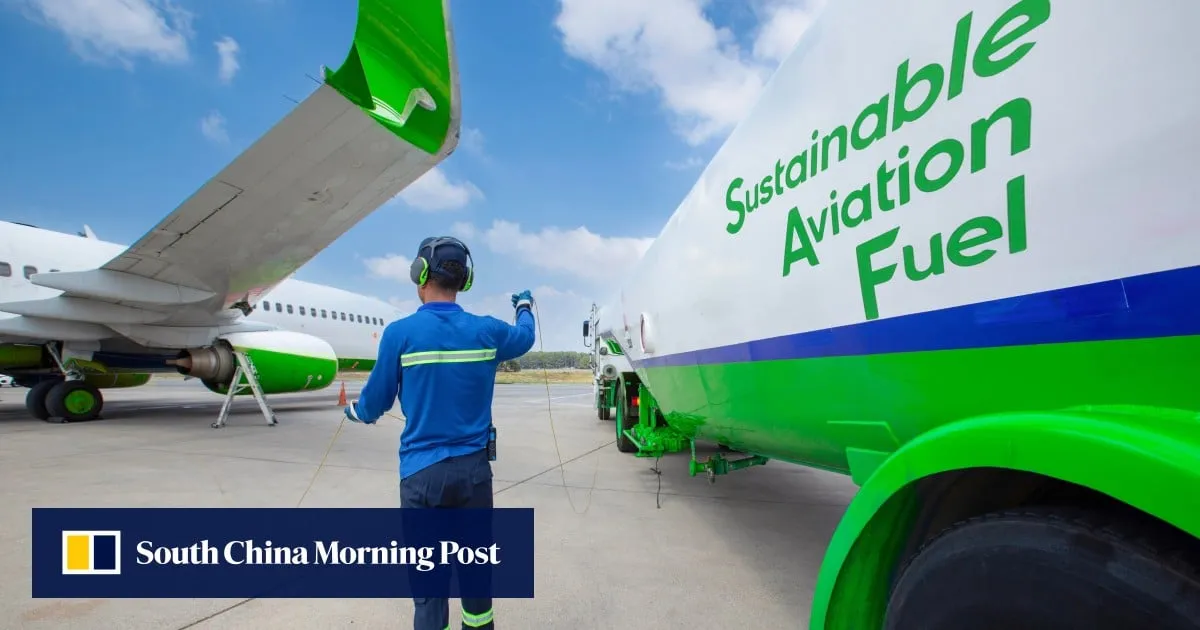
South China Morning PostFIG 01
Reading time
1min
Word count
197words
Sources cited
1cited
Entities identified
10entities
Quality score
100%
§ 01
Briefing Summary
AI-generatedNEWSAR · AI
A new study suggests India's agricultural waste, currently burned and contributing to air pollution, could be used to produce sustainable aviation fuel (SAF). Researchers from UC Berkeley's India Energy & Climate Centre and Energy Innovation found that by combining crop residue with green hydrogen, India could produce SAF at costs up to 40% lower than global benchmarks. This presents an opportunity for India to transform an air pollution problem into a clean-fuel export industry. The study highlights India's advantages in this endeavor: inexpensive solar power, a national focus on green hydrogen development, and a large supply of crop residue.
Confidence 0.90Sources 1Claims 4Entities 10
§ 02
Article analysis
Model · rule-basedFraming
Environmental
Economic Impact
Tone
Measured
AI-assessed
CalmNeutralAlarmist
Factuality
0.70 / 1.00
Factual
LowHigh
Sources cited
1
Limited
FewMany
§ 03
Key claims
4 extracted01
Turning crop waste into SAF is an opportunity to transform a domestic air pollution issue into a clean-fuel export industry.
quoteAmol Phadke
Confidence
1.00
02
India could produce SAF at costs up to 40% lower than global benchmarks by combining crop residue with green hydrogen.
statisticUC Berkeley’s India Energy & Climate Centre and Energy Innovation
Confidence
0.95
03
India has advantages in becoming a major SAF supplier: cheap solar power, a green hydrogen push, and vast crop residue supply.
factualreport by UC Berkeley’s India Energy & Climate Centre and Energy Innovation
Confidence
0.90
04
India's agricultural waste could be used to produce sustainable aviation fuel (SAF).
factual
Confidence
0.90
§ 04
Full report
1 min read · 197 words§ 05
Entities
10 identifiedKey playerOppositionContextPositiveNeutralNegative
Organizations3
§ 06
Keywords & salience
9 termscrop residue
1.00
sustainable aviation fuel
1.00
green hydrogen
0.90
solar power
0.80
air pollution
0.70
clean-fuel export
0.60
agricultural waste
0.50
india
0.50
jet fuel
0.40
§ 07
Topic connections
Interactive graph Network visualization showing 51 related topics
View Full Graph Person Organization Location Event|Click node to navigate|Edge numbers = shared articles