This photo, provided by the Belarusian Association of Journalists, shows imprisoned Belarusian journalist Kiryl Pazniak, 49, who has been convicted and sentenced to 3 1/2 years in prison. (Belarusian Association of Journalists via AP) Updated [hour]:[minute] [AMPM] [timezone], [monthFull] [day], [year] TALLINN, Estonia (AP) — A court in Belarus has convicted a journalist and sentenced him to 3 1/2 years in prison in the latest step against free speech in the country, the Belarusian Association of Journalists reported Thursday. Kiryl Pazniak, 49, who hosted a popular political show on YouTube, has been convicted on the charges of discrediting Belarus and forming an extremist organization, the group said — accusations widely used by authorities to stifle critical voices. Pazniak has also been ordered to pay a fine, roughly equivalent to $8,500. Pazniak was arrested in September 2025. His ex-wife Elena said he has fallen seriously ill behind bars, suffering from Pneumonia and COVID-19, and was placed in a prison hospital in serious condition. He has been designated a political prisoner by human rights defenders.Belarus’ authoritarian president, Alexander Lukashenko, has governed the nation of 9.5 million with an iron fist for more than three decades. The country has been sanctioned repeatedly by Western nations — both for its crackdown on human rights and for allowing Moscow to use its territory in the full-scale invasion of Ukraine that began on Feb. 24, 2022. Lukashenko’s government was challenged after a 2020 presidential election, when hundreds of thousands took to the streets to protest a vote they viewed as rigged. In an ensuing crackdown, tens of thousands were detained, with many beaten by police. Prominent opposition figures fled the country or were imprisoned. 2 MIN READ 1 MIN READ 5 MIN READ Since U.S. President Donald Trump returned to the White House in January 2025, Lukashenko has released hundreds of political prisoners as part of American-brokered deals that lifted some U.S. sanctions, part of the isolated leader’s efforts to improve ties with the West. Human rights groups say, however, that Belarusian authorities have continued their crackdown on dissent. Belarus still has 863 political prisoners, according to the Viasna human rights center. “Pazniak nearly died behind bars, but was convicted and is forced to continue suffering simply for fulfilling his professional duty,” said Andrei Bastunets, leader of the Belarusian Association of Journalists. “Repressions against journalists in Belarus are not abating, and the situation with freedom of speech remains the worst in Europe.” The Committee to Protect Journalists reported this week that six Belarusian media outlets in exile regularly face DDoS attacks that aim to overload their websites with traffic and make them impossible to access.“While it can be difficult to pinpoint those responsible for DDoS attacks, editors and journalists at the outlets targeted in the recent wave told CPJ they believed Belarusian authorities might have sought to squash reporting on particular political topics, including events linked to Belarus’ exiled opposition,” CPJ said in an online statement.
SRCAssociated Press (AP)
LANGEN
LEANCenter
WORDS490
ENT10
THU · 2026-07-02 · 13:23 GMTBRIEF NSR-2026-0702-89399
NSR-2026-0702-89399News Report·EN·Human Rights
Belarus convicts a journalist and sentences him to 3.5 years in prison
A court in Belarus has convicted journalist Kiryl Pazniak, 49, and sentenced him to 3 1/2 years in prison. Pazniak, who hosted a popular political YouTube show, was found guilty of discrediting Belarus and forming an extremist organization, charges authorities frequently use to suppress critical voices.
By
YURAS KARMANAUAssociated Press (AP)Filed 2026-07-02 · 13:23 GMTLean · CenterRead · 2 min
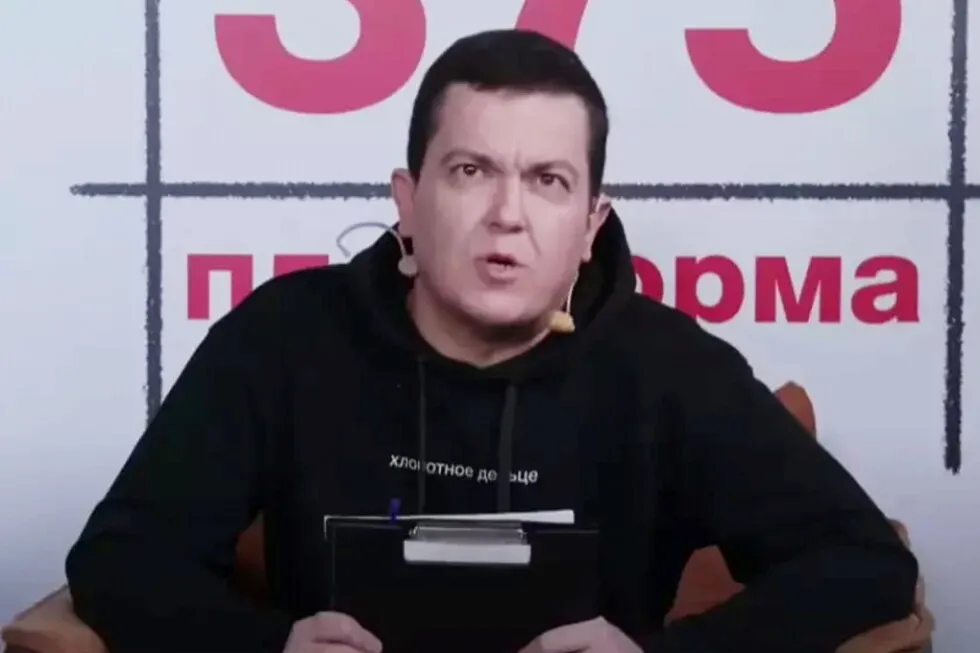
Associated Press (AP)FIG 01
Reading time
2min
Word count
490words
Sources cited
4cited
Entities identified
10entities
Quality score
100%
§ 01
Briefing Summary
AI-generatedNEWSAR · AI
A court in Belarus has convicted journalist Kiryl Pazniak, 49, and sentenced him to 3 1/2 years in prison. Pazniak, who hosted a popular political YouTube show, was found guilty of discrediting Belarus and forming an extremist organization, charges authorities frequently use to suppress critical voices. He was also fined approximately $8,500. Pazniak was arrested in September 2025 and is reportedly seriously ill in prison, having been designated a political prisoner by human rights defenders. This conviction is part of an ongoing crackdown on free speech in Belarus under President Alexander Lukashenko, with 21 journalists currently imprisoned.
Confidence 0.90Sources 4Claims 5Entities 10
§ 02
Article analysis
Model · rule-basedFraming
Human Rights
Legal & Judicial
Tone
Measured
AI-assessed
CalmNeutralAlarmist
Factuality
0.80 / 1.00
Factual
LowHigh
Sources cited
4
Well sourced
FewMany
§ 03
Key claims
5 extracted01
Repressions against journalists in Belarus are not abating, and the situation with freedom of speech remains the worst in Europe.
quoteAndrei Bastunets
Confidence
1.00
02
Belarus still has 863 political prisoners.
statisticViasna human rights center
Confidence
1.00
03
Kiryl Pazniak has been designated a political prisoner by human rights defenders.
factualhuman rights defenders
Confidence
1.00
04
Pazniak was convicted on charges of discrediting Belarus and forming an extremist organization.
factualBelarusian Association of Journalists
Confidence
1.00
05
A court in Belarus convicted journalist Kiryl Pazniak and sentenced him to 3 1/2 years in prison.
factualBelarusian Association of Journalists
Confidence
1.00
§ 04
Full report
2 min read · 490 words§ 05
Entities
10 identifiedKey playerOppositionContextPositiveNeutralNegative
People4
§ 06
Keywords & salience
10 termsjournalist conviction
1.00
free speech
0.90
political prisoner
0.80
human rights
0.70
belarus
0.60
authoritarian regime
0.60
extremist organization
0.50
discrediting belarus
0.50
alexander lukashenko
0.40
crackdown on dissent
0.40
§ 07
Topic connections
Interactive graph Network visualization showing 51 related topics
View Full Graph Person Organization Location Event|Click node to navigate|Edge numbers = shared articles