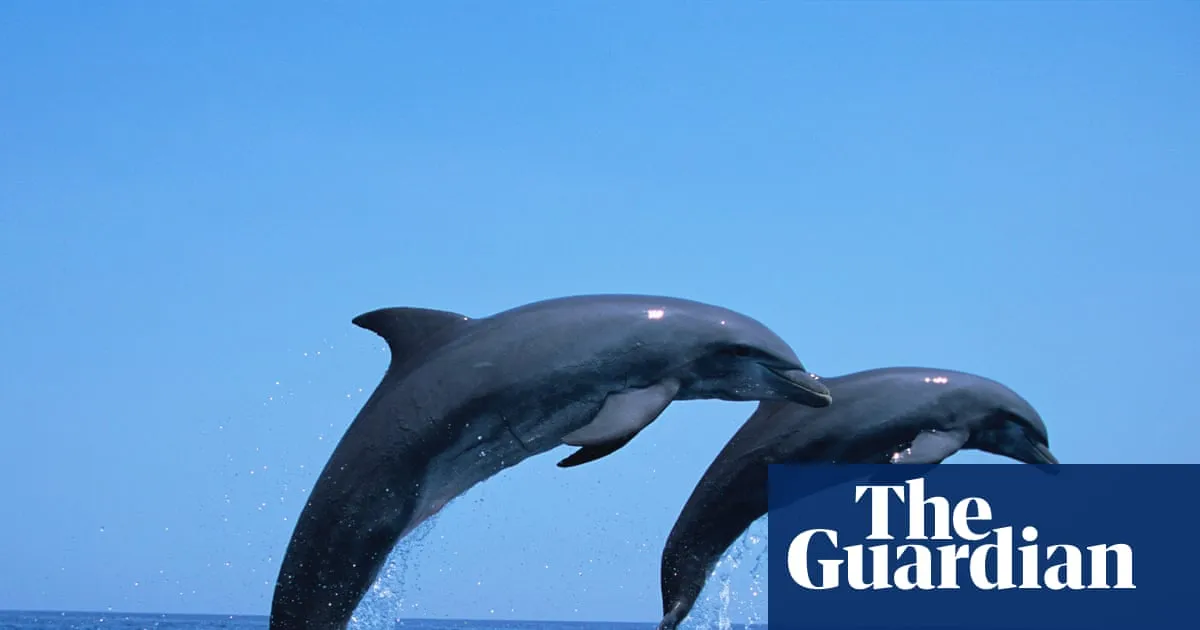
Bottlenose dolphins in the Adriatic are increasingly following trawlers to scavenge for food, with baby dolphins learning the technique from their parents, a study has found.“These days the easiest way to find [Bottlenose dolphins] is to look for trawlers,” said Giovanni Bearzi, a co-author of the study and the president of Dolphin Biology and Conservation in Italy. “Many of them are followed by the dolphins that go to forage and scavenge in their wake.“When I say scavenge, I mean that they also feed on discards and unwanted organisms. Dolphins are following the trawlers because natural prey is very hard to find. Why is it hard to find? It’s overfished.“The Mediterranean Sea is one of the areas with the highest rates of fishing worldwide. The fishing pressure in the Mediterranean is twice the level considered sustainable by the FAO [UN Food and Agriculture Organization].”The scientists monitored trawlers offshore in the Adriatic for 148 days, carrying out 859 inspections across two regions and different types of trawlers.Dolphins have always followed fishing boats, but the researchers said the behaviour seemed to have increased in intensity. A study from the Adriatic in the 1990s found that 10% of trawlers were followed by dolphins, but in the recent study, in one area 76% of trawlers were followed.Many animals with depleted prey start pursuing food near humans, such as polar bears scavenging in rubbish dumps, according to the study. Trawlers could represent a simple source of food in an impoverished ecosystem.Although dolphins are highly opportunistic animals and may have learned that it is easier for them to catch fish in the wake of a trawler, this does not mean that it is advantageous.A trawler in the Mediterranean, which has one of the highest rates of fishing in the world. Photograph: Hemis/AlamyDr Randall Reeves, one of the authors of the study and chair of the Committee of Scientific Advisors at the US Marine Mammal Commission, said: “It is known that Bottlenose dolphins are occasionally injured or killed by trawl gear, and that foraging behind trawlers can affect dolphins’ diet, social organisation and communication.“Dolphins may also suffer hearing damage that results from chronic exposure to the noise of trawlers. However, finding sufficient prey away from trawlers in an overfished sea may be too difficult. It appears that for these animals, taking the risks is better than going hungry.”Bearzi added: “The baby dolphins follow the trawlers with their mothers, watch the adults foraging and learn that kind of behaviour. It is transmitted culturally.”skip past newsletter promotionafter newsletter promotionThe Adriatic ecosystem used to include many more common dolphins. “The common dolphins are not common any more,” Bearzi said. “Except for a very few hotspots in the Adriatic, they have virtually vanished. One species has gone and that is not a good sign. It’s a warning sign.”The scientists are calling for action to protect a rich diversity of species, and advise against continued use of trawlers, to protect dolphins and conserve marine biodiversity.Bearzi said: “When I was younger, I just wanted to study the behaviour of dolphins. I wouldn’t even think about human encroachment back then. But what we saw [in past research] is entire communities of dolphins disappearing. If you stop destructive fishing, the marine resources would bloom very quickly. Dolphins would be able to feed again on their natural prey, as they did for centuries in this same area.“Fish less. Fish in less destructive ways. This is really the message.”The study, Bottlenose Dolphin Reliance on Trawlers in Prey-depleted Adriatic Sea Regions, published in Frontiers, was carried out by Bearzi along with Silvia Bonizzoni, Nathan B Furey and Randall R Reeves, a group of researchers who have studied the behaviour of dolphins in the Mediterranean for decades
SRCThe Guardian - World News
LANGEN
LEANCenter-Left
WORDS617
ENT10
FRI · 2026-07-03 · 04:00 GMTBRIEF NSR-2026-0703-89613
NSR-2026-0703-89613News Report·EN·Environmental
‘Scavenger’ dolphins increasingly rely on trawlers for food in overfished Adriatic, say scientists
Bottlenose dolphins in the Adriatic Sea are increasingly following trawlers to scavenge for food due to overfishing, according to a recent study. Researchers observed that in one area, 76% of fishing boats were followed by dolphins, a significant increase from the 10% observed in the 1990s.
Lauren LeesThe Guardian - World NewsFiled 2026-07-03 · 04:00 GMTLean · Center-LeftRead · 3 min
The Guardian - World NewsFIG 01
Reading time
3min
Word count
617words
Sources cited
2cited
Entities identified
10entities
Quality score
100%
§ 01
Briefing Summary
AI-generatedNEWSAR · AI
Bottlenose dolphins in the Adriatic Sea are increasingly following trawlers to scavenge for food due to overfishing, according to a recent study. Researchers observed that in one area, 76% of fishing boats were followed by dolphins, a significant increase from the 10% observed in the 1990s. Young dolphins are learning this scavenging behavior from their mothers, a form of cultural transmission. Scientists suggest this reliance on trawlers, while providing an easier food source, carries risks for dolphins, including injury, hearing damage, and altered social dynamics. The study highlights the severe impact of high fishing pressure in the Mediterranean, which has led to the decline of other dolphin species. Researchers advocate for reduced and less destructive fishing practices to allow marine resources to recover and dolphins to return to their natural prey.
Confidence 0.90Sources 2Claims 5Entities 10
§ 02
Article analysis
Model · rule-basedFraming
Environmental
Human Interest
Tone
Mixed Tone
AI-assessed
CalmNeutralAlarmist
Factuality
0.80 / 1.00
Factual
LowHigh
Sources cited
2
Limited
FewMany
§ 03
Key claims
5 extracted01
The Mediterranean Sea has fishing pressure twice the level considered sustainable by the FAO.
statisticGiovanni Bearzi
Confidence
0.95
02
In one Adriatic area, 76% of trawlers were followed by dolphins in the recent study, compared to 10% in the 1990s.
statisticscientists
Confidence
0.90
03
Bottlenose dolphins in the Adriatic are increasingly following trawlers to scavenge for food.
factualscientists
Confidence
0.90
04
Baby dolphins are learning the scavenging technique from their parents, indicating cultural transmission.
factualGiovanni Bearzi
Confidence
0.85
05
Common dolphins have virtually vanished from the Adriatic, except for a few hotspots.
factualGiovanni Bearzi
Confidence
0.80
§ 04
Full report
3 min read · 617 words§ 05
Entities
10 identifiedKey playerOppositionContextPositiveNeutralNegative
Organizations3
§ 06
Keywords & salience
10 termstrawlers
1.00
bottlenose dolphins
1.00
scavenging
0.90
overfished adriatic
0.90
fishing pressure
0.80
depleted prey
0.70
food source
0.60
marine ecosystem
0.50
dolphin biology and conservation
0.40
us marine mammal commission
0.40
§ 07
Topic connections
Interactive graph No topic relationship data available yet. This graph will appear once topic relationships have been computed.