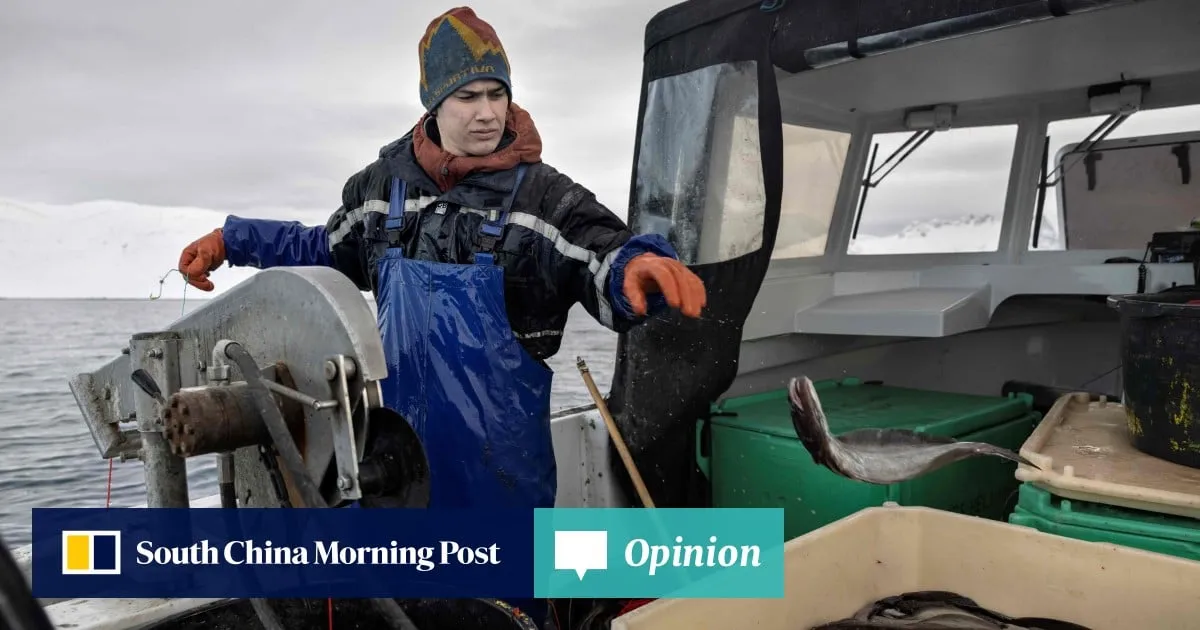
An unmistakable pattern has emerged in the US’ strategy to China" class="entity-link entity-topic" data-entity-id="158463" data-entity-type="topic">contain China. Washington has sought to deny China access to frontier technologies and key commodities, and to redirect related supply chains to revitalise American industries.You think I am pulling your leg. This is not a joke. Well, it kind of is a bad joke but not by me. Rather, it came from the Trump administration.Specifically, Tom Dans, a Treasury official during Trump’s first term and now head of the US Arctic Research Commission, finally revealed why Greenland is so vital to America’s national security.“My view is that the United States could take all the seafood Greenland could produce, and cut out the middleman, and keep it from China – and you could bring back all-you-can-eat shrimp at Red Lobster,” he told Ben Taub, a staff writer for The New Yorker.So there you have it – the new seafood doctrine in American foreign policy, specifically articulated to counter China’s unrivalled appetite for the world’s seafood.
SRCSouth China Morning Post
LANGEN
LEANCenter-Right
WORDS164
ENT10
SAT · 2026-07-04 · 01:30 GMTBRIEF NSR-2026-0704-89878
NSR-2026-0704-89878Analysis·EN·Political Strategy
Is ‘no Greenland seafood for China’ the US’ new security doctrine?
A US strategy to contain China involves denying Beijing access to key commodities and redirecting supply chains to benefit American industries. This approach, according to Tom Dans, a former Trump administration Treasury official and current head of the US Arctic Research Commission, extends to Greenland's seafood production.
Alex LoSouth China Morning PostFiled 2026-07-04 · 01:30 GMTLean · Center-RightRead · 1 min
South China Morning PostFIG 01
Reading time
1min
Word count
164words
Sources cited
1cited
Entities identified
10entities
Quality score
100%
§ 01
Briefing Summary
AI-generatedNEWSAR · AI
A US strategy to contain China involves denying Beijing access to key commodities and redirecting supply chains to benefit American industries. This approach, according to Tom Dans, a former Trump administration Treasury official and current head of the US Arctic Research Commission, extends to Greenland's seafood production. Dans stated that the US could acquire all of Greenland's seafood, cutting out China and potentially revitalizing the American food industry, citing an example of bringing back "all-you-can-eat shrimp at Red Lobster." This perspective suggests a "seafood doctrine" within American foreign policy aimed at countering China's significant demand for seafood.
Confidence 0.85Sources 1Claims 4Entities 10
§ 02
Article analysis
Model · rule-basedFraming
Political Strategy
National Security
Tone
Sensational
AI-assessed
CalmNeutralAlarmist
Factuality
0.30 / 1.00
Opinion-Heavy
LowHigh
Sources cited
1
Limited
FewMany
§ 03
Key claims
4 extracted01
Tom Dans suggested that the US could 'bring back all-you-can-eat shrimp at Red Lobster' by controlling Greenland's seafood.
quoteTom Dans
Confidence
1.00
02
Tom Dans stated that the US could take all of Greenland's seafood production and keep it from China.
quoteTom Dans
Confidence
1.00
03
The US strategy to contain China involves denying China access to key commodities and redirecting supply chains.
factual
Confidence
0.80
04
China has an 'unrivalled appetite for the world’s seafood'.
factual
Confidence
0.60
§ 04
Full report
1 min read · 164 words§ 05
Entities
10 identifiedKey playerOppositionContextPositiveNeutralNegative
Organizations3
Locations3
§ 06
Keywords & salience
9 termsgreenland seafood
1.00
us strategy to contain china
1.00
national security
0.90
frontier technologies
0.70
supply chains
0.70
american foreign policy
0.60
us arctic research commission
0.50
trump administration
0.50
seafood doctrine
0.40
§ 07
Topic connections
Interactive graph Network visualization showing 51 related topics
View Full Graph Person Organization Location Event|Click node to navigate|Edge numbers = shared articles