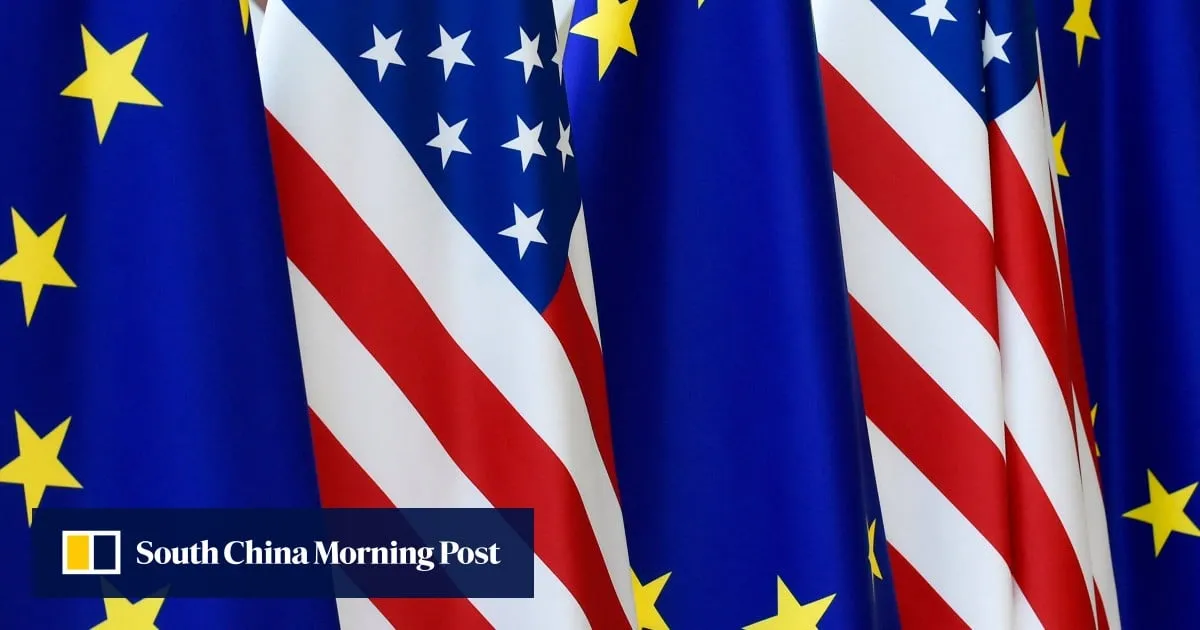
Middle powers would be better off hedging their bets rather than picking sides between countries such as the United States or China, a forum in Beijing heard on Friday.Speakers at Tsinghua University’s World Peace Forum agreed that these nations should band together to seek more diversified partnerships.“So during the period of bipolarisation, with China and the US now engaged in some kind of strategic competition, probably it is wise for middle powers not to take sides,” Jia Qingguo, a professor of international studies at Peking University, said during a panel discussion.He added that doing so “would limit their diplomatic space and limit their capability to preserve their interests”, adding that “hedging” was a better option.Jonathan Fried, chairman of the Canadian National Committee for Pacific Economic Cooperation, echoed this, saying: “hedging means developing an insurance policy.”Fried pointed to the Association of Southeast Asian Nations as a prime example of this strategy in action, noting that these countries were deeply invested in preserving good relations with both Beijing and Washington, viewing one as their top customer and the other as their premier investor.
SRCSouth China Morning Post
LANGEN
LEANCenter-Right
WORDS181
ENT11
SAT · 2026-07-04 · 11:00 GMTBRIEF NSR-2026-0704-89988
NSR-2026-0704-89988News Report·EN·Diplomatic
Is it wiser for middle powers ‘not to take sides’ in face of US-China rivalry?
At a forum in Beijing on Friday, experts at Tsinghua University's World Peace Forum suggested that middle powers should avoid choosing sides in the US-China rivalry. Speakers, including Peking University professor Jia Qingguo, argued that taking sides would restrict diplomatic options and the ability to protect national interests.
Carol YangSouth China Morning PostFiled 2026-07-04 · 11:00 GMTLean · Center-RightRead · 1 min
South China Morning PostFIG 01
Reading time
1min
Word count
181words
Sources cited
2cited
Entities identified
11entities
Quality score
100%
§ 01
Briefing Summary
AI-generatedNEWSAR · AI
At a forum in Beijing on Friday, experts at Tsinghua University's World Peace Forum suggested that middle powers should avoid choosing sides in the US-China rivalry. Speakers, including Peking University professor Jia Qingguo, argued that taking sides would restrict diplomatic options and the ability to protect national interests. Instead, they advocated for a strategy of "hedging," which involves diversifying partnerships. Jonathan Fried, chairman of the Canadian National Committee for Pacific Economic Cooperation, supported this view, likening hedging to developing an insurance policy. The Association of Southeast Asian Nations was cited as an example of this strategy, as its members maintain strong ties with both China and the US, benefiting from trade and investment from each.
Confidence 0.90Sources 2Claims 5Entities 11
§ 02
Article analysis
Model · rule-basedFraming
Diplomatic
Economic Impact
Tone
Measured
AI-assessed
CalmNeutralAlarmist
Factuality
0.60 / 1.00
Mixed
LowHigh
Sources cited
2
Limited
FewMany
§ 03
Key claims
5 extracted01
Hedging means developing an insurance policy.
quoteJonathan Fried
Confidence
0.90
02
Taking sides in the US-China rivalry would limit middle powers' diplomatic space and capability to preserve their interests.
quoteJia Qingguo
Confidence
0.90
03
Middle powers would be better off hedging their bets rather than picking sides between the US or China.
quoteSpeakers at Tsinghua University’s World Peace Forum
Confidence
0.90
04
ASEAN countries are deeply invested in preserving good relations with both Beijing and Washington.
quoteJonathan Fried
Confidence
0.80
05
Middle powers should band together to seek more diversified partnerships.
quoteSpeakers at Tsinghua University’s World Peace Forum
Confidence
0.80
§ 04
Full report
1 min read · 181 words§ 05
Entities
11 identifiedKey playerOppositionContextPositiveNeutralNegative
Organizations4
§ 06
Keywords & salience
10 termsmiddle powers
1.00
us-china rivalry
1.00
hedging bets
0.90
strategic competition
0.80
diplomatic space
0.70
diversified partnerships
0.60
preserving interests
0.50
association of southeast asian nations
0.50
bipolarisation
0.40
insurance policy
0.40
§ 07
Topic connections
Interactive graph Network visualization showing 51 related topics
View Full Graph Person Organization Location Event|Click node to navigate|Edge numbers = shared articles