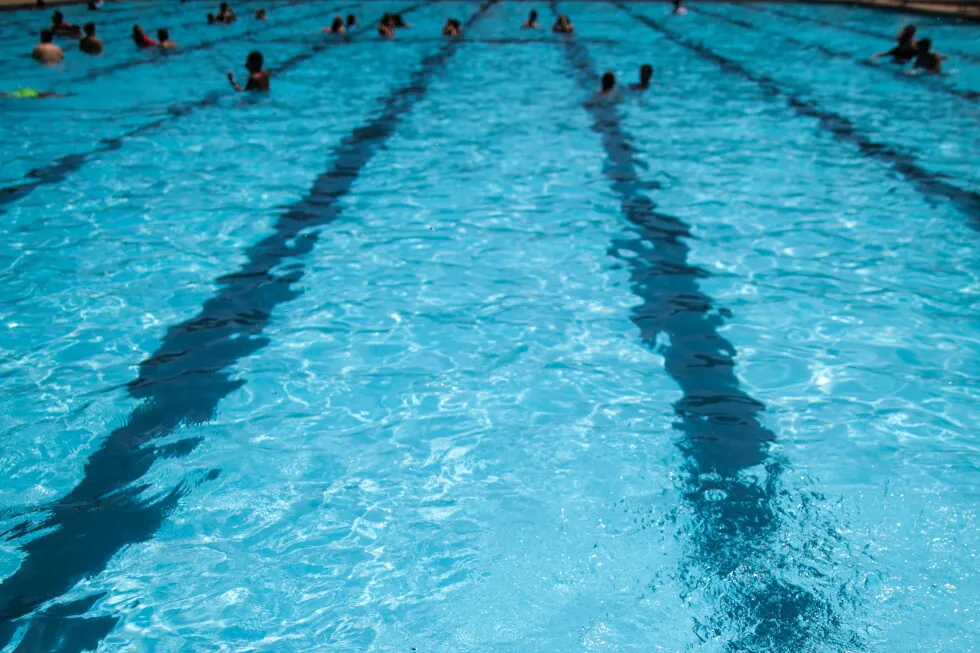
Children cool off at the Hamilton Fish pool, July 18, 2017, in the Lower East Side neighborhood of New York. (AP Photo/Mary Altaffer, File) By Mike Stobbe Updated 2:01 PM MESZ, July 4, 2026 Add AP News on Google Add AP News as your preferred source to see more of our stories on Google. Share Share Facebook Copy Link copied Print Email X LinkedIn Bluesky Flipboard Pinterest Reddit New York (AP) — Doctors and others are sounding an alarm: More U.S. children have been drowning in recent years. “When drowning occurs, seconds matter,” said Dr. Rohit Shenoi, the lead author of a recent American Academy of Pediatrics warning. “Quick rescue and resuscitation can mean the difference between life, death and lifelong disability.” About 4,000 to 5,000 Americans drown each year. Most are adults who die in natural bodies of water, such as lakes, ponds or oceans. But statistically speaking, drowning is a much larger danger to children. It’s the No. 1 cause of death for kids ages 1 to 4, and one of the top killers of children ages 5 to 14. The drowning rate is higher for white kids in the younger group, but much higher for Black, American Indian and Alaska Native children in the older group. Drownings of very young children sometimes occur in bathtubs. But most, like Stewie Leonard’s, occur in swimming pools. The Stew Leonard’s grocery chain offers a Disney-like shopping experience, featuring food-promoting animatronic characters like a dancing banana, a mooing cow and singing avocados. But several of its stores also have an animatronic creature that seems out of place: a life-jacketed duck named Stewie who sings about how not to drown. The duck is named for the son of Stew Leonard, the grocery chain’s chief executive. The boy was 21 months old when he drowned during a family vacation on the island of St. Martin in 1989. More than a dozen adults and kids had gathered at a birthday party for Stewie’s older sister, who was turning 3. Stew Leonard was outside hanging balloons and his wife was inside baking a cake. “I saw Stewie outside and I assumed that he (Leonard) was watching him,” said his wife, Kim, noting that other relatives also were in the area of the pool. More from Be Well Autoimmune diseases can strike any part of the body, and mostly affect women. Here’s what to know 12 Calisthenics are making a comeback. Is body weight enough to get a good workout? 23 Gut microbiome tests are everywhere. Should you get one? “We never communicated with each other; ‘You’ve got him?’” said Kim Leonard, now 65. “When everyone’s watching, nobody’s watching.” “There were a couple of balloons floating in the water,” Leonard, 71, recalled. “And you know after a few minutes, sort of everybody was like, ‘Where’s Stewie?’ Unfortunately I was the one who found him. He was face down in the pool.” His death led the couple to start a foundation that pays for children’s swimming lessons and promotes drowning prevention. Unintentional child drowning deaths in the U.S. fell from around 2,000 a year in the 1980s to below 1,000 a year by the early 2000s, thanks in part to public awareness campaigns, expanded access to swimming lessons, and adoption of pool fencing laws. Between 2000 and 2019, health officials saw a 38% drop. But then the trend reversed, with the number of child drowning deaths rising from 756 in 2019 to 865 in 2024, the most recent year for which complete data is available. The bulk of them were children younger than 5. The child drowning death rate also increased slightly, from 1.1 to 1.2 per 100,000 children. The COVID-19 pandemic interrupted swimming lessons and lifeguard training programs, and contributed to a national lifeguard shortage. Meanwhile, some data suggests an increase in swimming pool construction and increases in unsupervised swimming, said Tessa Clemens, the CDC Foundation’s senior director for drowning prevention initiatives. Kym Roberts studies drownings in Australia — where child drownings have been either level or decreasing in recent years. She said “drowning in young children is often associated with falls into water and lapses in direct supervision.” Some possible good news: Preliminary U.S. data for last year suggests child drownings declined. But it’s not clear whether that’s the start of a trend, and the deaths still remain higher compared to before the COVID-19 pandemic, Clemens said. Inventors have recognized a need for child water safety measures, and recent years have seen the emergence of immersion alarms that sound if the wristband a child is wearing goes underwater. But manufacturers of such devices note they can serve as an extra warning system, but should not be considered a primary way to keep children safe. The federal government’s top public health agency, the Centers for Disease Control and Prevention, laid off Clemens and the rest of the staff of its drowning prevention program last year. But new guidance and drowning prevention support continues to come out of other organizations, including the CDC Foundation and the American Academy of Pediatrics. A CDC Foundation program has paid for basic swimming and water safety skills training for over 35,000 students since 2024. The program operates in 11 states with higher drowning rates: Alaska, Arizona, California, Florida, Georgia, Hawaii, Louisiana, Michigan, New York, Oklahoma and Texas. The AAP says research shows that policies can make a difference, including lifeguard standards, life jacket regulations and requirements that swimming pools be completely surrounded by fences with self-closing, self-latching gates. Stew Leonard emphasizes two other approaches — swimming lessons for young kids and complete focus by caregivers when young children are around water. “I mean, I love ballet. I love karate. I love tennis lessons. You know, all the activities that kids can do,” he said. “But the only thing you can do to save their life is put them in swimming lessons.” His foundation has funded over 250,000 swimming lessons for children and opened two swimming schools — one of them across the street from his company’s headquarters in Norwalk, Connecticut. Also, “shut your cellphones off when you’re around the pool, watching the kids. Don’t sit there reading a book. Don’t sit there talking to your friends, neglecting your child that’s near the water,” he said. The Associated Press Health and Science Department receives support from the Howard Hughes Medical Institute’s Department of Science Education and the Robert Wood Johnson Foundation. The AP is solely responsible for all content. Mike Stobbe Stobbe mainly covers public health for The Associated Press. twitter mailto
SRCAssociated Press (AP)
LANGEN
LEANCenter
WORDS1 090
ENT12
SAT · 2026-07-04 · 12:23 GMTBRIEF NSR-2026-0704-90003
NSR-2026-0704-90003News Report·EN·Public Health
A child can drown in seconds. Doctors want more families to be prepared
Doctors are raising concerns about a recent increase in child drownings in the U.S., where drowning is the leading cause of death for children aged 1-4. While drowning deaths decreased significantly by the early 2000s, the trend reversed after 2019, with numbers rising again.
Associated Press (AP)Filed 2026-07-04 · 12:23 GMTLean · CenterRead · 5 min
Associated Press (AP)FIG 01
Reading time
5min
Word count
1 090words
Sources cited
3cited
Entities identified
12entities
Quality score
100%
§ 01
Briefing Summary
AI-generatedNEWSAR · AI
Doctors are raising concerns about a recent increase in child drownings in the U.S., where drowning is the leading cause of death for children aged 1-4. While drowning deaths decreased significantly by the early 2000s, the trend reversed after 2019, with numbers rising again. Experts attribute this resurgence partly to disruptions caused by the COVID-19 pandemic, including interrupted swimming lessons and lifeguard shortages, alongside potential increases in unsupervised swimming. The American Academy of Pediatrics emphasizes that quick rescue is critical. Prevention strategies highlighted include swimming lessons for children and constant, focused supervision by caregivers, as well as policy measures like pool fencing.
Confidence 0.90Sources 3Claims 5Entities 12
§ 02
Article analysis
Model · rule-basedFraming
Public Health
Human Interest
Tone
Measured
AI-assessed
CalmNeutralAlarmist
Factuality
0.80 / 1.00
Factual
LowHigh
Sources cited
3
Well sourced
FewMany
§ 03
Key claims
5 extracted01
When everyone's watching, nobody's watching.
quoteKim Leonard
Confidence
1.00
02
Quick rescue and resuscitation can mean the difference between life, death and lifelong disability.
quoteDr. Rohit Shenoi
Confidence
1.00
03
The drowning rate is higher for white kids in the younger group, but much higher for Black, American Indian and Alaska Native children in the older group.
statisticnull
Confidence
0.95
04
Drowning is the No. 1 cause of death for kids ages 1 to 4, and one of the top killers of children ages 5 to 14.
statisticnull
Confidence
0.95
05
More U.S. children have been drowning in recent years.
factualDoctors and others
Confidence
0.90
§ 04
Full report
5 min read · 1 090 words§ 05
Entities
12 identifiedKey playerOppositionContextPositiveNeutralNegative
People3
Organizations3
Locations4
§ 06
Keywords & salience
8 termschild drowning
1.00
drowning prevention
0.90
pediatrics
0.80
child mortality
0.70
public health alarm
0.60
emergency response
0.50
swimming pools
0.50
disability
0.40
§ 07
Topic connections
Interactive graph No topic relationship data available yet. This graph will appear once topic relationships have been computed.