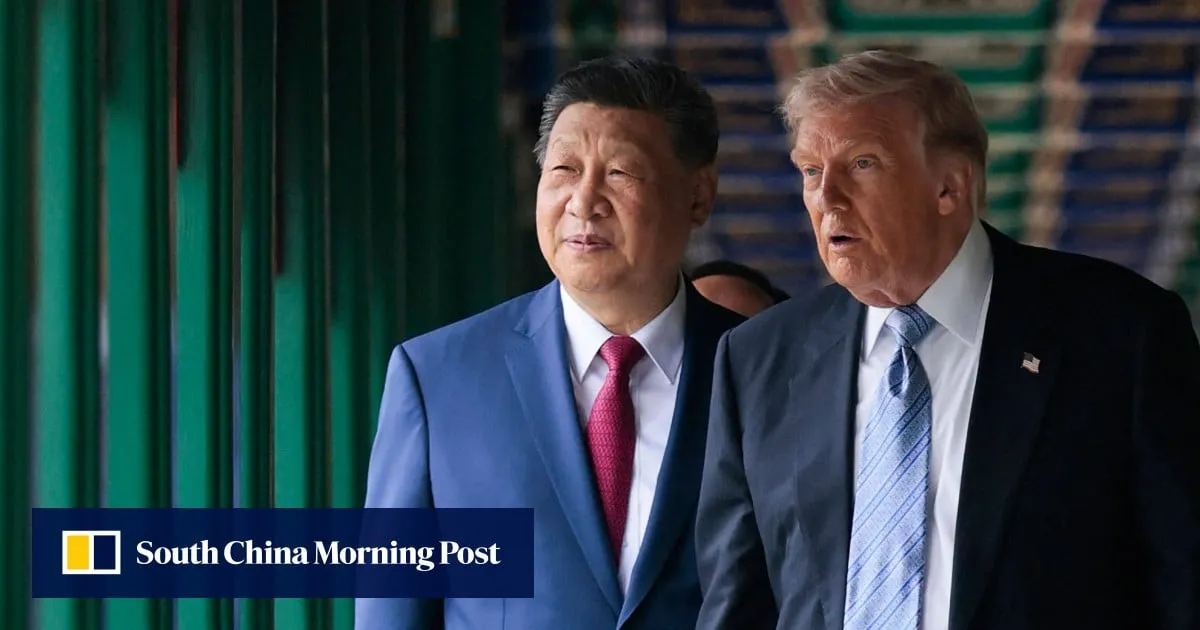
China and the United States may have agreed to establish a “constructive” relationship characterised by “strategic stability” but deep-seated differences have left the future shape of the relationship looking uncertain, a forum in Beijing heard on Saturday.Looking ahead to President Xi Jinping’s possible US visit later this year, Sun Yun, director of the China programme at US think tank the Stimson Centre, said such trips typically required a list of deliverables, “but to my knowledge, both the two sides have not reached any consensus on what that deliverable package will look like”.Sun told the World Peace Forum held by Tsinghua University: “The two leaders have reached the consensus to establish a constructive relationship of strategic stability, but both sides do not have a shared consensus as for what exactly it means.”She also highlighted a fundamental difference in priorities, with Beijing focusing on the constructive aspects such as cooperation while Washington was more concerned about how to manage disputes.For the US, the most important issue was to establish regular communication channels between their militaries, she added.Sun said there was an urgent need to improve operational-level communication channels – especially one between the US Pacific Command and its Chinese counterparts – to ensure a swift response to any crisis in flashpoints such as the China-sea" class="entity-link entity-location" data-entity-id="8346" data-entity-type="location">South China Sea or Taiwan Strait.Sun also cited the stalled plans for US defence undersecretary Elbridge Colby to visit China this year as further evidence of clogged communication channels.
SRCSouth China Morning Post
LANGEN
LEANCenter-Right
WORDS241
ENT12
SUN · 2026-07-05 · 01:00 GMTBRIEF NSR-2026-0705-90106
NSR-2026-0705-90106News Report·EN·Diplomatic
Why US and China are struggling to reach a consensus over future shape of relationship
A forum in Beijing revealed that despite agreement on a "constructive" relationship and "strategic stability," deep-seated differences between China and the US create uncertainty about their future relationship. Sun Yun of the Stimson Centre noted that while leaders have agreed on the terms, there's no shared understanding of what they entail.
Carol YangSouth China Morning PostFiled 2026-07-05 · 01:00 GMTLean · Center-RightRead · 1 min
South China Morning PostFIG 01
Reading time
1min
Word count
241words
Sources cited
1cited
Entities identified
12entities
Quality score
100%
§ 01
Briefing Summary
AI-generatedNEWSAR · AI
A forum in Beijing revealed that despite agreement on a "constructive" relationship and "strategic stability," deep-seated differences between China and the US create uncertainty about their future relationship. Sun Yun of the Stimson Centre noted that while leaders have agreed on the terms, there's no shared understanding of what they entail. China prioritizes cooperation, while the US focuses on managing disputes and establishing regular military communication channels. The lack of consensus on deliverables for President Xi Jinping's potential US visit and stalled defense official visits highlight communication challenges. The urgency for improved operational-level communication, particularly between military commands, was emphasized to manage potential crises in flashpoints like the South China Sea and Taiwan Strait.
Confidence 0.90Sources 1Claims 5Entities 12
§ 02
Article analysis
Model · rule-basedFraming
Diplomatic
National Security
Tone
Measured
AI-assessed
CalmNeutralAlarmist
Factuality
0.70 / 1.00
Factual
LowHigh
Sources cited
1
Limited
FewMany
§ 03
Key claims
5 extracted01
There is an urgent need to improve operational-level communication channels between the US Pacific Command and its Chinese counterparts.
quoteSun Yun
Confidence
1.00
02
Beijing focuses on constructive aspects like cooperation, while Washington is more concerned with managing disputes.
quoteSun Yun
Confidence
1.00
03
Both sides have not reached any consensus on what the 'deliverable package' for President Xi Jinping's possible US visit will look like.
quoteSun Yun
Confidence
1.00
04
China and the US have agreed to establish a 'constructive' relationship characterized by 'strategic stability'.
factualArticle
Confidence
0.90
05
Deep-seated differences between the US and China make the future shape of their relationship uncertain.
factualArticle
Confidence
0.80
§ 04
Full report
1 min read · 241 words§ 05
Entities
12 identifiedKey playerOppositionContextPositiveNeutralNegative
People3
Organizations3
Locations4
§ 06
Keywords & salience
10 termsus-china relationship
1.00
strategic stability
0.90
constructive relationship
0.80
communication channels
0.70
managing disputes
0.60
taiwan strait
0.50
south china sea
0.50
stimson centre
0.40
world peace forum
0.40
xi jinping
0.40
§ 07
Topic connections
Interactive graph Network visualization showing 51 related topics
View Full Graph Person Organization Location Event|Click node to navigate|Edge numbers = shared articles