Investing in the UK transport network to make it fully accessible to disabled passengers could boost the economy by £176bn by helping millions more people into work, according to a report.Making the economic case for an inclusive transport network, the Institution of Mechanical Engineers (IMechE) said the current system was inaccessible to almost a quarter of the working-age population.Highlighting a lack of lifts and ramps at stations, large gaps on platforms, and a lack of tactile paving and sensory-friendly environment, IMechE said people were being shut out of work, education and everyday life.Its report found that almost half of disabled professionals have turned down job opportunities because of transport issues, leaving about 2.8 million people effectively locked out of the workforce, in part because of transport barriers.Based on the Office for National Statistics’ estimate of an average worker’s annual contribution to economic output of about £63,000, IMechE said helping all of them into a job could add £176.4bn a year to the national economy.“Inaccessible buses, trains and stations are not just a social failure, they are a massive economic own goal, holding back growth, productivity and the UK’s path to net zero,” the report said.The analysis comes after the prime minister, Keir Starmer, announced billions of pounds of cuts to infrastructure projects across the UK last week to help cover a £15bn increase in defence spending over four years.The chancellor, Rachel Reeves, had previously argued it would be a mistake to reduce infrastructure funding in the face of tough fiscal decisions, suggesting that cuts made by the Conservatives had contributed to weaker growth in the British economy over recent years.IMechE estimated the cost of investing in a fully inclusive rail network would be between £20bn and £24bn spread over a number of years. It called on the government to consider tax incentives for accessibility upgrades to unlock private investment, and a push to make inclusive design a core engineering requirement.It said its £176bn figure could be a conservative estimate, because there were other ways the economy could benefit, including a potential £22.3bn-a-year boost to retail, leisure and tourism as a result of disabled people taking more trips using public transport to high streets and venues.Closing the accessibility gap could also generate between £10bn and £34bn in extra annual fare revenue for transport operators through increased passenger numbers.IMechE’s director of engineering policy and impact, James Partington, said: “Britain does not have a transport problem. It has a growth problem disguised as a transport problem. Fixing accessibility is not just the right thing to do, it is one of the fastest ways to unlock jobs, boost the economy and future-proof the country.skip past newsletter promotionafter newsletter promotion“The prize is enormous. The cost of doing nothing is even bigger.”Tanni Grey-Thompson, the former Paralympic wheelchair racing champion and cross-bench peer, has repeatedly highlighted inaccessible transport in parliament. She was forced to drag herself off a train in London two years ago because no staff at the operator, London North Eastern Railway, were available to help her.Nearly nine in 10 of disabled people surveyed last year for the House of Commons transport committee said they often or always had difficulties when travelling. The MPs on the committee recommended clearer legislation, tougher enforcement of existing rules and a unified complaints service for disabled people who faced problems on public transport.A Department for Transport spokesperson said: “We’re working to make journeys easier for everyone, with £280m for step-free access and lifts at train stations across the UK.“We’re also delivering better passenger assistance and setting clear expectations about accessibility for buses and taxis so that people can get to their next mode of transport more easily.”
SRCThe Guardian - World News
LANGEN
LEANCenter-Left
WORDS608
ENT12
SUN · 2026-07-05 · 23:01 GMTBRIEF NSR-2026-0706-90325
NSR-2026-0706-90325News Report·EN·Economic Impact
Making public transport fully accessible ‘could boost UK economy by £176bn’
A report by the Institution of Mechanical Engineers (IMechE) suggests that making the UK's public transport fully accessible to disabled passengers could boost the economy by £176 billion annually. The current network is inaccessible to nearly a quarter of the working-age population, effectively excluding approximately 2.8 million people from the workforce due to issues like a lack of lifts, ramps, and tactile paving.
Richard Partington Senior economics correspondentThe Guardian - World NewsFiled 2026-07-05 · 23:01 GMTLean · Center-LeftRead · 3 min
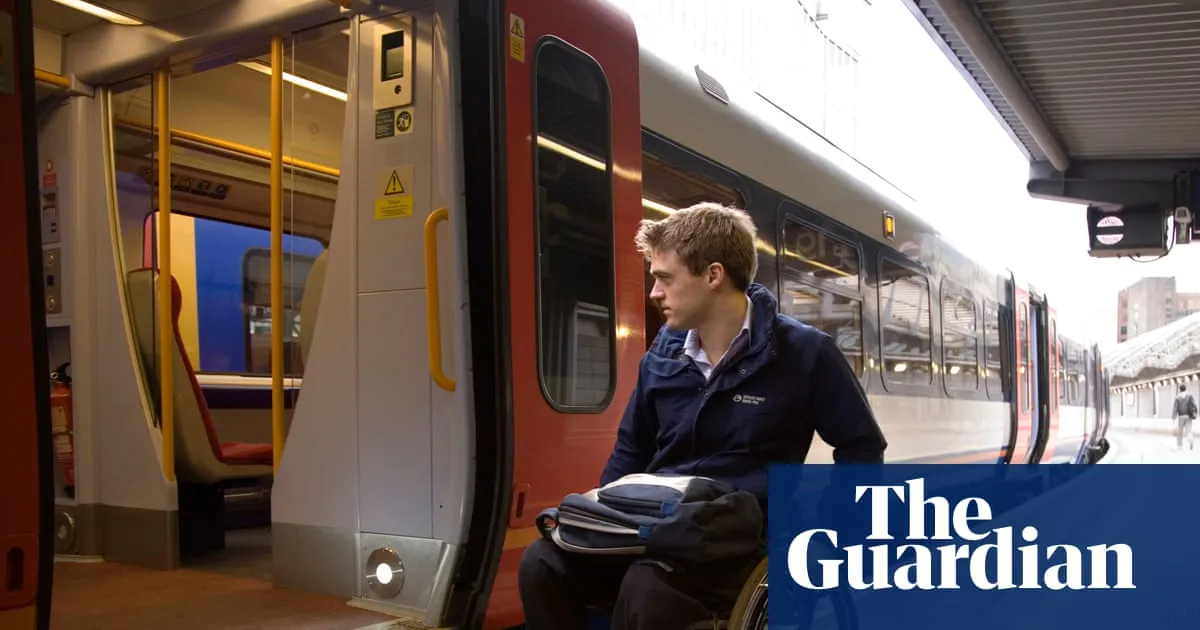
The Guardian - World NewsFIG 01
Reading time
3min
Word count
608words
Sources cited
3cited
Entities identified
12entities
Quality score
100%
§ 01
Briefing Summary
AI-generatedNEWSAR · AI
A report by the Institution of Mechanical Engineers (IMechE) suggests that making the UK's public transport fully accessible to disabled passengers could boost the economy by £176 billion annually. The current network is inaccessible to nearly a quarter of the working-age population, effectively excluding approximately 2.8 million people from the workforce due to issues like a lack of lifts, ramps, and tactile paving. IMechE estimates the cost of a fully inclusive rail network at £20-£24 billion over several years and highlights potential economic benefits beyond employment, including increased retail and tourism spending. The report advocates for inclusive design as a core engineering requirement and suggests government incentives for private investment in accessibility upgrades. The Department for Transport states it is investing £280 million in step-free access and lifts at train stations.
Confidence 0.90Sources 3Claims 5Entities 12
§ 02
Article analysis
Model · rule-basedFraming
Economic Impact
Social Justice
Tone
Measured
AI-assessed
CalmNeutralAlarmist
Factuality
0.80 / 1.00
Factual
LowHigh
Sources cited
3
Well sourced
FewMany
§ 03
Key claims
5 extracted01
Almost a quarter of the working-age population finds the current transport system inaccessible.
statisticInstitution of Mechanical Engineers (IMechE)
Confidence
0.90
02
Investing in fully accessible public transport could boost the UK economy by £176bn annually.
statisticInstitution of Mechanical Engineers (IMechE)
Confidence
0.90
03
Closing the accessibility gap could generate an additional £22.3bn annually for retail, leisure, and tourism.
statisticInstitution of Mechanical Engineers (IMechE)
Confidence
0.85
04
Nearly half of disabled professionals have declined job offers due to transport issues.
statisticInstitution of Mechanical Engineers (IMechE)
Confidence
0.85
05
The cost of a fully inclusive rail network is estimated between £20bn and £24bn over several years.
statisticInstitution of Mechanical Engineers (IMechE)
Confidence
0.80
§ 04
Full report
3 min read · 608 words§ 05
Entities
12 identifiedKey playerOppositionContextPositiveNeutralNegative
Organizations3
Locations1
§ 06
Keywords & salience
10 termspublic transport accessibility
1.00
economic boost
0.90
disabled passengers
0.80
inclusive transport network
0.70
workforce participation
0.60
transport barriers
0.50
infrastructure investment
0.50
uk economy
0.40
inclusive design
0.40
institution of mechanical engineers
0.40
§ 07
Topic connections
Interactive graph Network visualization showing 51 related topics
View Full Graph Person Organization Location Event|Click node to navigate|Edge numbers = shared articles