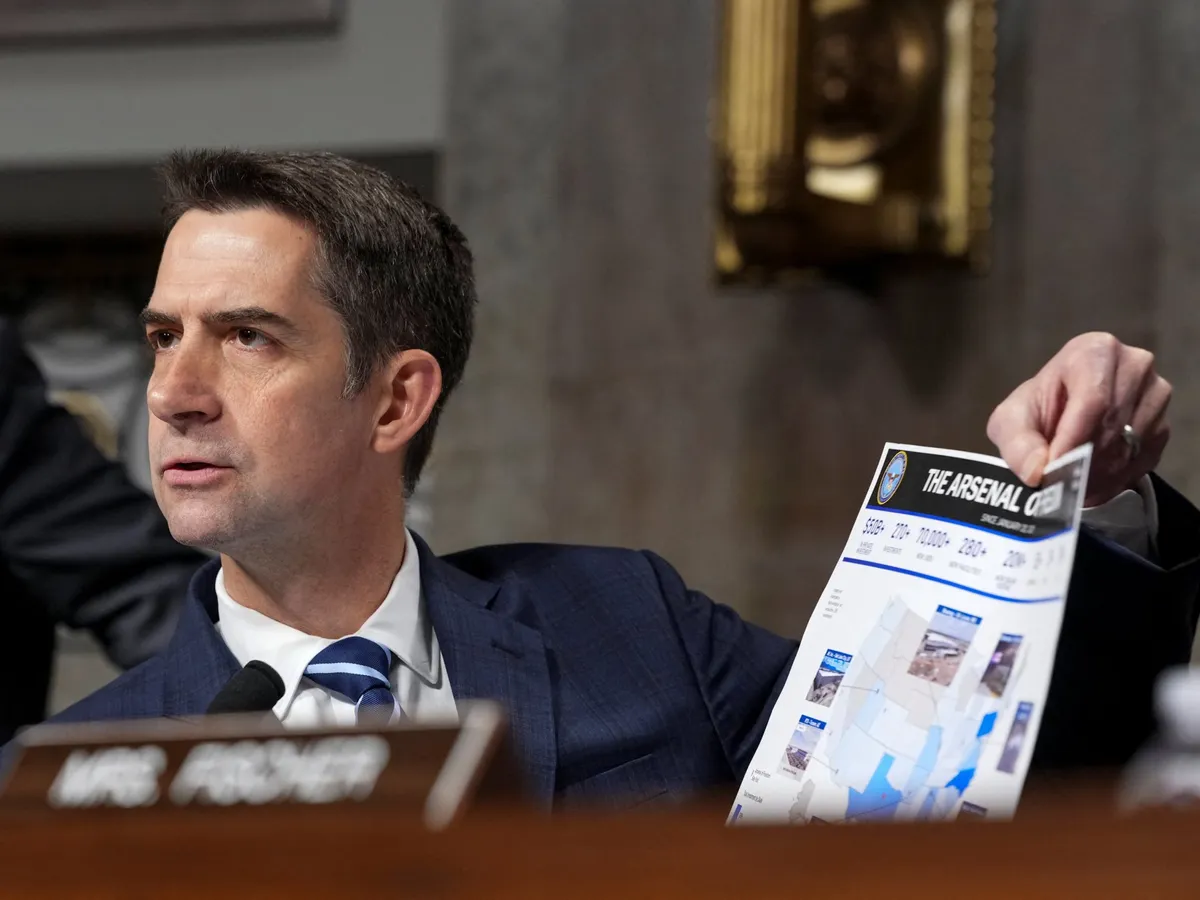
Shielding US commitments to Israel from congressional scrutiny would be harmful for both countries.Washington-based journalist.Published On 6 Jul 2026Senator Tom Cotton during a Senate Armed Services Committee hearing on Capitol Hill, April 30 [Ken Cedeno/Reuters]US Senator Tom Cotton and pro-Israel allies are pursuing problematic legislation that has largely gone under the radar of most mainstream media. If passed, these bills and amendments would embed the US-Israel security relationship more deeply within the Pentagon’s institutional framework, making it substantially harder for future presidents and Congresses to reconsider one of America’s most consequential foreign policy commitments.This comes at a crucial time. The 10-year Memorandum of Understanding between the US and Israel which grants the latter $38bn in military aid is expiring in 2028. At this time, Washington should be discussing whether the arrangement continues to serve American interests, whether future aid should carry conditions, and whether the transformed Middle East warrants a different approach. Instead, Senate Republicans are building a legislative architecture that could preclude any change in policy.Their strategy is trying to bypass the traditional foreign aid and military cooperation process by embedding amendments in large budget bills that have to pass. For example, a section of the National Defense Authorization Act (NDAA) for fiscal year 2027 would establish permanent integration of Israeli technology into US military research, procurement and manufacturing.Senator Cotton’s companion legislation, which is embedded into an intelligence authorisation bill, requires the president to expand US-Israeli intelligence cooperation on a list of subjects. It also restricts presidential authority to pause or limit intelligence-sharing. If these bills are passed with the amendments proposed by Cotton and his allies, foreign policy flexibility would give way to statutory permanence.Supporters present these initiatives as routine improvements to an indispensable alliance. Their timing suggests otherwise. For decades, unconditional Israel" class="entity-link entity-topic" data-entity-id="159850" data-entity-type="topic">military aid to Israel attracted little opposition in Washington. That bipartisan consensus has begun to fracture.The war in Gaza has produced unprecedented civilian destruction, repeated humanitarian crises, allegations of violations of international humanitarian law and growing diplomatic isolation for Israel. American opinion has shifted accordingly.By October 2025, the Pew Research Center found that 33 percent of Americans believed the United States was providing too much military support to Israel; 23 percent thought it was “about right”; 8 percent thought it was not enough. A June 2026 survey by Quinnipiac University found that 48 percent of Americans thought their government was supporting Israel “too much”.Negative views of Israel among Americans have also spiked. The latest Pew Research poll shows 60 percent of Americans holding unfavourable views of Israel, up from 53 percent last year.Within Congress, lawmakers who once treated military assistance as politically untouchable increasingly advocate conditions, restrictions or reductions.It is precisely because the politics are changing that the legislative strategy has shifted from defending aid on its merits to redesigning the process by which it is approved. By embedding permanent cooperation mechanisms and statutory limits on presidential discretion inside the annual defence authorisation bill—a measure Congress cannot realistically allow to fail—Republicans raise the political cost of challenging unconditional assistance.Legislators are forced into an impossible choice: accept provisions they oppose or risk accusations of undermining national security. Procedural necessity quietly replaces democratic deliberation. This is not simply legislative craftsmanship. It is entrenchment by design.The constitutional implications extend well beyond Israel. Congressional authority over appropriations exists to ensure that foreign policy remains accountable to elected representatives. Alliances evolve, governments change, and strategic interests shift. Military assistance and cooperation should therefore remain subject to periodic review, rather than becoming embedded in bureaucratic structures that future lawmakers struggle to alter.Yet in recent years, nearly every proposal to condition military aid, strengthen human rights reporting, tighten oversight of weapons transfers or increase transparency over the use of American arms has failed in the face of overwhelming Republican opposition. Rather than defend unconditional aid through persuasion, the party increasingly seeks to minimise opportunities for meaningful debate.The strategy also aligns closely with the long-standing objective of Israeli Prime Minister Benjamin Netanyahu and successive Israeli governments: to make American support as independent as possible from shifts in American politics. Institutionalising support before demographic and electoral change reshapes Congress has become critical.The deeper military cooperation is embedded within permanent Pentagon structures, the less leverage future administrations would possess and the less influence American public opinion would be able to exert.This should concern supporters of Israel no less than its critics. Strong alliances derive their durability from democratic legitimacy, not procedural insulation. If military assistance remains strategically justified, it should be able to survive regular congressional scrutiny and public debate. A policy that requires institutional protection from democratic review implicitly acknowledges that public consent can no longer be assumed.The irony is striking. Many of the same lawmakers who champion constitutional checks and balances, congressional authority and fiscal oversight in domestic policy appear willing to suspend those principles when Israel" class="entity-link entity-topic" data-entity-id="159850" data-entity-type="topic">military aid to Israel is at stake. The power of the purse is among Congress’s oldest constitutional responsibilities. Yet they now seek to narrow that authority.The question before Congress therefore reaches beyond Israel. It is whether the US intends to preserve democratic accountability over its most consequential foreign policy commitments, or gradually replace political consent with institutional permanence.Democracies remain resilient because no strategic commitment is permanently exempt from public scrutiny. Placing major policies beyond ordinary democratic review would weaken not only congressional authority but also the constitutional principles that authority was designed to protect.The views expressed in this article are the author’s own and do not necessarily reflect Al Jazeera’s editorial policy.
SRCAl Jazeera
LANGEN
LEANCenter
WORDS914
ENT12
MON · 2026-07-06 · 14:13 GMTBRIEF NSR-2026-0706-90554
NSR-2026-0706-90554Opinion·EN·Political Strategy
The pitfalls of institutionalising US military aid to Israel
US Senator Tom Cotton and allies are pushing legislation to institutionalize US military aid to Israel within the Pentagon's framework, making it harder for future administrations to alter the commitment. This strategy aims to bypass traditional scrutiny, particularly as the $38 billion military aid memorandum expires in 2028.
Said ArikatAl JazeeraFiled 2026-07-06 · 14:13 GMTLean · CenterRead · 4 min
Al JazeeraFIG 01
Reading time
4min
Word count
914words
Sources cited
2cited
Entities identified
12entities
Quality score
100%
§ 01
Briefing Summary
AI-generatedNEWSAR · AI
US Senator Tom Cotton and allies are pushing legislation to institutionalize US military aid to Israel within the Pentagon's framework, making it harder for future administrations to alter the commitment. This strategy aims to bypass traditional scrutiny, particularly as the $38 billion military aid memorandum expires in 2028. Proposed amendments to defense and intelligence authorization bills would permanently integrate Israeli technology into US military systems and restrict presidential authority to limit intelligence sharing. This legislative approach is occurring as public and congressional support for unconditional aid to Israel has fractured due to the war in Gaza and growing negative views of Israel. The article argues this "entrenchment by design" circumvents democratic deliberation and reduces accountability for foreign policy decisions.
Confidence 0.90Sources 2Claims 5Entities 12
§ 02
Article analysis
Model · rule-basedFraming
Political Strategy
Diplomatic
Tone
Measured
AI-assessed
CalmNeutralAlarmist
Factuality
0.40 / 1.00
Mixed
LowHigh
Sources cited
2
Limited
FewMany
§ 03
Key claims
5 extracted01
The 10-year Memorandum of Understanding granting Israel $38bn in military aid expires in 2028.
factual
Confidence
1.00
02
By October 2025, 33 percent of Americans believed the US was providing too much military support to Israel.
statisticPew Research Center
Confidence
0.90
03
A June 2026 Quinnipiac University survey found 48 percent of Americans thought their government was supporting Israel 'too much'.
statisticQuinnipiac University
Confidence
0.90
04
Legislation pursued by Senator Tom Cotton and allies would embed the US-Israel security relationship deeper into the Pentagon's institutional framework.
factual
Confidence
0.90
05
A section of the NDAA for FY2027 would establish permanent integration of Israeli technology into US military research, procurement, and manufacturing.
factual
Confidence
0.80
§ 04
Full report
4 min read · 914 words§ 05
Entities
12 identifiedKey playerOppositionContextPositiveNeutralNegative
Locations4
§ 06
Keywords & salience
10 termsus military aid to israel
1.00
congressional scrutiny
0.90
institutional framework
0.80
foreign policy commitments
0.70
memorandum of understanding
0.60
war in gaza
0.50
senator tom cotton
0.50
pentagon
0.50
bipartisan consensus
0.40
international humanitarian law
0.40
§ 07
Topic connections
Interactive graph Network visualization showing 51 related topics
View Full Graph Person Organization Location Event|Click node to navigate|Edge numbers = shared articles